Send the form and the boiler tune-up stops being something to remember.
A boiler set right keeps a South Dakota house warm without wasting gas doing it. Most people set the thermostat and never think about the boiler itself until something's wrong, and by January that's usually the worst time to find out it's not running the way it should.
Cold here doesn't ease up. Once the temperature drops and stays down, a boiler that's slightly off, a little lime scale on the heat exchanger, a thermostat miscalibrated by a couple degrees, works harder than it needs to for the same heat in the room. You pay for that difference on the gas bill every month from November through March.
A boiler that gets looked at once a year, before the cold sets in or early into it, tends to run the way it was built to run. Someone who services these systems all winter in this state knows what usually goes wrong first, what parts wear out in this cold, and what a normal pressure reading looks like versus one that means trouble is coming. That's a different kind of check than reading a manual.
If your boiler is doing something that doesn't sit right, running longer than it used to, making noise it didn't make last year, or just not heating certain rooms the way it should, that's worth having someone look at before it becomes a bigger repair in the middle of a cold snap.
Send the request and the work of tracking someone down is done. One contractor gets matched to you, local, licensed, and familiar with boilers through a Dakota winter, not a list of names to call and compare. From there it's off your plate.
What temperature should I set my boiler to in winter?
A South Dakota winter asks a lot of a boiler, and guessing at the thermostat either leaves rooms cold or runs up the gas bill for no reason. You want a number you can actually set it to and trust, not a vague range, especially once temperatures outside drop and stay down for months.
Set the water temperature to 160-180°F for most of the winter
Most boilers run a water temperature between 160°F and 180°F through the cold months, and that range is enough to heat a South Dakota house even when it's well below zero outside. The boiler doesn't need to run hotter than that unless the house has unusually large radiators or long runs of pipe losing heat along the way. Running it hotter than necessary doesn't heat the house faster, it just burns more gas getting water to a temperature the radiators don't need. If rooms are still cold at 160°F, that usually points to something in the system, not the setting, and it's worth having that looked at before pushing the temperature any higher.
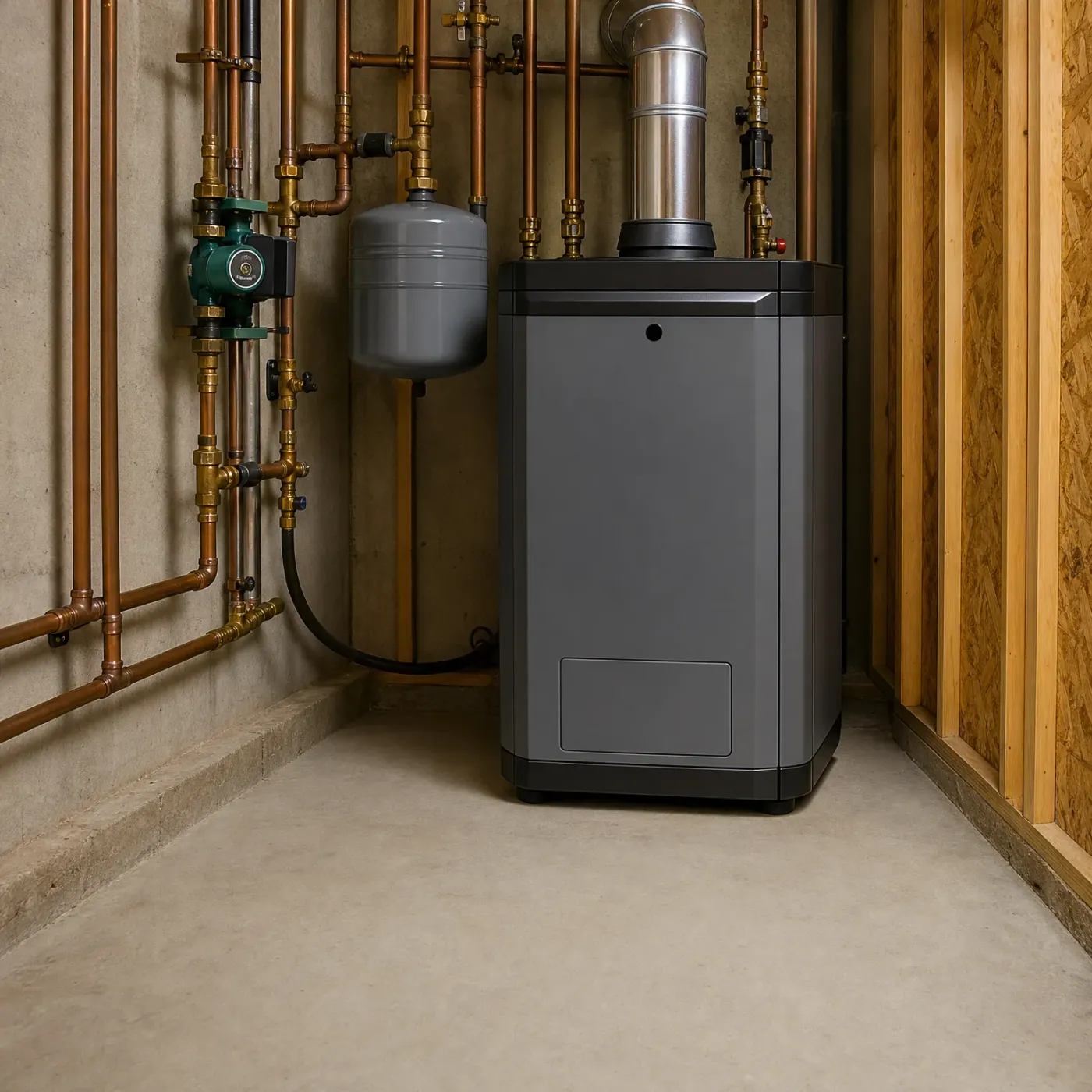
Running clean
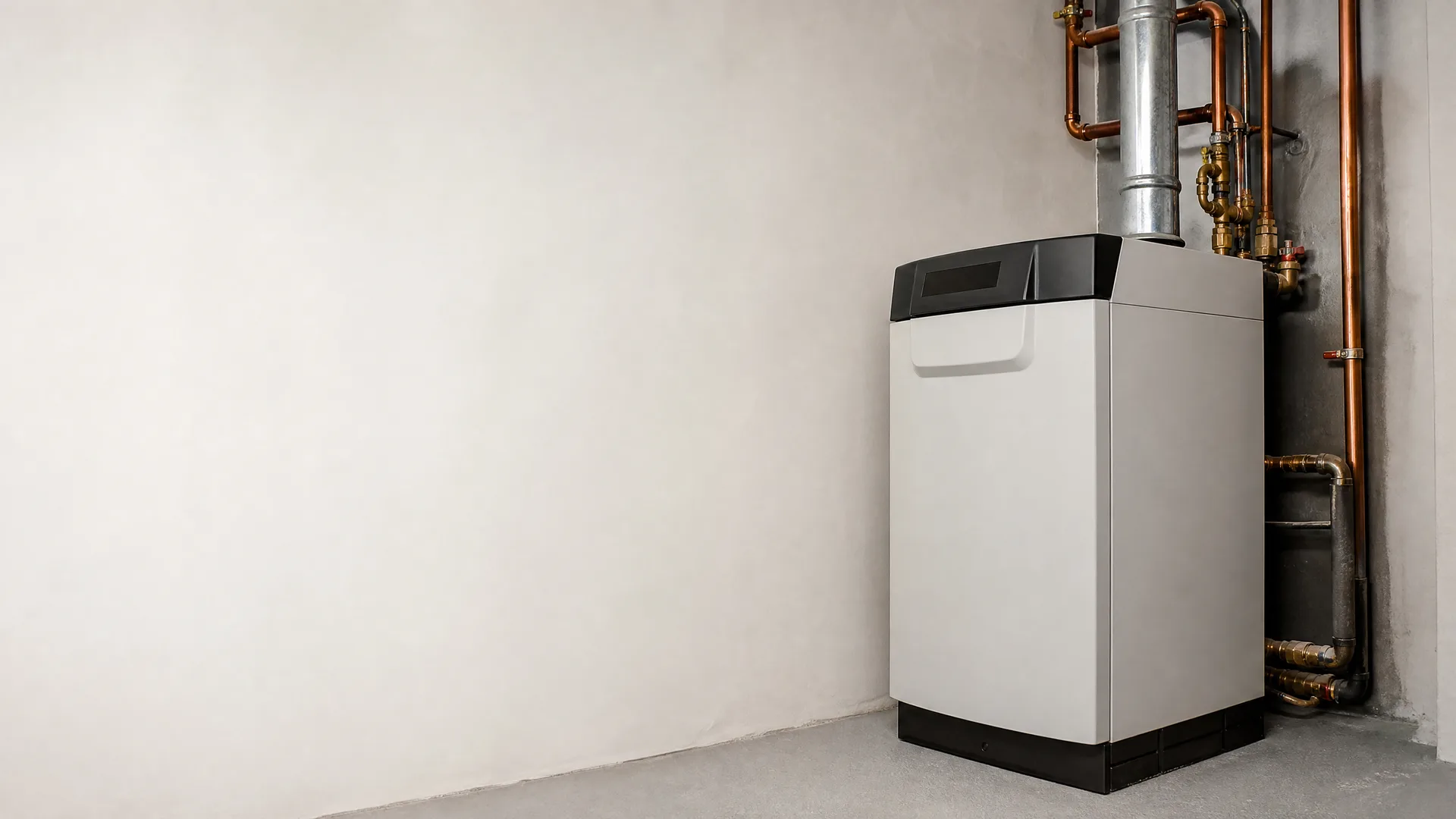
This is what a boiler setup looks like when nothing's wrong. The pump moves water quietly, the expansion tank holds steady pressure, and the flue vents clean through stainless steel. Set it right and it just does this, winter after winter.
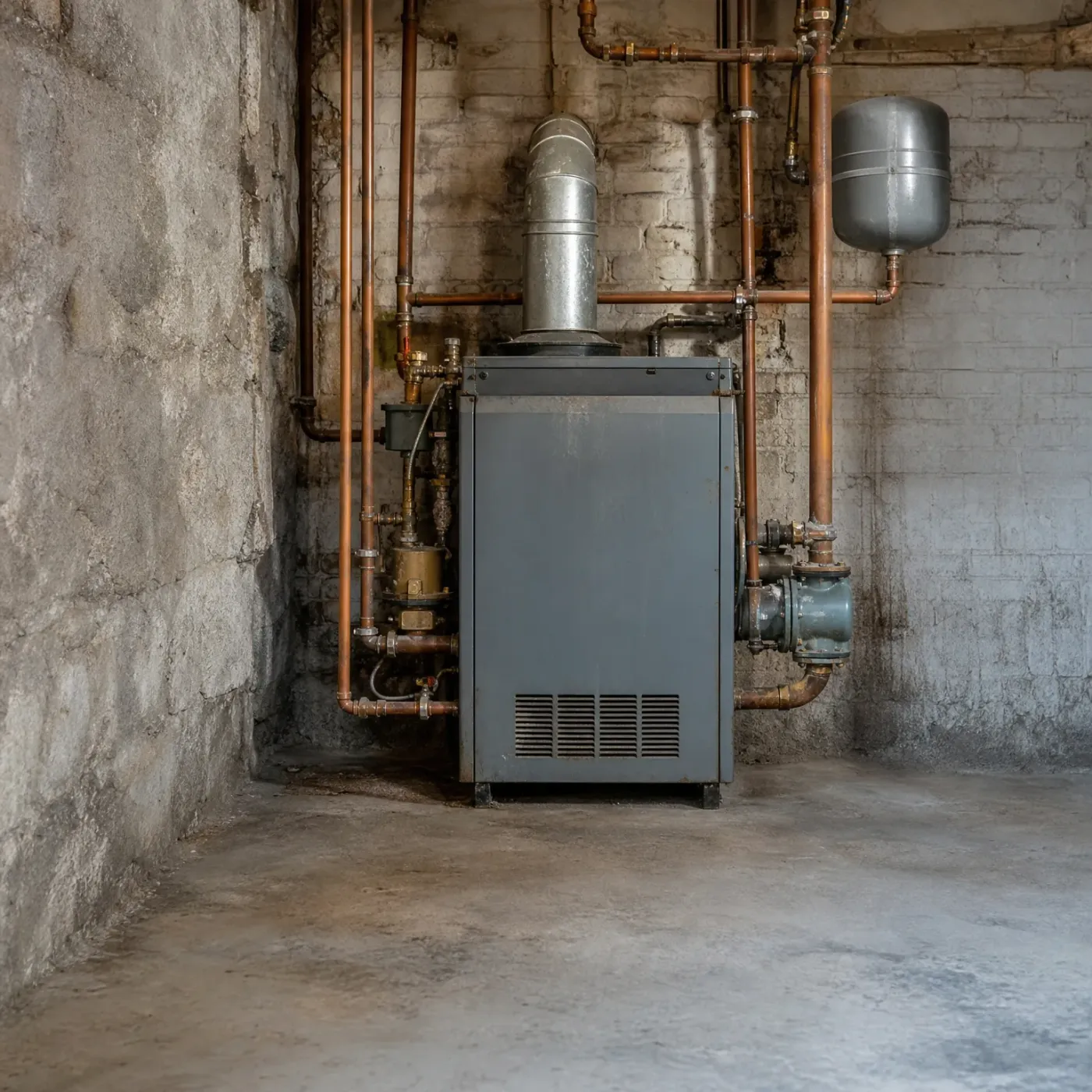
Running worn
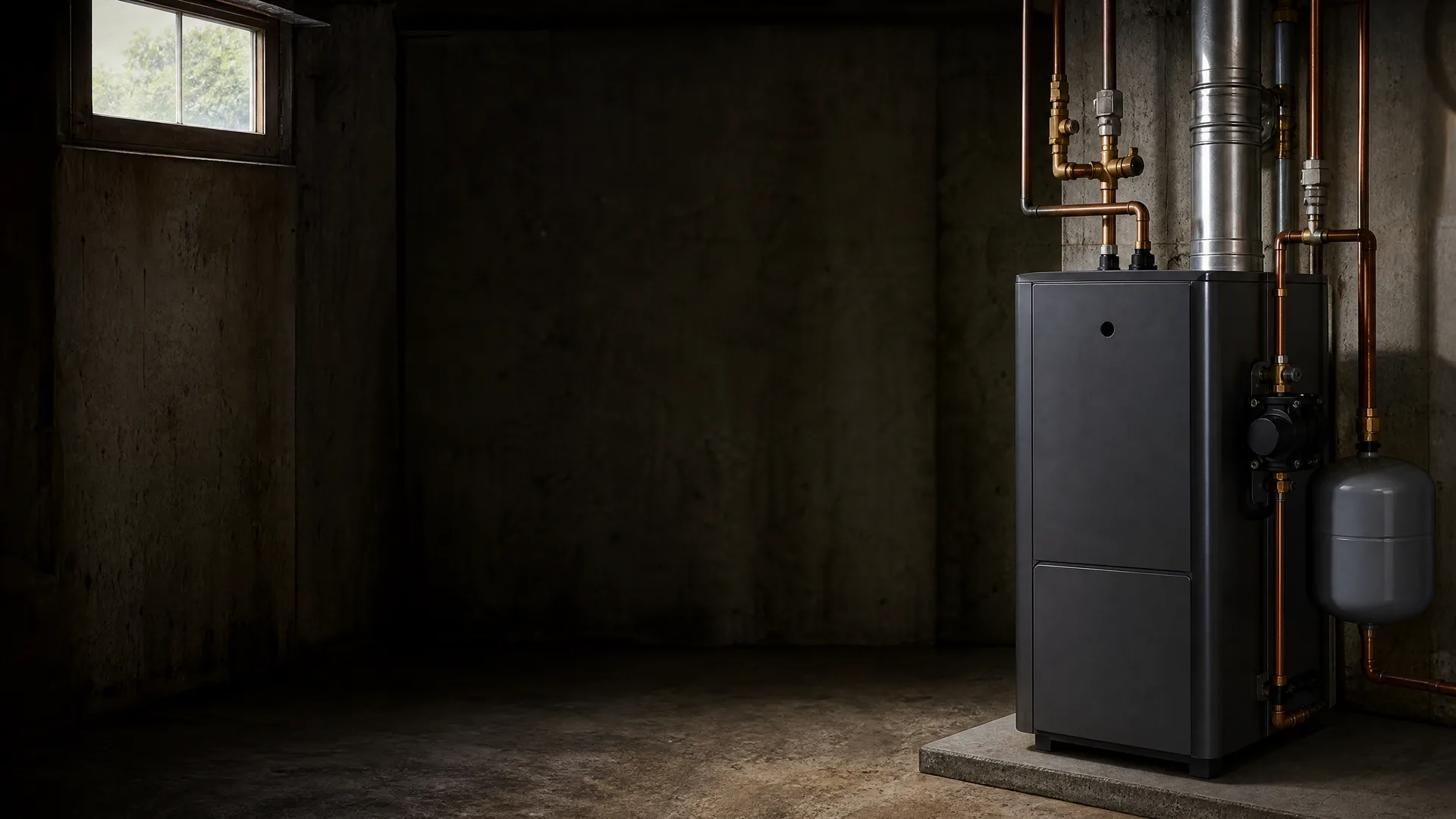
Cast iron and galvanized vent pipe tell you this boiler has been at it a long time. Old sections hold heat differently than new ones, and a setting that worked fine ten years ago can leave a system like this short now. Worth having someone check it before the cold sets in for good.
Too Hot vs Too Cold
Running too hot
Water above 180°F short cycles the boiler, so it fires more often and wears the igniter and heat exchanger faster.
Rooms with older cast iron radiators can overheat and you end up cracking a window in January to cool off.
The flue runs hotter than it needs to, which pushes more heat and gas out the chimney instead of into the house.
A pressure relief valve that weeps or drips is often the boiler telling you the supply temp is set too high.
Higher water temp doesn't heat the house faster, it just burns more gas getting a room to the same setpoint.
Running too cold
Below 140°F, a lot of boilers in South Dakota homes can't keep up once it drops below zero outside.
Rooms farthest from the boiler, upstairs or at the end of a run, stay noticeably cooler than the rest of the house.
Return water that's too cool can let condensation form inside a non-condensing boiler, which corrodes the heat exchanger over time.
Floors fed by radiant loops take longer to come up to temperature, so the house feels cold even after the boiler's been running a while.
Setting it low to save gas can backfire if the boiler has to run longer stretches just to reach the thermostat's setpoint.
A licensed local pro takes the request for your boiler tune-up.
You're not committing to anything by asking.
A boiler that's running at the right water temperature doesn't have to work to keep the house warm. One that's set too high fires more often than it needs to, and every extra cycle wears the same parts a yearly checkup is meant to catch.
That's why the setting matters more than the thermostat number on the wall. Get the water temperature right once, and the boiler holds a steady house all winter without the extra cycling that ages it early.
Set too low for your house
If the water temperature is set too low for a cold snap, you'll notice it first in the rooms farthest from the boiler. The bedroom at the end of the hall stays a few degrees cooler than the living room, and the radiator there feels barely warm to the hand. You end up pushing the thermostat higher to compensate, which makes the boiler run longer to chase a setting it was never going to reach efficiently. The fix usually isn't a higher thermostat setting at all. It's the water temperature curve, and that's something worth having checked before the next cold stretch.
Set too high for your house
Set too high, the signs show up as waste before they show up as a problem. The boiler short cycles, meaning it shuts off and fires again more often than it should, and you can hear it if you're near the mechanical room. Rooms closest to the boiler run warmer than you set them for. Over a winter, that extra cycling adds wear to the igniter and heat exchanger, the same parts a yearly checkup looks at. You pay for that wear twice, once in gas and once in the repair bill that shows up a season or two sooner than it should.
Winter nights average 11°F statewide
At 11 below zero most nights, your boiler is holding water temperature against real cold, not a mild chill. That's the stretch where a setting that's slightly off shows up fastest, in a cool bedroom or a bill that's higher than it should be.
NOAA nClimDiv 1991-2020 county normals weighted by homes
A boiler left alone
Nobody's touched the settings since whoever installed it walked out the door. The water temperature might be right or it might be five years of small drift, a thermostat bumped by a kid, a setting changed one cold night and never changed back. It runs, the house is some version of warm, and that's as far as anyone looks. You only find out it was wrong when a part fails in February and the repair bill tells you how long it had been working harder than it needed to.
A boiler checked each fall
Someone who services boilers for a living looks at the water temperature before the first hard freeze, not after. They know what a South Dakota winter asks of a system like yours and they set it for that, not for whatever the last homeowner guessed. The pump, the pressure, the flue draft, all of it gets checked while it's easy to fix. You go into the cold stretch with a boiler that's already been looked at by someone who does this every year, not one you're hoping holds.
A boiler set somewhere between 160 and 180 degrees for most of a South Dakota winter, turned up toward the top of that range only when it drops well below zero, keeps the house warm without making the boiler work harder than it has to. That's the answer, and everything else is just what happens when the setting drifts from it. A yearly checkup is what keeps that number honest, and the person checking it matters. A local tech who works on boilers all winter in this state has seen what cold like this does to a heat exchanger or an igniter, and knows what to look for before it fails instead of after. You're matched with one contractor, not a handful calling at once, someone licensed and familiar with the equipment that actually runs in houses around here. The setting is simple once it's right. Keeping it right is the part that takes someone who knows the equipment.
Send one request and you're done looking
Your request goes to one pro, not a list of companies.