Tell us about the job
Takes about a minute. No obligation.
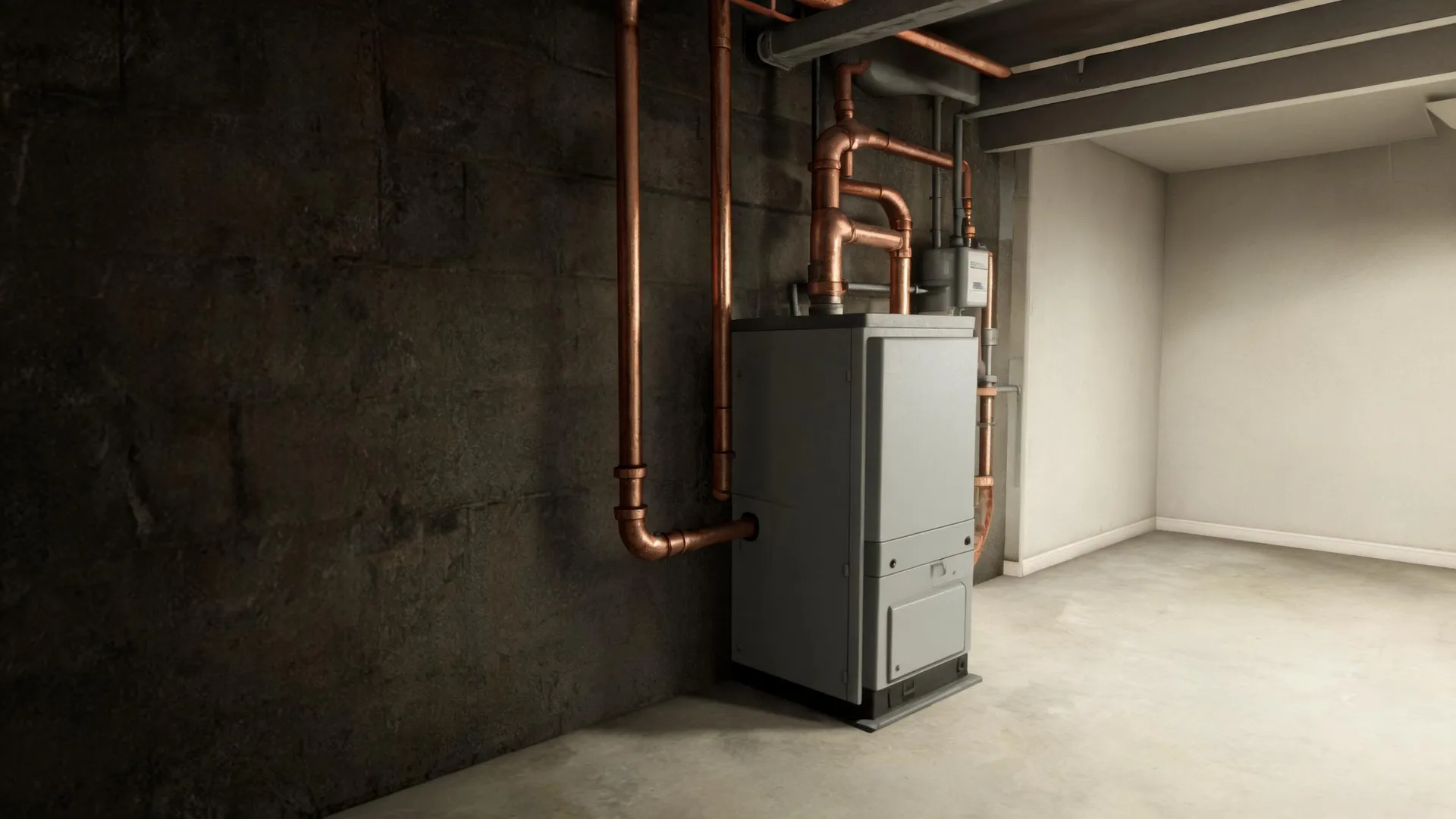
Sizing a boiler correctly for a Sully County home means accounting for a burner and heat exchanger that cycle hard and rarely rest. Homes in Sully County, SD run heat about nine months a year, from September through May. The ignition system fires repeatedly across that stretch, and the heat exchanger expands and contracts with each cycle. A unit that was undersized at installation runs longer per cycle to meet the load, and the stress on those components shows earlier than it would in a shorter season. A contractor quoting a new boiler here has to establish the actual heat loss of the house before settling on capacity, because an undersized replacement repeats the same problem.
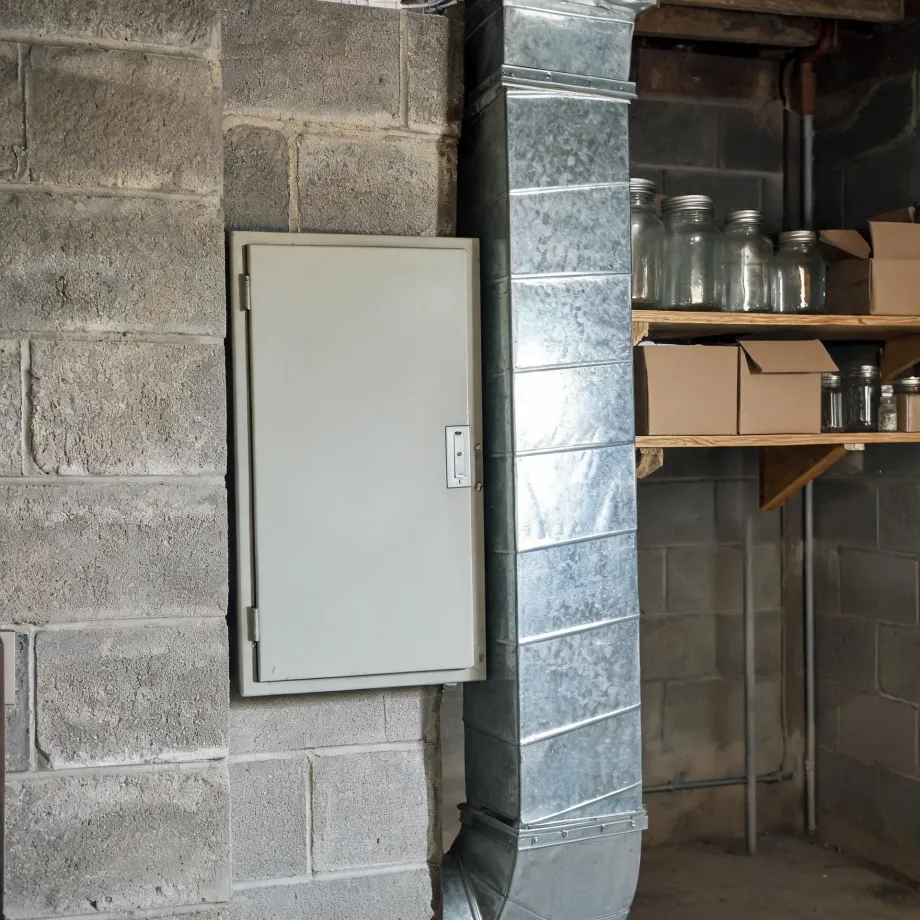
Ductwork sized for an earlier generation of heating equipment is what a contractor runs into here when quoting a boiler installation. Half the homes in Sully County, South Dakota were built in 1979 or earlier (2020-2024 ACS 5-year). That gap between what the house was built to carry and what a new boiler demands is where the real scoping work happens. If the existing ducts are undersized, the contractor has to account for that before the unit is ever chosen, and the electrical service gets the same look.
What Gets Installed With a New Boiler
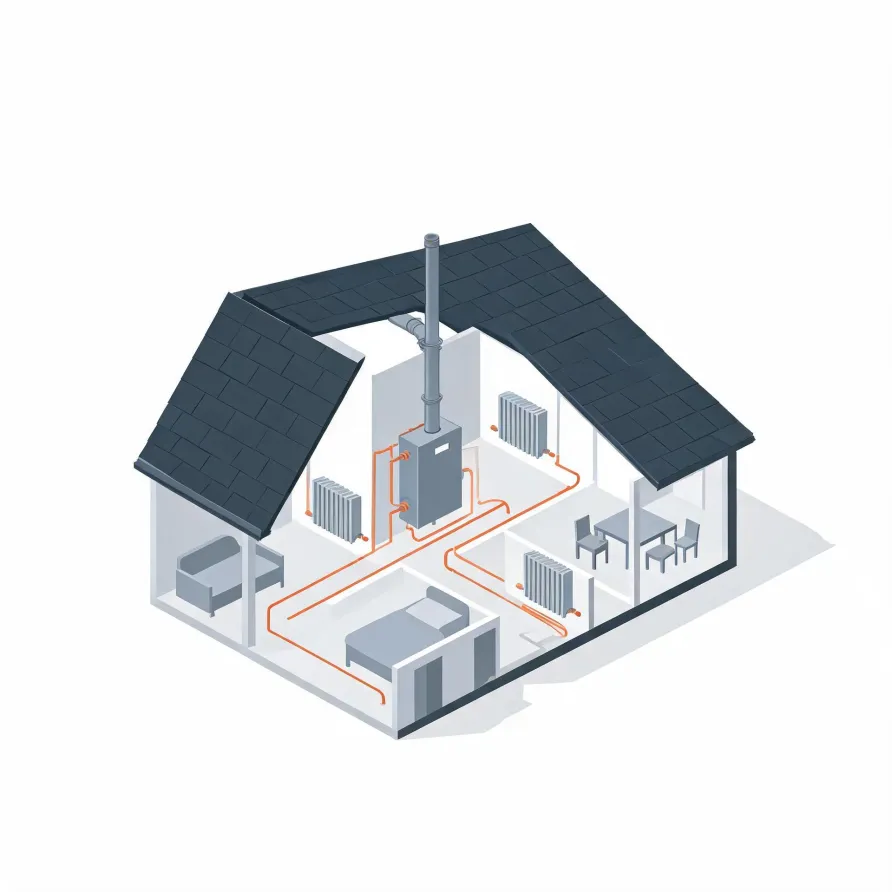
The boiler itself sits in a mechanical room, basement, or utility space and is the central unit a contractor puts in place first. It heats water and sends it out through the distribution system. A pressure relief valve and expansion tank mount close to the boiler and are part of the same installation.
Pipes carry the heated water from the boiler to radiators, baseboard units, or in-floor loops positioned throughout the living spaces, then return cooler water back. A circulator pump, mounted on the return line near the boiler, moves water through that loop. A thermostat goes on an interior wall and ties the whole system together.
The drawing shows a typical boiler system layout, and a licensed contractor determines exactly what applies to your house.
Find a contractor in Sully CountySully County, by the numbers
117 severe weather events were recorded in Sully County, South Dakota between 2015 and 2024.
NOAA National Centers for Environmental Information, Storm Events Database, bulk CSV export, events 2015-01-01 through 2024-12-31.Half the homes in Sully County, South Dakota were built in 1979 or earlier (2020-2024 ACS 5-year).
U.S. Census Bureau, 2020-2024 American Community Survey 5-Year EstimatesSully County, South Dakota holds 934 housing units (2020-2024 ACS 5-year).
U.S. Census Bureau, 2020-2024 American Community Survey 5-Year EstimatesOwners occupy 72.8% of the occupied homes in Sully County, South Dakota (2020-2024 ACS 5-year).
U.S. Census Bureau, 2020-2024 American Community Survey 5-Year EstimatesSevere Weather Events in Sully County
Sully County weather puts real demands on heating equipment, and those demands shape what a boiler installation here needs to handle. The record of severe weather events below shows the conditions local systems are built around.
117 severe weather events, 2015–2024. Source: NOAA National Centers for Environmental Information, Storm Events Database.