Tell us about the job
Takes about a minute. No obligation.
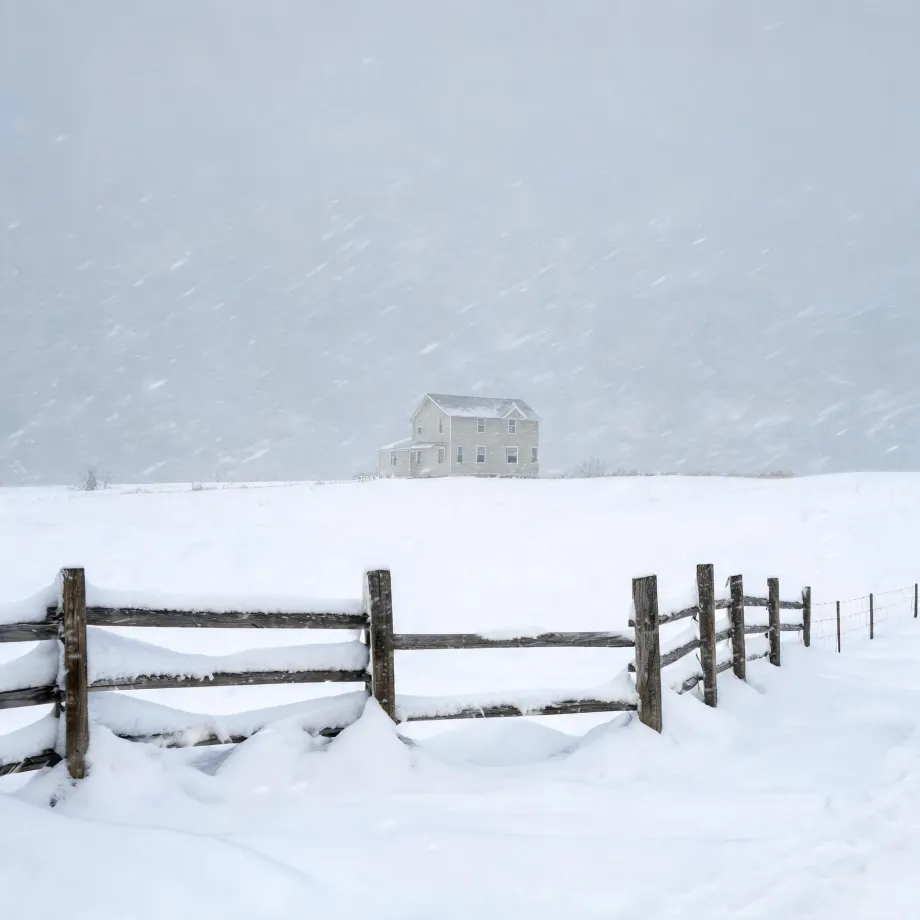
A boiler working a long heating season puts its hardest wear on the burner, the heat exchanger, and the ignition system, because those are the parts that cycle every time the thermostat calls. Homes in Stanley County, SD run heat about eight months a year, from October through May. By late winter, a burner that started the season marginal has run through enough cycles to fail outright. A contractor quoting a repair here checks ignition components and heat exchanger condition before pricing anything else, because those are where the load lands.
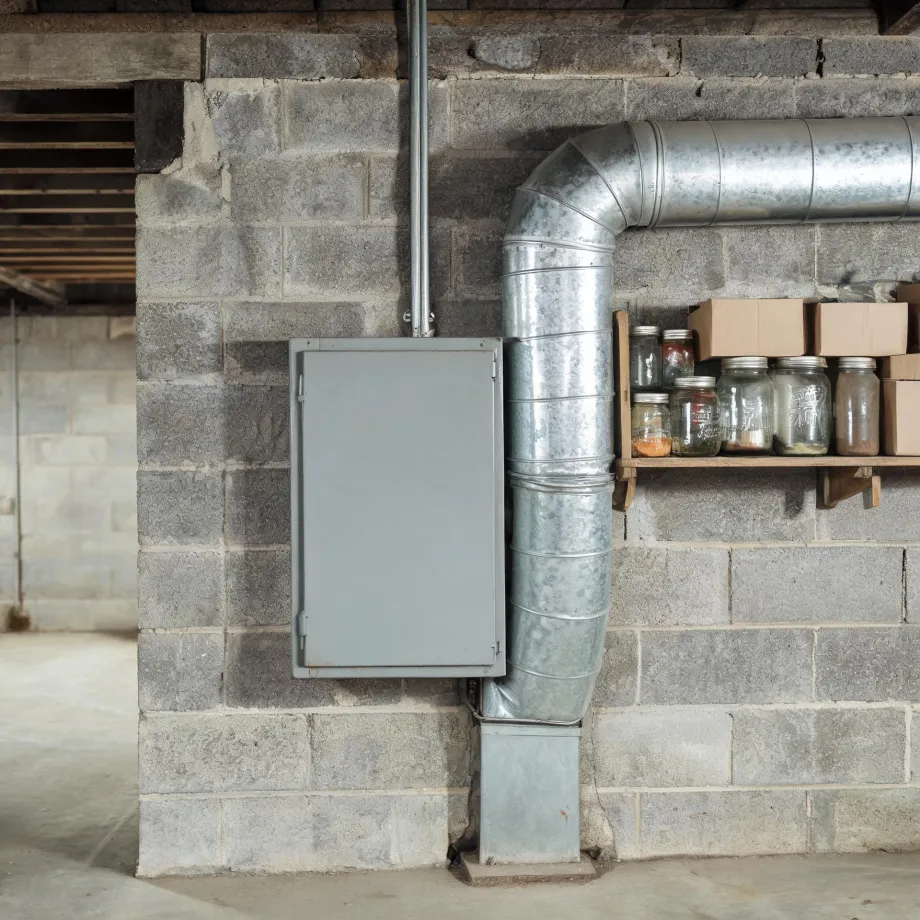
Boiler systems in housing this old frequently carry a repair history that shows up the moment a contractor opens the cabinet: bypassed controls, non-original components, heat exchangers that have been cleaned or sealed rather than swapped. Half the homes in Stanley County, South Dakota were built in 1993 or earlier (2020-2024 ACS 5-year). Stock that age tends to have systems that were maintained in place across multiple repair cycles, which means the part a contractor needs may no longer be in production. Whether a boiler here is repairable or is a candidate for replacement often comes down to what the opened unit physically contains and what a parts search turns up.
The Parts of a Boiler a Contractor Checks First
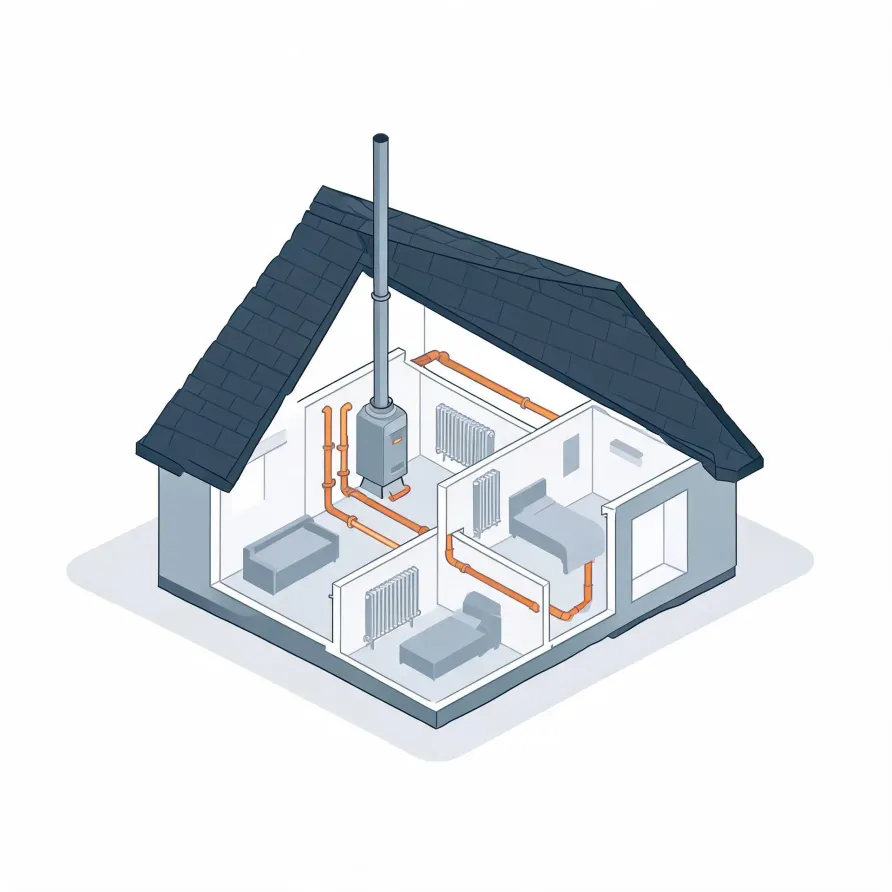
The boiler itself sits in the basement or mechanical room and is the piece a contractor looks at before anything else. It houses the burner and the heat exchanger, and when either of those fails, the system stops producing heat or produces it poorly. The circulator pump, mounted directly on the boiler, is another early suspect when heat delivery is uneven.
From the boiler, supply pipes run through the house to radiators or baseboard units in each room, and return pipes carry cooled water back. The expansion tank, usually hanging near the boiler, keeps pressure stable, and the pressure relief valve sits beside it as a safety check. A contractor reads all of these together.
The drawing shows a general layout of these components, and a licensed contractor determines which parts apply to the specific system and conditions in your home.
Find a contractor in Stanley CountyStanley County, by the numbers
223 severe weather events were recorded in Stanley County, South Dakota between 2015 and 2024.
NOAA National Centers for Environmental Information, Storm Events Database, bulk CSV export, events 2015-01-01 through 2024-12-31.Half the homes in Stanley County, South Dakota were built in 1993 or earlier (2020-2024 ACS 5-year).
U.S. Census Bureau, 2020-2024 American Community Survey 5-Year EstimatesStanley County, South Dakota holds 1,542 housing units (2020-2024 ACS 5-year).
U.S. Census Bureau, 2020-2024 American Community Survey 5-Year EstimatesOwners occupy 83.1% of the occupied homes in Stanley County, South Dakota (2020-2024 ACS 5-year).
U.S. Census Bureau, 2020-2024 American Community Survey 5-Year EstimatesCodes & Standards Governing Boiler and HVAC Repair in Stanley County, South Dakota1 sourced rules and standards
Licensing and Legal Requirements in Stanley County, South Dakota
South Dakota leaves HVAC licensing to the municipality: the state’s trade-regulation chapter lets a municipality license, tax and regulate heating, ventilation and air conditioning contractors by name, so who licenses a contractor depends on the town the work is in.
Severe Weather Events in Stanley County
Boilers in Stanley County work against whatever the climate brings, and weather events put real strain on heating systems over time. How often that strain arrives is a local fact, and it shapes what repair and maintenance look like here.
223 severe weather events, 2015–2024. Source: NOAA National Centers for Environmental Information, Storm Events Database.