





South Dakota Boilers
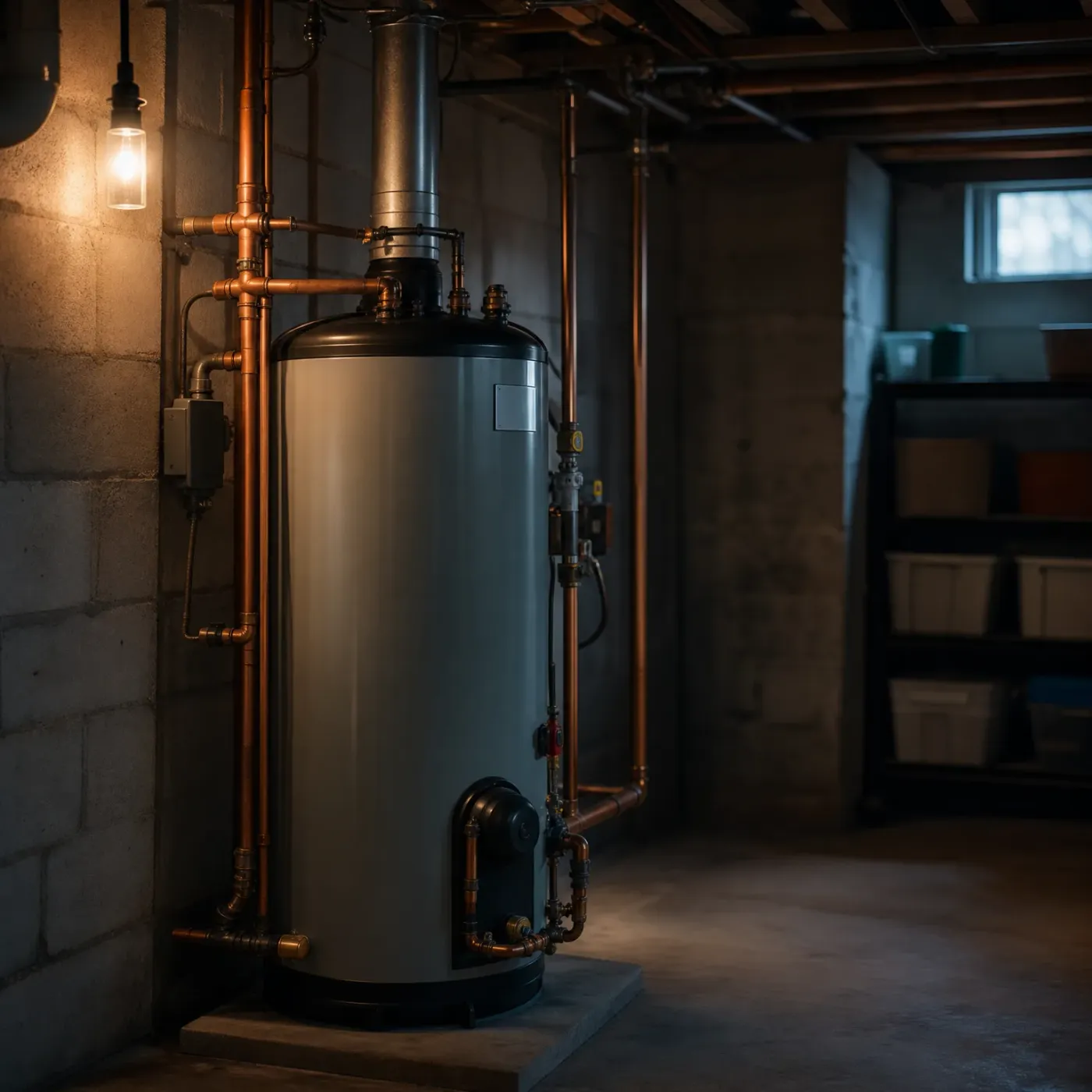
A cylindrical water heater or boiler with a flue pipe and copper piping stands on a concrete pad in a dim basement with concrete block walls, a hanging bulb at left and a shelving unit with bins at right.

No quotes to chase

How long a boiler lasts in South Dakota

A boiler that's on its way out doesn't always announce itself, and once it does, most people start calling around for quotes, explaining the same problem over and over. This page covers how long a boiler typically holds up in South Dakota and what shortens or stretches that. When you're ready to replace one, a local contractor who installs these regularly can take it from there.

Start one form

A boiler in South Dakota typically lasts 15 to 20 years. Boilers tend to run longer than furnaces because the heat exchanger deals with hot water instead of combustion gases moving through metal, so there's less to corrode and crack over time. What wears a boiler down here is how hard it works. Winters are long and demand steady heat for months, and most homes run on gas, so the burner and heat exchanger are cycling on and off for a good stretch of the year. A boiler that's kept up with annual service, clean burners, good water chemistry, checked pressure, will tend to land at the higher end of that range. One that's been ignored, or that's been short-cycling because it's oversized for the house, will wear out sooner. If yours is past 15 years, it's worth knowing what to watch for before it fails on a cold night instead of on your schedule.

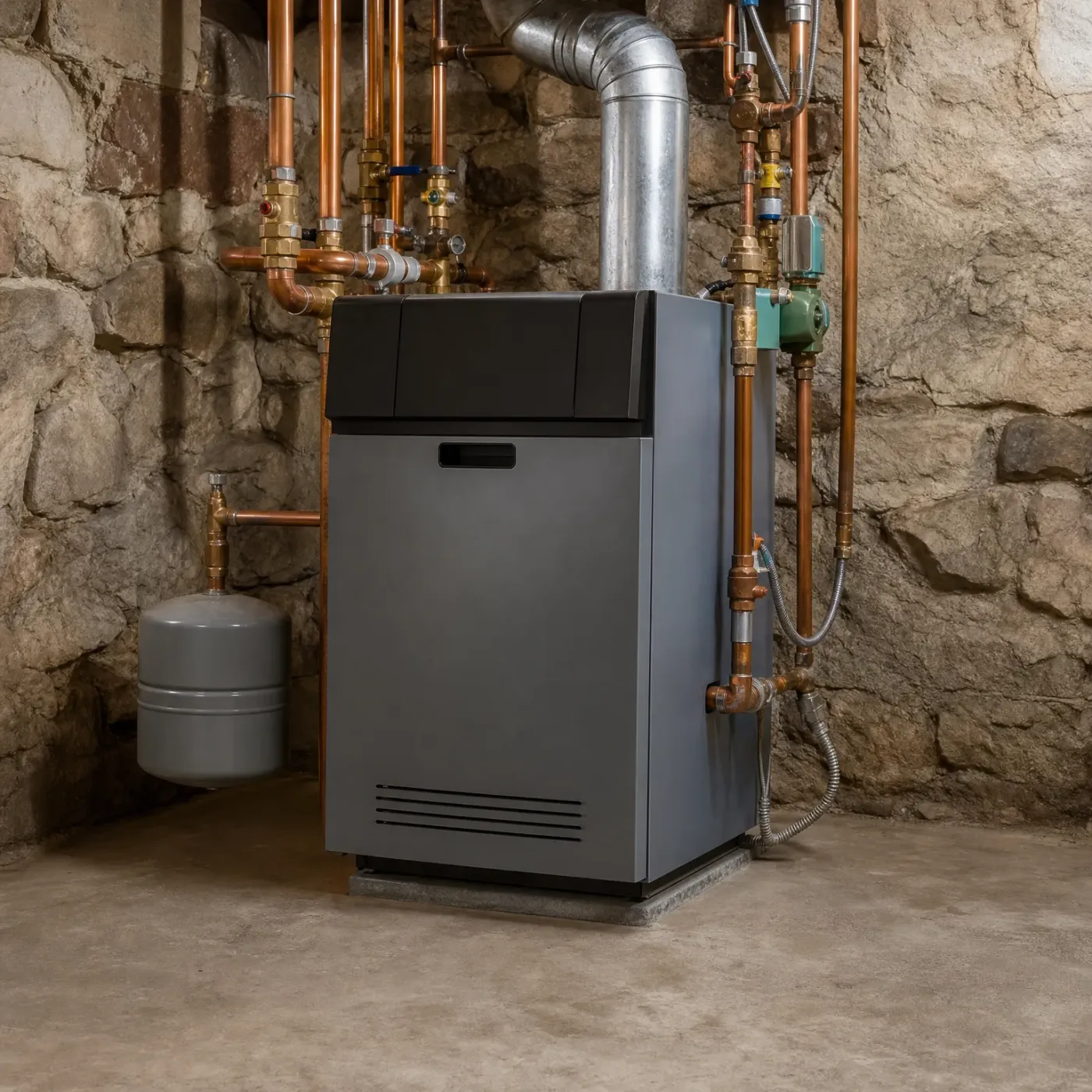
A gray residential boiler on a concrete pad in a basement with stone walls, connected to copper piping, brass valves, a circulator pump, an expansion tank, and a metal flue duct.
A boiler like this is still heating water efficiently, with clean connections and no rust or leaks at the joints.
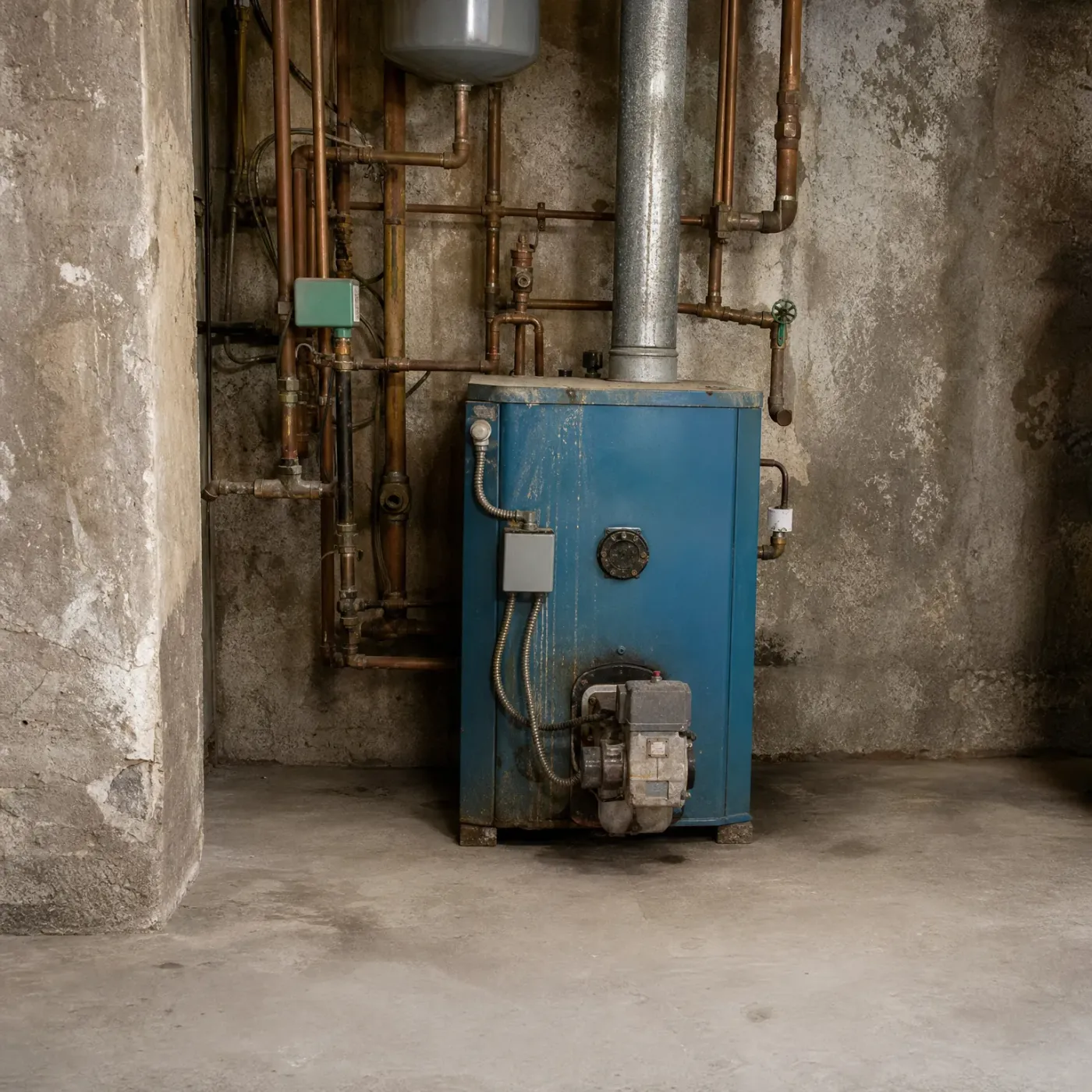
A blue cabinet boiler with a metal flue pipe and copper piping stands against a bare concrete wall in a basement with a concrete floor.
A boiler this old, with a bare flue pipe and scaled fittings, is a likely candidate for replacement rather than another repair.

A boiler doesn't burn fuel against metal the way a furnace does. It heats a closed loop of water and sends that same water around to the radiators or baseboard lines, so the parts that fail are the ones that move and seal that water, not the ones exposed to combustion gases. The heat exchanger is usually the first to go, worn down by mineral deposits that build up inside it over years and block heat from transferring the way it should. Sediment collecting at the bottom of the tank does something similar, holding the burner's heat away from the water so the boiler has to run longer just to hit the same temperature. Pressure matters too. If the pressure drops or the expansion tank stops doing its job, the pump and the heat exchanger both end up working harder than they should. And if the circulator pump itself wears out, you can end up with a boiler that's running fine but a house that stays cold, because the hot water never reaches the radiators. A yearly check of the pressure relief valve and a flush of the loop catches most of this before it turns into a cracked heat exchanger.

How a Boiler Actually Wears Out

  • A boiler heats water in a sealed loop, so the same water cycles through the system instead of burning fresh fuel-air mix against metal like a furnace does.
  • The heat exchanger is the part that fails most boilers, since mineral deposits inside it build up over years and reduce how well it transfers heat.
  • Low water pressure or a bad expansion tank forces the boiler to work harder and shortens the life of the pump and the heat exchanger together.
  • A circulator pump moves the hot water to the radiators or baseboard lines, and when it wears out the boiler runs but the house stays cold.
  • Sediment settling at the bottom of the tank insulates the water from the burner's heat, making the boiler run longer to reach the same temperature.
  • Yearly service that checks the pressure relief valve and flushes the loop catches the kind of wear that otherwise ends in a cracked heat exchanger.
A gray-haired man in a dark sweater sits on a light gray sofa in a living room, looking toward a sunlit window with trees outside.
A gray-haired man in a dark blue sweater sits on a light gray sofa in a sunlit living room, looking off to the side, with a potted plant, shelving unit, and large glass doors behind him.
A bearded man with graying hair in a dark green sweater sits on a sofa in a living room, looking off to the side, with a sliding glass door and a dim kitchen doorway behind him.
A gray-haired man in a dark knit sweater sits on a light gray sofa in a living room, looking toward a sunlit window, with houseplants, a lamp, and framed art in the background.

Why winters matter more than summers

South Dakota winters put more hours on a boiler than almost anything else in the house. A boiler that runs from October through April is cycling on and off for roughly seven months straight, and most of its wear happens during that stretch, not during the warm months when it sits idle. A furnace forced to run that many hours would see its heat exchanger take the brunt of it, cracking under repeated heating and cooling. A boiler's heat exchanger handles hot water instead, so it ages slower under the same workload. That's a big part of why boilers here tend to outlast furnaces by several years even when both are heating the same square footage.

What a yearly checkup actually catches

Most boilers that fail early do so because something small went unnoticed for a year or two, not because the unit was defective. A yearly checkup lets a technician check the pressure relief valve, look at the expansion tank, and flush sediment out of the bottom of the tank before it builds up around the heat exchanger. Low water pressure forces the boiler to work harder to move water through the loop, and a bad expansion tank lets pressure swing more than it should, straining joints over time. None of this shows up as a problem you'd notice day to day. It shows up five years later as a boiler that needed replacing sooner than it should have.

A middle-aged woman with shoulder-length dark hair, wearing a gray cardigan over a cream top, sits in an upholstered armchair and looks toward a sunlit window, with a shelf holding framed pictures and a plant behind her.
A woman with her hair in a bun holds a sleeping young child against her chest, both wrapped in a textured beige knit blanket on a sofa in a dimly lit room with a lamp, framed picture, and bookshelf behind them.

Skip the calls to every shop

By the time a boiler starts showing its age, usually you're not just dealing with the heat going out. You're dealing with finding someone who'll actually come look at a boiler, since plenty of contractors work mostly on furnaces and don't touch hot water heat as often. Then there's the back and forth: describing the rust at the fittings or the short cycling to three or four different companies, waiting on quotes, trying to compare bids that aren't quite for the same work. Filling out this request sends your situation to one local contractor who works on boilers through a South Dakota winter every year and knows what a system at 18 years with scaled fittings usually needs versus one that still has a few seasons left. You get one call, from someone who already knows what you're describing, instead of sorting through several.

A boiler pushing past 20 years in South Dakota is more likely to let go in January than in June, and a cracked heat exchanger in the middle of winter means no heat until it's replaced.

Catching it before that point means you pick the week it gets swapped out, not the contractor who happens to have an opening during a cold snap.

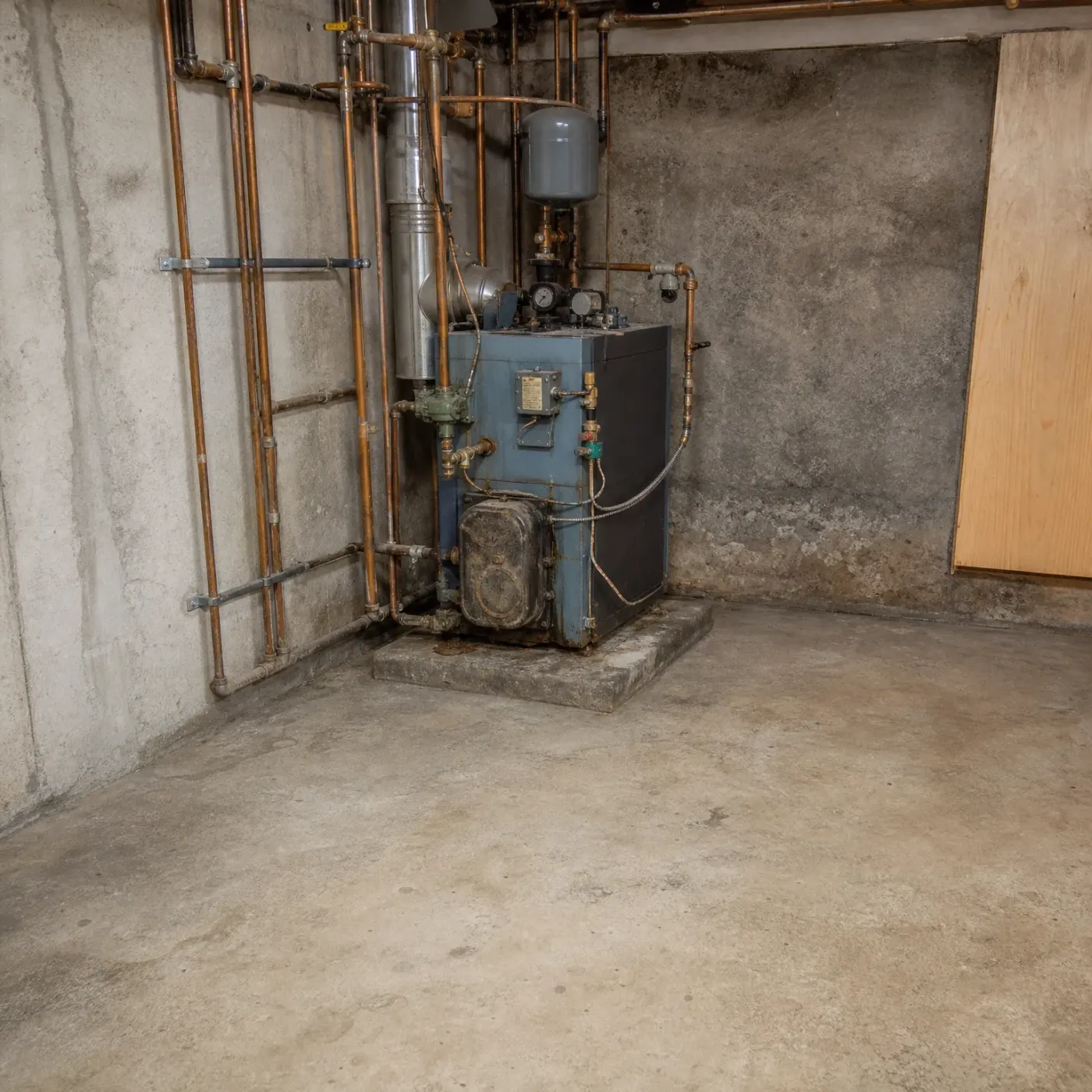
A blue boiler on a raised concrete pad in a basement corner, with copper and steel pipes, a gauge cluster, an expansion tank, and a metal flue running up the bare concrete walls.
Before you get your boiler installation
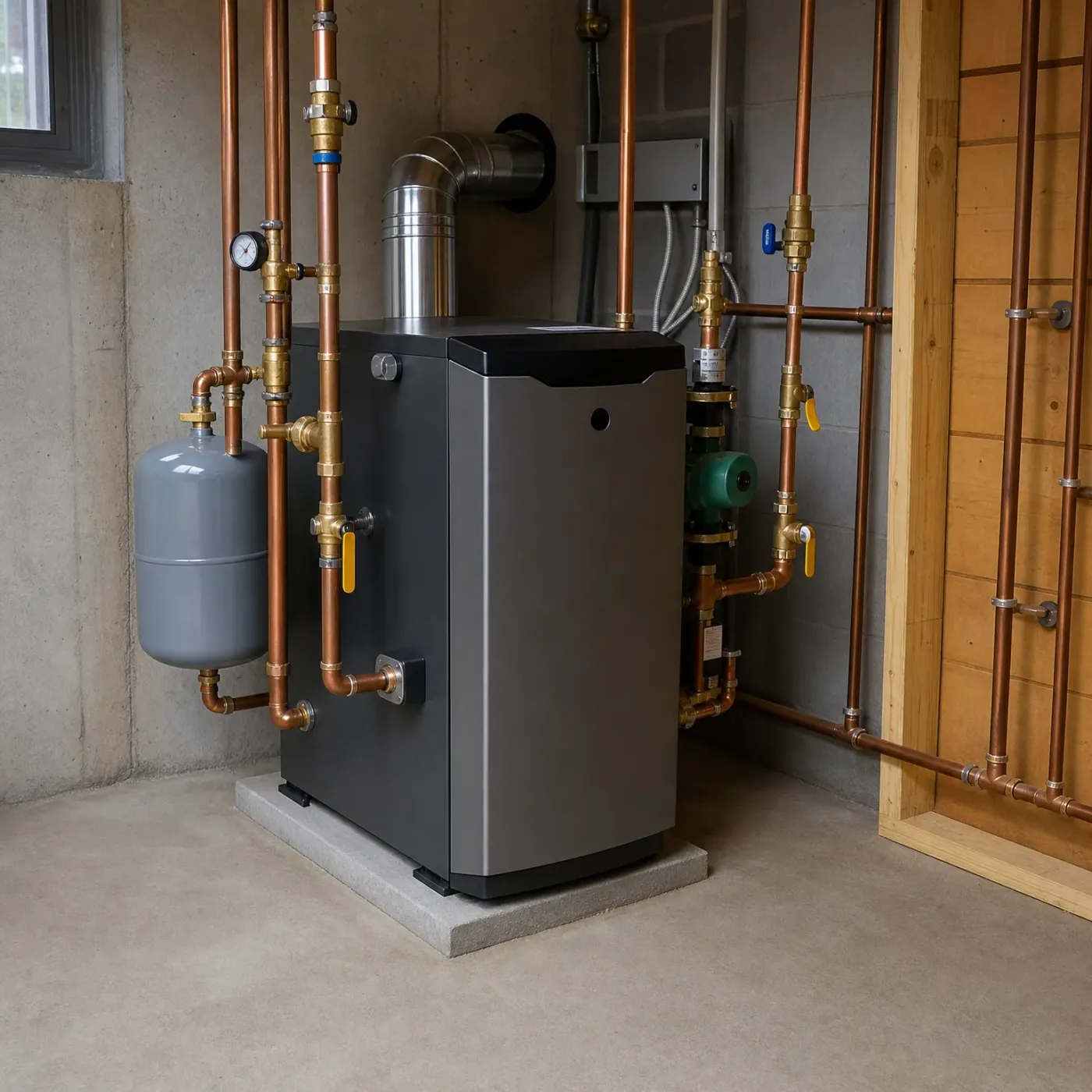
A dark gray floor-standing boiler on a concrete pad in a basement, surrounded by copper piping, brass valves, a gray expansion tank, a circulator pump, and a metal flue pipe against concrete block walls.
After you get your boiler installation
A gray boiler unit on a concrete pad in a basement corner, connected to copper piping, circulator pumps, and a ceiling-mounted expansion tank against bare concrete walls.

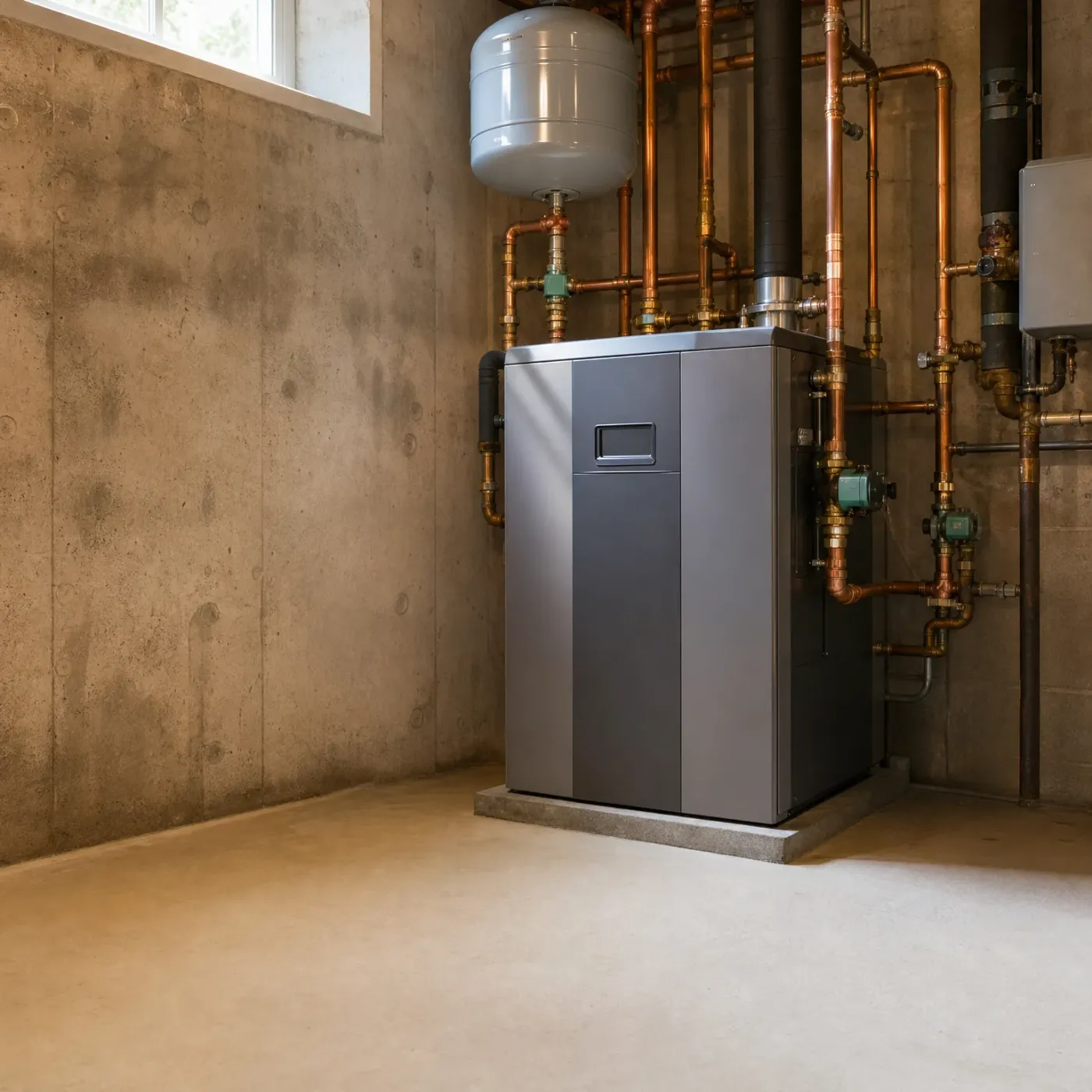
Running clean

This is a boiler that's doing its job without strain. The copper pipes and fittings behind it are tight and dry, the pump isn't weeping, and the expansion vessel is holding pressure the way it should. Nothing here is asking for attention yet.
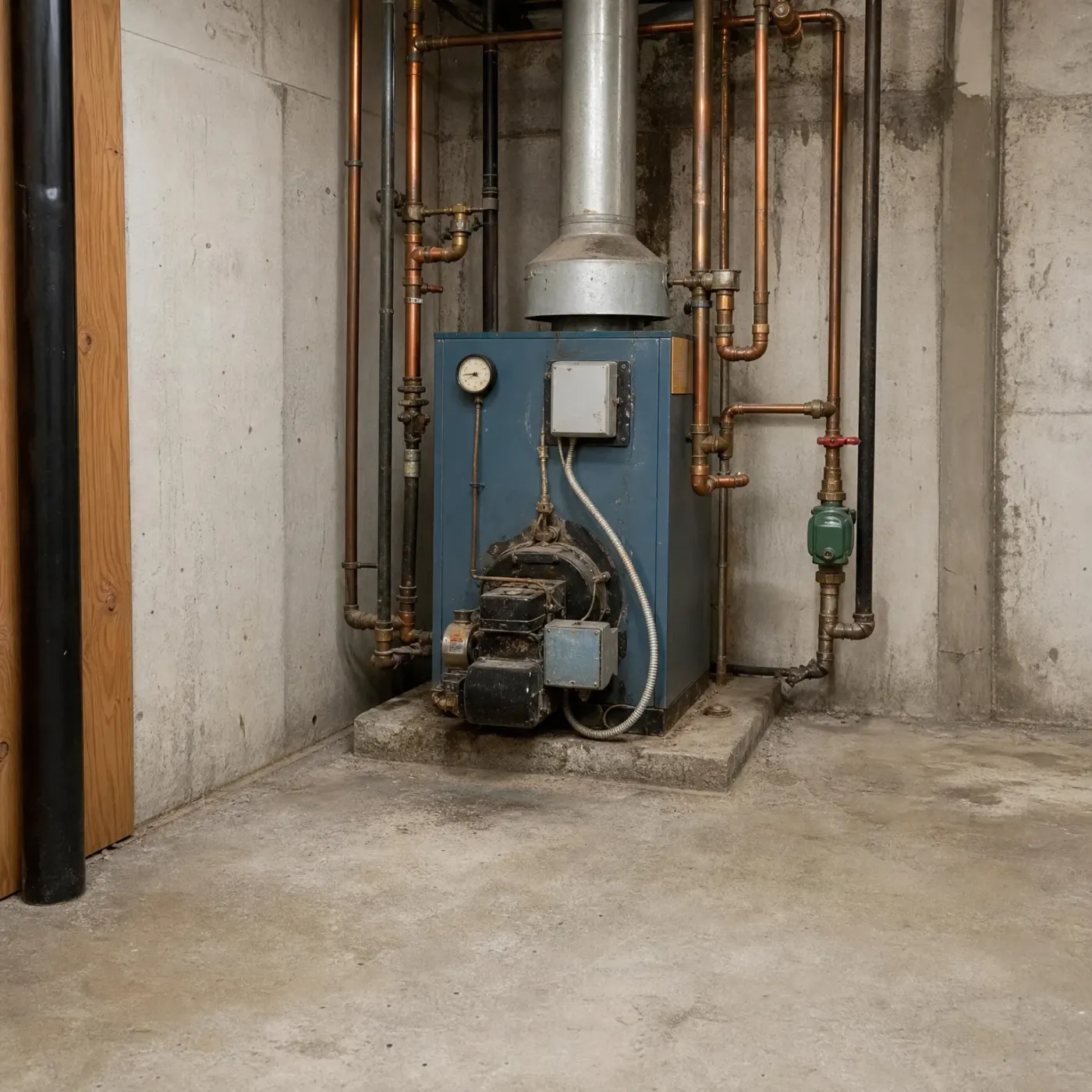
A blue oil-fired boiler with a pressure gauge, burner unit and metal flue sits on a concrete pad in a basement corner, surrounded by copper and black pipes against bare concrete walls.

Running on borrowed time

The flue duct and scaled fittings on a boiler like this tell you it's logged a lot of winters already. The pressure gauge is worth watching, and a burner assembly this old is closer to its last repair than its first one. This is the point where a licensed local contractor who works on boilers every season, not just furnaces, should be the one deciding whether it's fixed again or replaced.

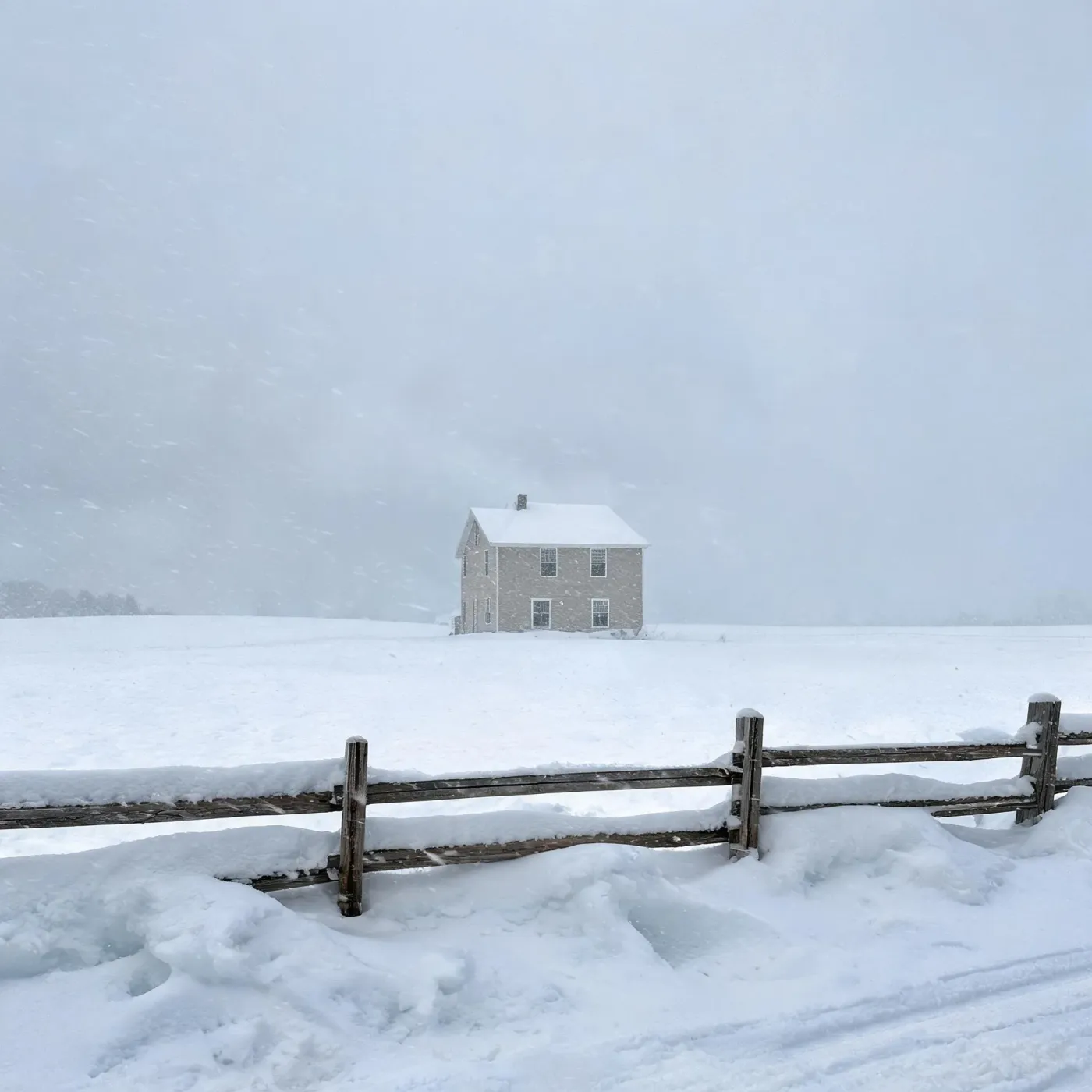
Winter nights average 11°F statewide

Those 11°F nights mean your boiler is holding a high water temperature for hours at a stretch, not just cycling on and off. A heat exchanger built to handle that keeps working; one already weak from age or deposits is the part that gives out on the coldest nights, not the mild ones.

NOAA nClimDiv 1991-2020 county normals weighted by homes

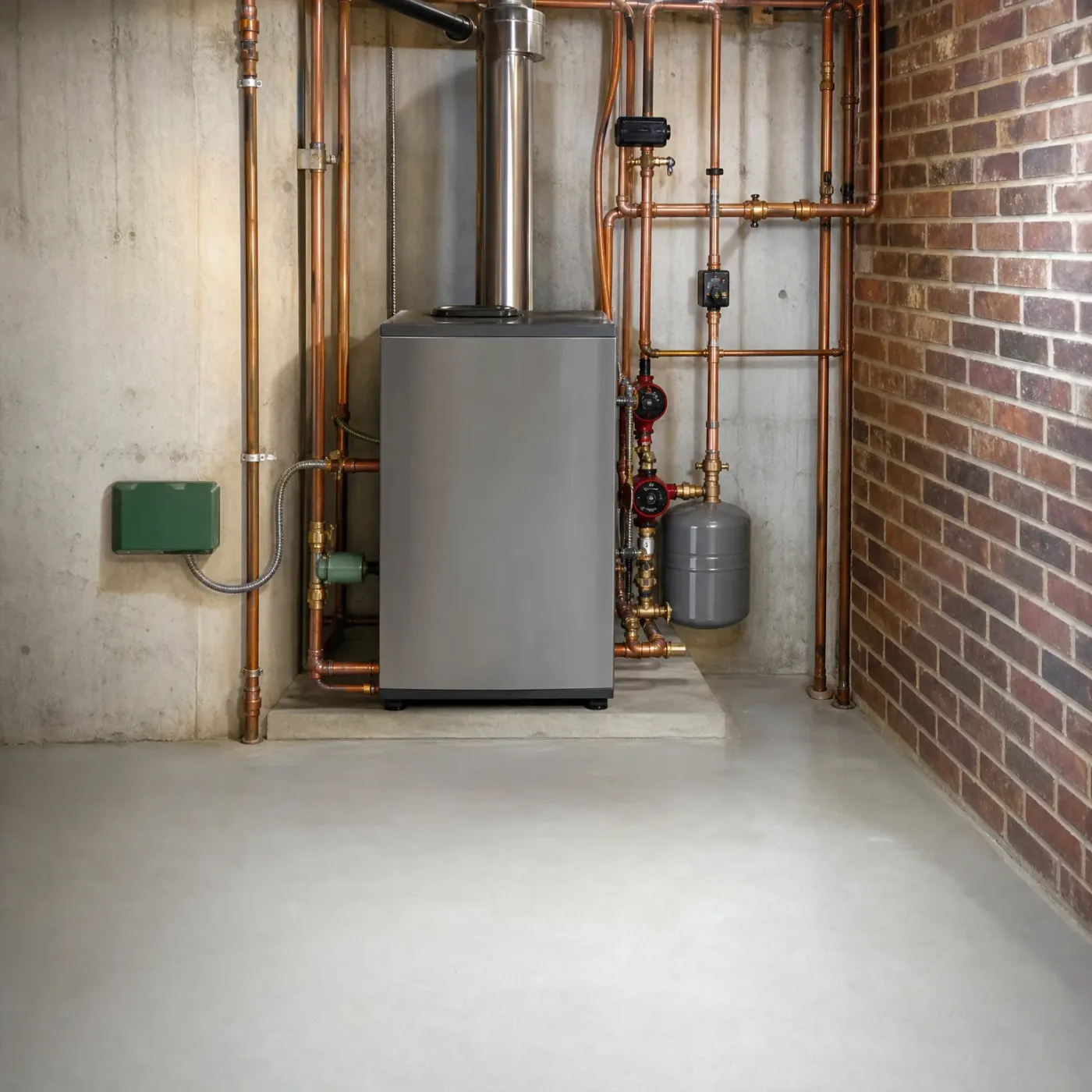
A gray boiler on a concrete pad in a basement, connected to copper piping, valves, pumps and a gray expansion tank, with a concrete wall on the left and a brick wall on the right.

A well-kept mechanical room

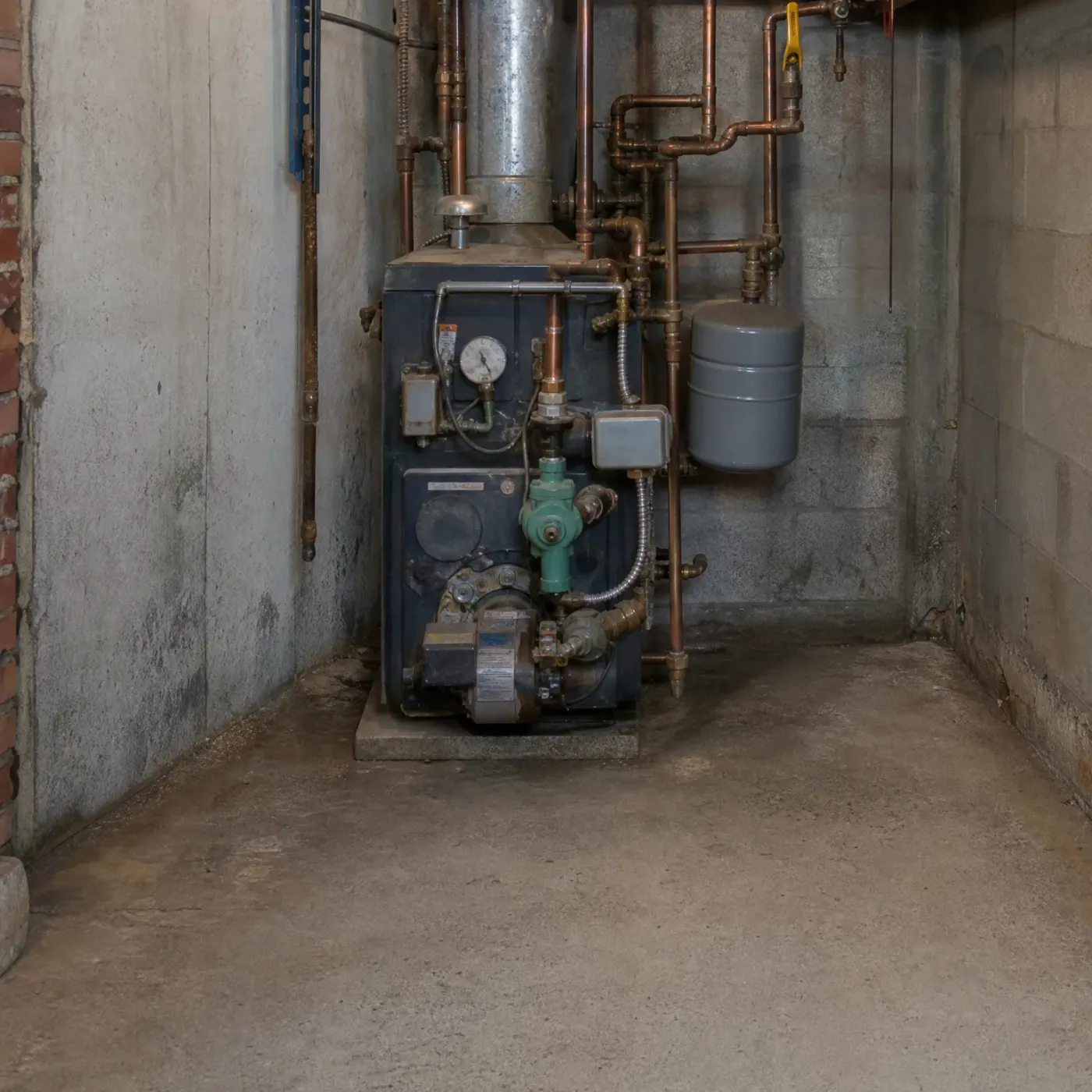
This basement setup is organized and dry. The copper piping is clean, the brass fittings aren't weeping, and the expansion tank is holding its charge. A boiler kept in a room like this, with nothing corroding around it, is the kind that reaches 20 years without a fight.

A dark cast-iron boiler with copper piping, pressure gauge, and a gray expansion tank sits on a concrete pad in a basement corner with concrete block and brick walls.

An aging oil-fired unit

This boiler sits crowded into a narrow alcove, piping scaled and the pressure gauge worn. Oil-fired units like this see more buildup inside the heat exchanger over the years than gas ones do. Once the fittings start showing it on the outside, the inside is usually further along.

Is your boiler telling you it's near the end?

You might notice the boiler taking longer to bring rooms up to temperature, or the burner cycling on and off more than it used to. Some homeowners hear a rumbling or kettling sound from the heat exchanger as mineral deposits build up inside it. Others see water pooling near the base, or rust forming where the pipes meet the unit. The pilot light or igniter might struggle to stay lit. None of this means the boiler quits that day, but a weeping fitting or a corroding exchanger left alone tends to fail on its own schedule, usually a cold one, and a boiler that fails outright in January means no heat in the house until someone replaces it.

A two-story house with a snow-covered roof and chimney stands alone in a white field during falling snow, with a wooden post-and-rail fence in the foreground.

Statewide, winter nights average 11°F, according to NOAA climate data. That's cold enough that your boiler is running long stretches at high water temperature instead of short bursts, and it stays that way for months, not days. The strain lands hardest on the heat exchanger, since that's the part holding the heat. If yours is already carrying some scale or age, a stretch of nights like that is when it tends to show, usually as a pressure drop, a leak at a fitting, or heat that takes longer to reach the rooms farthest from the boiler.

NOAA nClimDiv 1991-2020 county normals weighted by homes

A wooden table in the foreground holds a closed laptop and a ceramic mug of coffee, with a spindle-back wooden chair behind it, a beige wall with paneled wainscoting, a window at left, and a kitchen counter with a cutting board, bowl of fruit and greenery at right.

15 to 20 years, less if the heat exchanger's been fighting deposits

A boiler in South Dakota holds up for 15 to 20 years when the water stays clean and the pressure stays where it should. What cuts that short is almost always the heat exchanger, worn down by scale or by a winter that never let it rest. Past 20 years, the question isn't if it fails, it's whether it fails on a mild day or during a January cold snap.

Once you know where your boiler stands, the next step is getting someone out to look at it who actually works on hot water heat, not just furnaces. That search usually means calling a few places, describing the kettling sound or the rumbling to each one, then sitting with quotes that don't line up because no two contractors looked at the same thing. A local contractor who services boilers every winter already knows what tends to go first in a system your age, and you're dealing with one answer instead of five different ones to sort through.

A wooden table holding a stone vase with a bare branch, two stacked books and a small dark bowl, beside a window with green foliage outside and a sofa in the dim background.
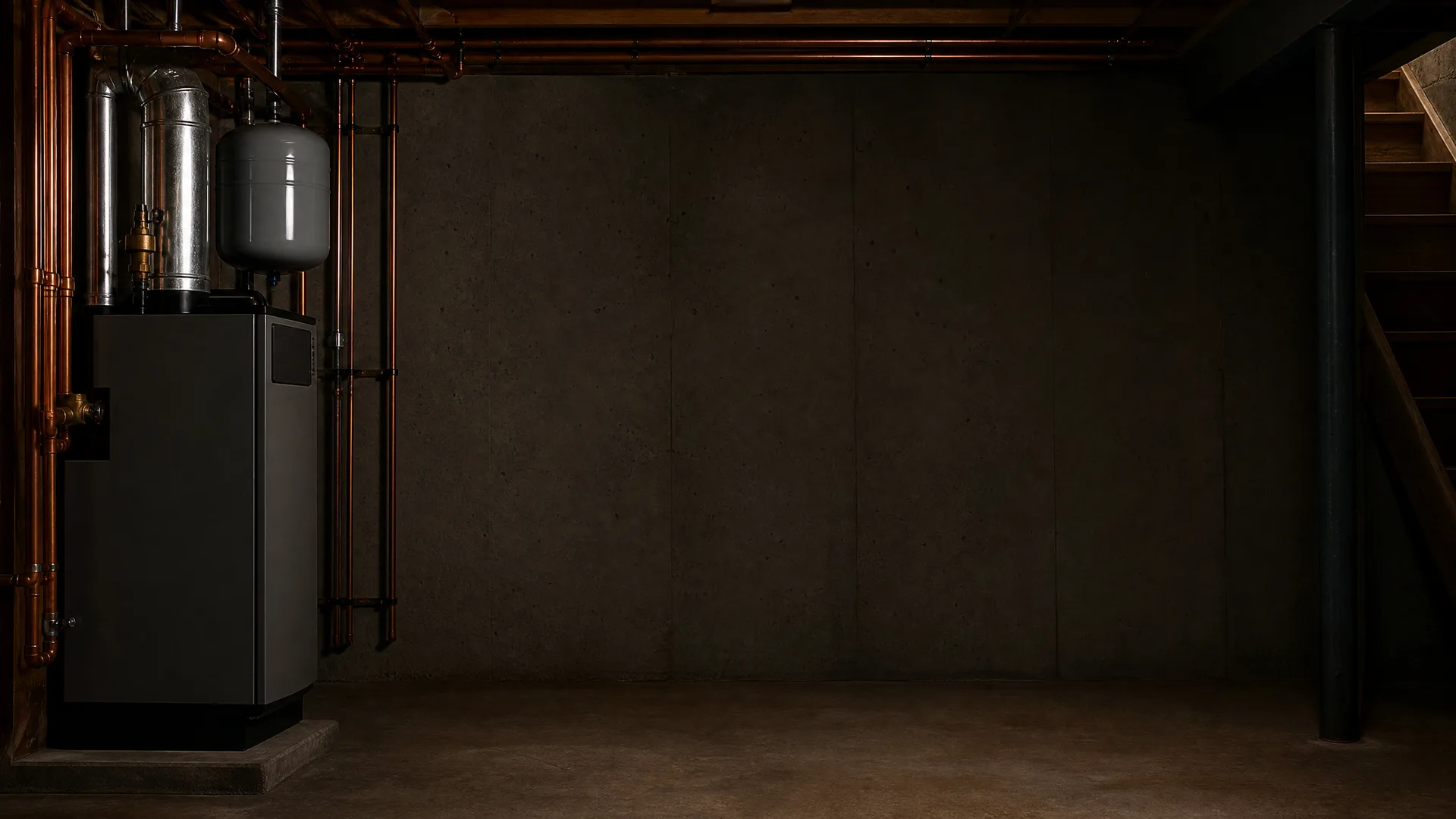
A dark basement with a gray boiler unit, expansion tank, and copper pipes along a concrete wall, with a steel support post and wooden stairs at right.

Skip calling around

The pro who reaches out is licensed in South Dakota.

Step 1 of 3: Equipment