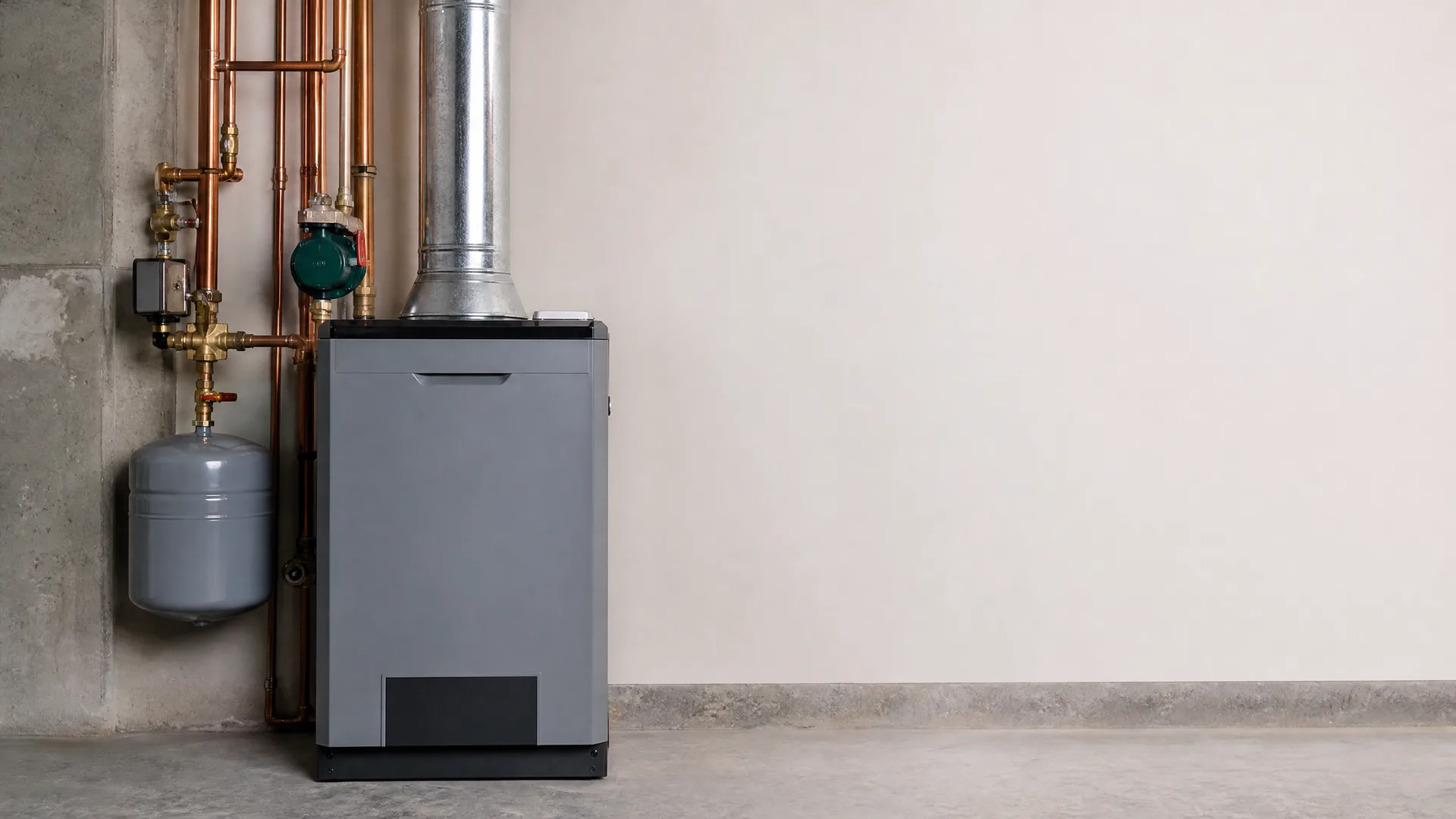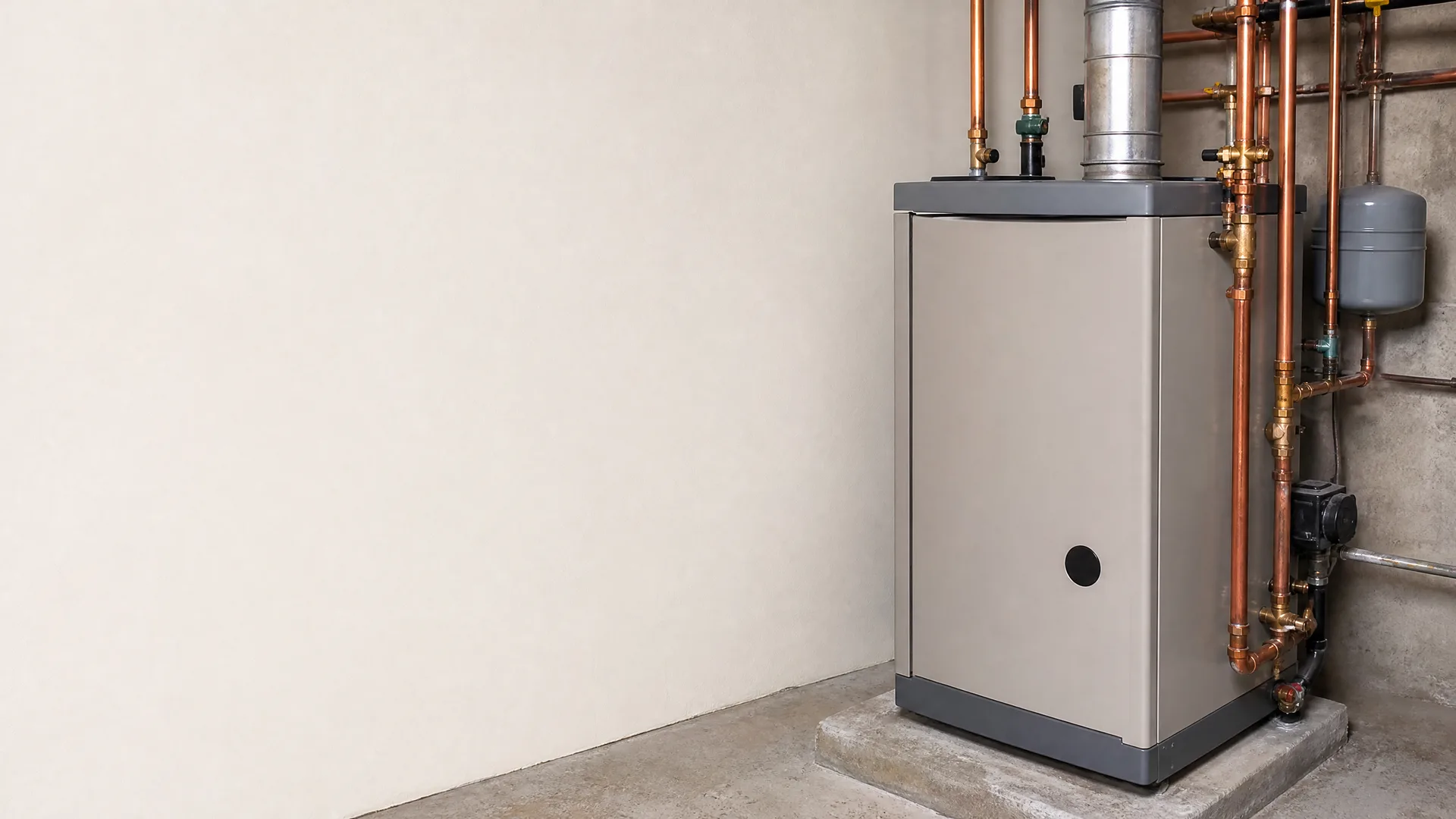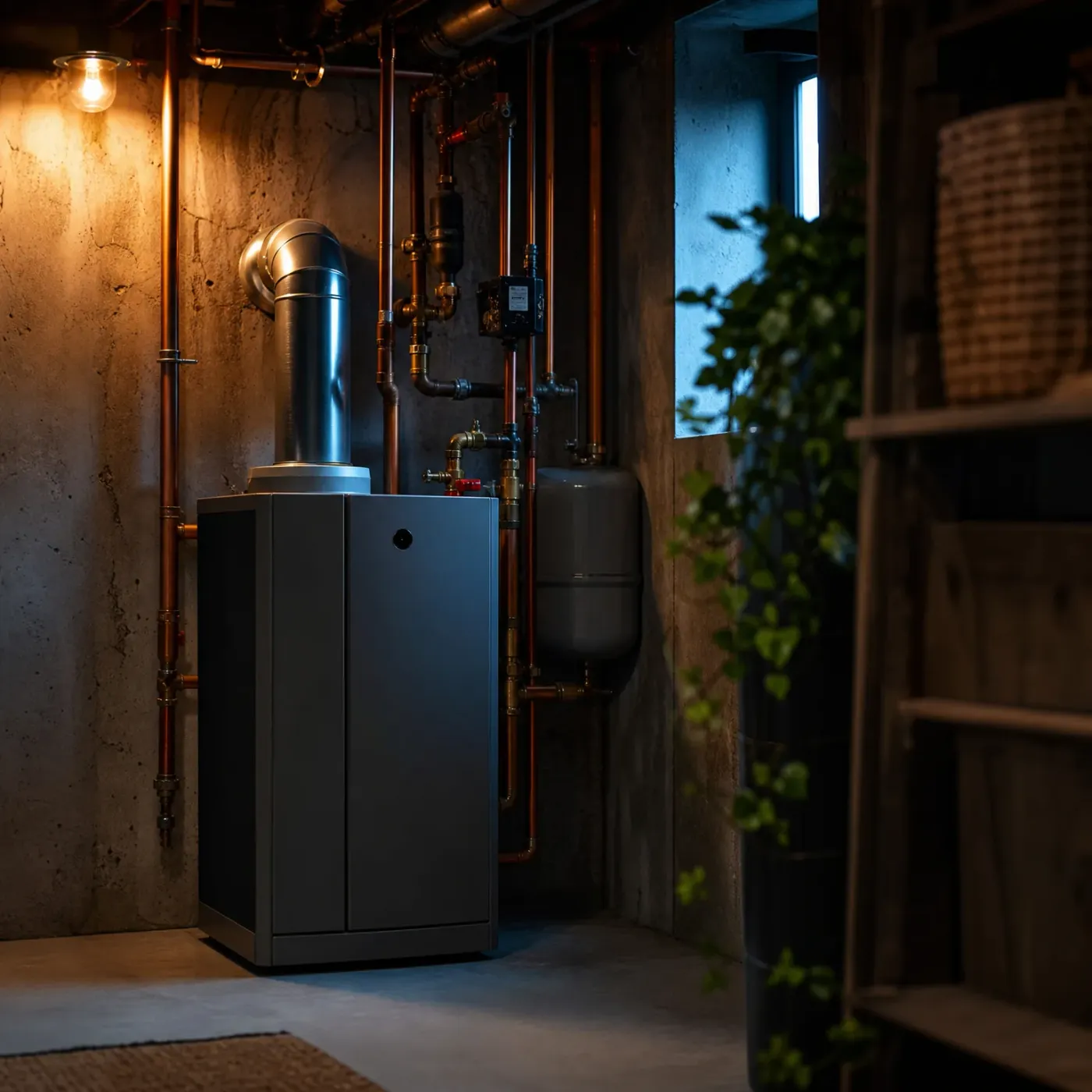




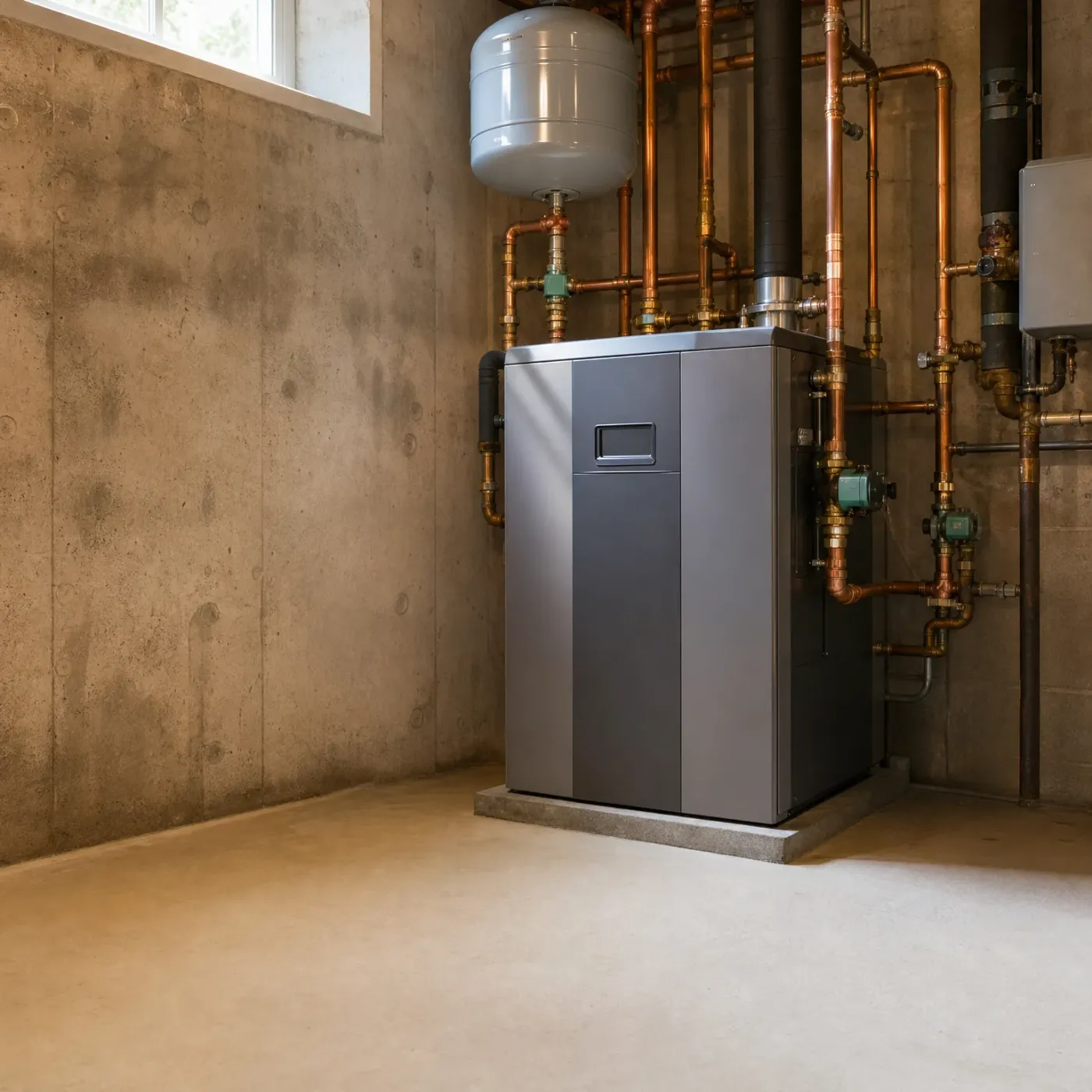
A dark grey floor-standing boiler with a metal flue stands against a concrete basement wall, surrounded by copper pipework, valves and a wall-mounted expansion tank, with ivy and a shelving unit at right.

Skip calling around

Is a high-efficiency boiler worth it in South Dakota

Gas heat runs most of the winter here, and a high-efficiency boiler costs more up front than a standard one. This page looks at whether that extra cost pays off with South Dakota winters and cheap power factored in, so you can weigh it before you commit to anything. Skip calling a few installers to ask the same question each time. One local contractor who installs and services these boilers every winter can walk you through it for your house.

Skip the calls

A high-efficiency boiler is worth it in South Dakota if you plan to stay in the house long enough for the lower gas bills to make up the extra cost of installing one. Winters here run long, often from October into April, and your boiler is working most of that stretch, so the efficiency gap between a standard model and a high-efficiency one shows up on real bills, not just on paper. A standard boiler vents a lot of heat straight out the flue. A high-efficiency, condensing boiler pulls more of that heat back out of the exhaust before it leaves, which matters most when the burner is running for months at a time. Power here is cheap, so switching to electric heat isn't the comparison. The real question is how long you'll own the house and how many winters you'll get to collect on the difference. If the answer is several years or more, the higher-efficiency unit tends to pay for itself through the gas it doesn't burn.

A man with grey hair and stubble in a dark sweater sits on a grey sofa indoors, looking off to the side, with a potted plant and a sunlit window behind him.
A man with gray hair, a beard and glasses, wearing a dark green sweater, sits on a gray sofa in a sunlit living room with a potted plant, table lamp and wooden sideboard behind him.
A middle-aged man with graying hair and a short beard sits on a blue sofa in a living room, looking toward a window, with a bookshelf, lamp and framed picture in the background.
A man with graying curly hair and a dark green sweater sits on a gray sofa in a sunlit living room, looking off to the side, with a framed picture, shelving, an armchair and a window with sheer curtains behind him.
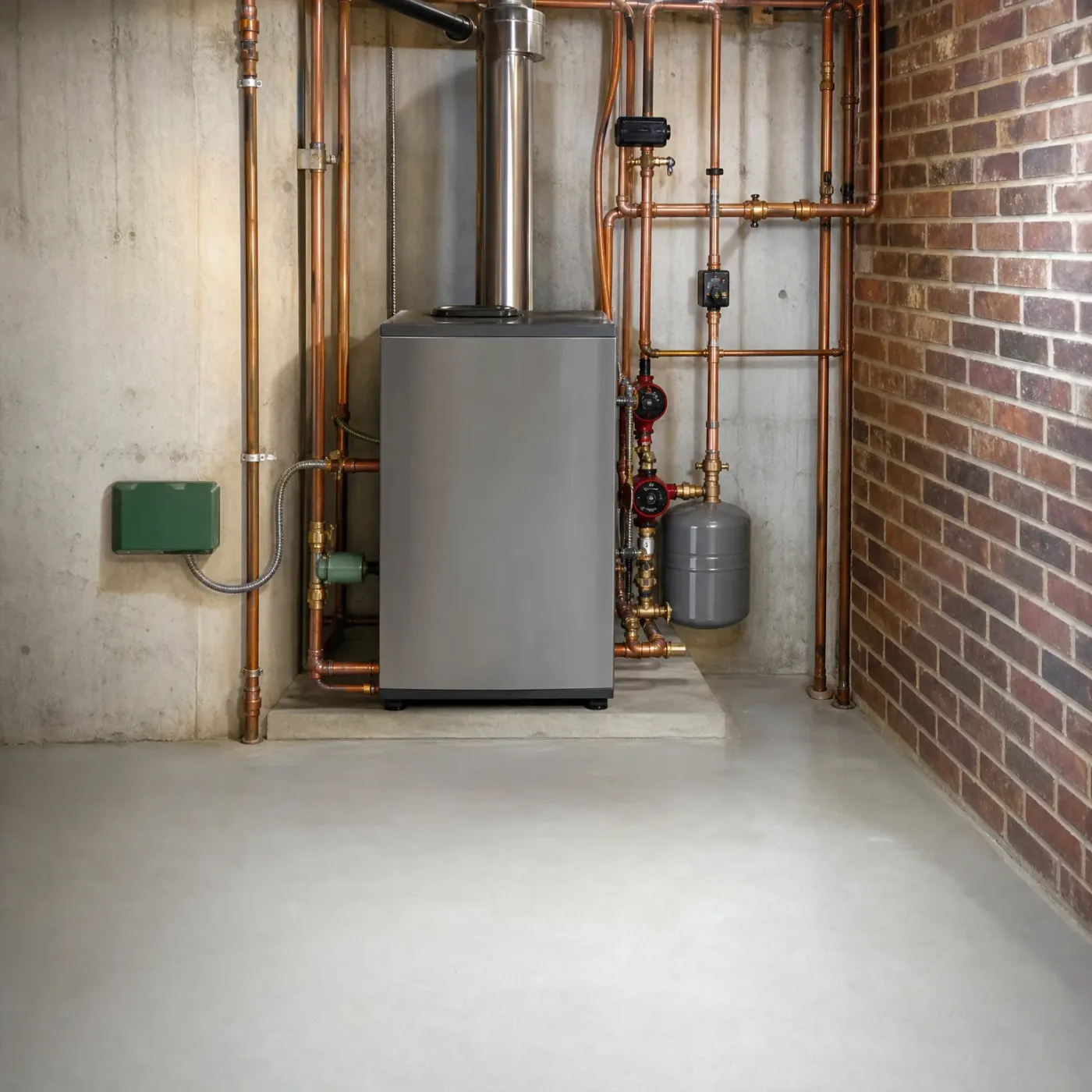
A gray boiler unit on a concrete pad in a basement corner, connected to copper piping, circulator pumps, and a ceiling-mounted expansion tank against bare concrete walls.

A boiler running the way it should

A high-efficiency boiler condenses exhaust gas instead of sending that heat up the flue. You'll see it vented with plastic pipe, not a metal flue, and the pressure gauge holding steady through a cold snap in January. It's doing its job quietly in the background all winter.
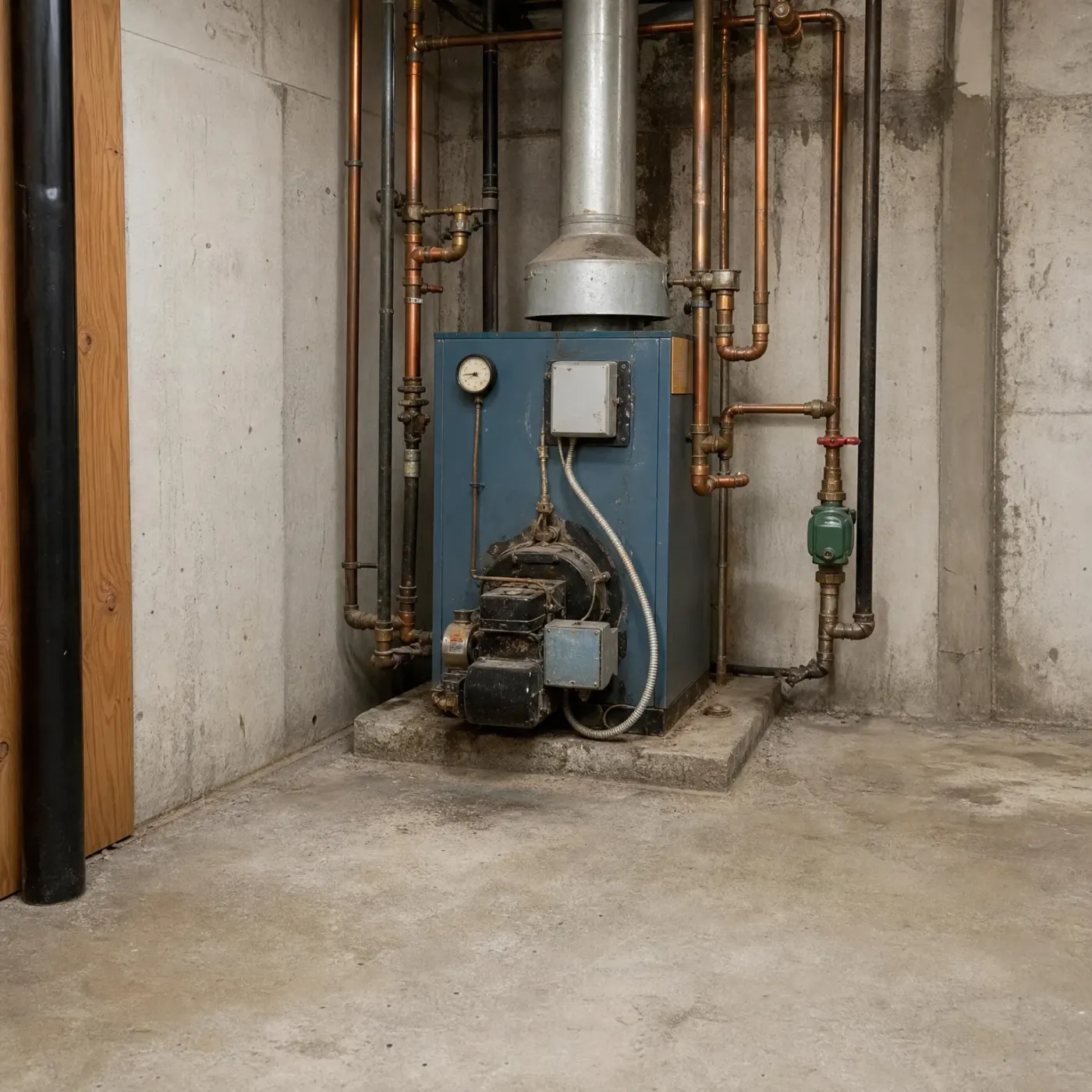

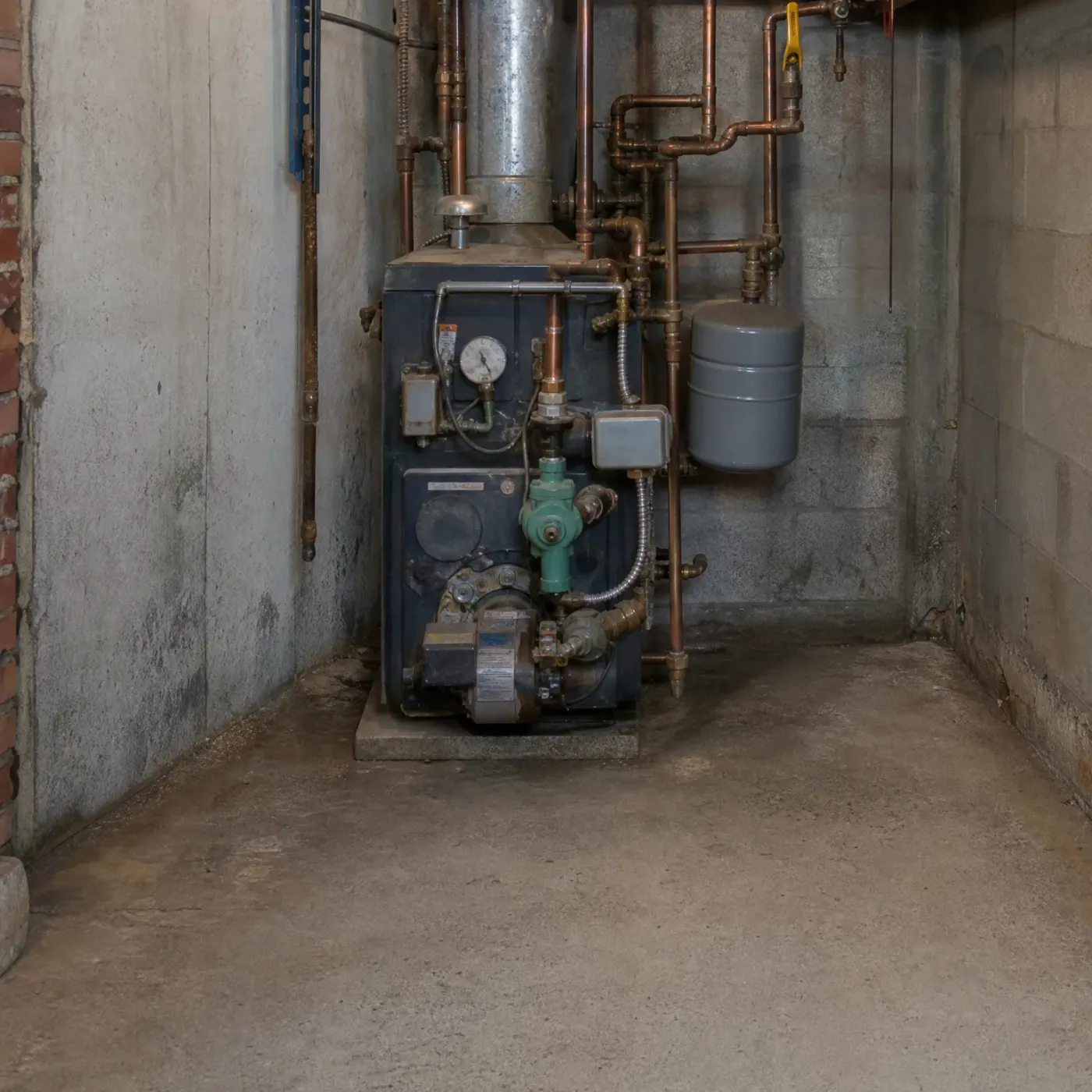
A blue oil-fired boiler with a pressure gauge, burner unit and metal flue sits on a concrete pad in a basement corner, surrounded by copper and black pipes against bare concrete walls.

A boiler on its way out

An older boiler like this one loses more heat up that metal flue than a condensing unit ever would. A pressure gauge that won't hold, a burner that short-cycles, a circulation pump that's seized up. These are the signs that it's time to replace rather than repair again.

A woman with shoulder-length brown hair wearing a beige knit cardigan sits in a gray upholstered armchair near a window, looking off to the side with a slight smile, with bookshelves blurred in the background.
A woman and a sleeping child wrapped together in a cream knitted blanket on a couch, with a potted plant, framed photo and lit lamp in the background.

A standard boiler sends its exhaust up a metal flue while it's still hot enough to carry real heat with it. A high-efficiency model runs that exhaust through a second heat exchanger first and pulls more of that heat into your water before letting it go. By the time the exhaust leaves the house, it's cooled enough that the water vapor in it turns back to liquid. That's the reason the vent is plastic pipe instead of metal, and why there's a small drain line running to a floor drain or a condensate pump. That water is mildly acidic, so it needs somewhere to go rather than sitting in the exchanger. Before any of that happens, an inducer fan kicks on to clear the exhaust path, which is why you'll hear it spin up a few seconds before the burner lights. And instead of firing at one rate, a modulating gas valve raises or lowers the flame to match how cold it is outside, rather than running full blast every time the thermostat calls for heat.

How the second heat exchanger works

  • A high-efficiency boiler has a secondary heat exchanger that pulls more heat out of the exhaust before it leaves the house.
  • That second pass cools the exhaust enough to turn the water vapor in it back into liquid, which is why the vent pipe is plastic, not metal.
  • The water that condenses out is mildly acidic, so the boiler has a condensate drain and trap that routes it to a floor drain or a small pump.
  • A modulating gas valve adjusts the flame up and down instead of firing at one rate, so the boiler matches output to how cold it actually is outside.
  • The inducer fan runs before the burner lights to clear the exhaust path, and you'll hear it start a few seconds before you feel any heat.
  • Standard boilers vent a flue hot enough that condensation never happens inside it, which is the main reason they don't need the plastic pipe or the drain.
A dark cast-iron boiler with copper piping, pressure gauge, and a gray expansion tank sits on a concrete pad in a basement corner with concrete block and brick walls.
Before you get your boiler installation
A gray boiler on a concrete pad in a basement, connected to copper piping, valves, pumps and a gray expansion tank, with a concrete wall on the left and a brick wall on the right.
After you get your boiler installation

Standard Boiler vs High-Efficiency Boiler

Standard boiler

  • Costs less to install, which matters if you won't be in the house for many more winters.
  • Vents through a metal flue, so the installer needs an existing chimney or liner in good shape.
  • Sends a good share of the heat from burning gas straight up the flue instead of into your rooms.
  • Runs at roughly the same efficiency on a mild October day as it does in a January cold snap.
  • Parts and service are familiar to most boiler techs in South Dakota, since this is still the common setup.

High-efficiency boiler

  • Costs more to install, partly because it usually needs a new vent pipe run in plastic, not metal.
  • Pulls extra heat out of the exhaust before it leaves the house, so less gas heat is wasted.
  • Pays back that higher install cost through lower gas bills, but only if you stay long enough to see it.
  • Runs more efficiently on milder days, so South Dakota's swing months between winter and summer add to the savings.
  • Needs a condensate drain for the water it pulls out of the exhaust, which a standard boiler doesn't have.
  1. The burner fires and heats water moving through the primary heat exchanger.

  2. Hot water leaves the boiler and circulates through the baseboards or radiant loops.

  3. Exhaust gas passes through a second heat exchanger before it exits.

  4. That second pass cools the exhaust until the water vapor in it condenses and drains out.

Why is your gas bill so high every winter

You know the pattern by now. The bill climbs in October, stays high through the worst of January, and barely eases up until April. If your boiler is old, you might notice the burner cycling on and off more than it used to, or the room by the far radiator never quite catching up to the rest of the house. Some standard boilers also show a metal flue pipe that feels warm to the touch, a sign that heat is leaving the house instead of staying in the water. None of that means anything is broken. It means the boiler is doing exactly what it was built to do, just not as efficiently as a newer one would.

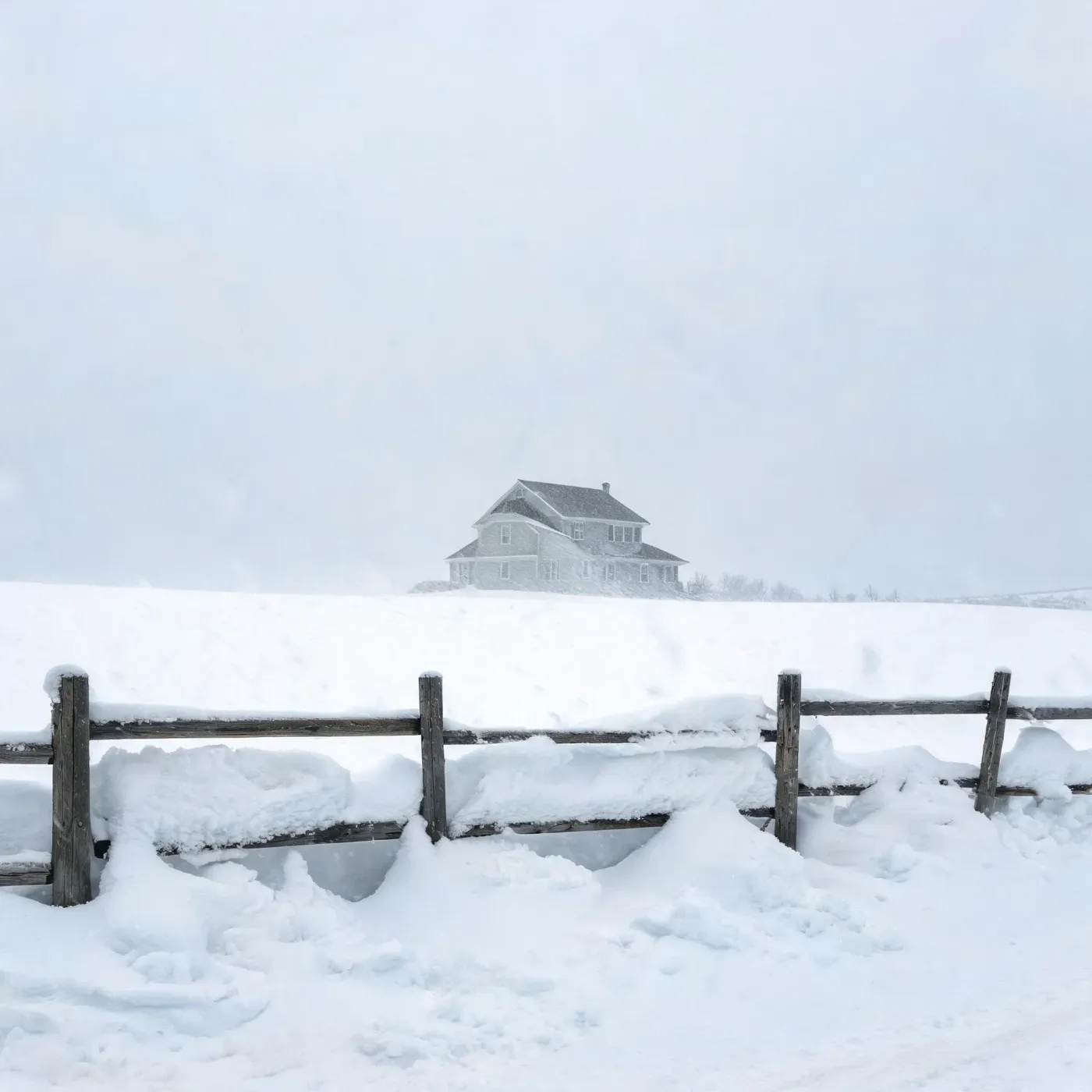
A two-story gabled house stands on a snow-covered rise under a pale overcast sky, with a snow-laden wooden rail fence crossing the foreground.

Winter nights statewide average 11°F, per NOAA climate data, and your boiler is what stands between that and a cold house. On those nights it's not cycling on and off the way it does in milder weather. It's running close to flat out, hours at a stretch, trying to hold the house at temperature against that kind of cold. A boiler with a weak heat exchanger or a pressure problem will show it first on a night like that, not in October. If you want someone to look at the installation before the cold sets in, it helps to have a local contractor who works on boilers all winter in this kind of cold and knows which parts give out first. You'd be dealing with one contractor, not several, and not re-explaining your system to each one.

NOAA nClimDiv 1991-2020 county normals weighted by homes

Describe it once

You've got a boiler problem that touches gas lines, venting, and possibly a new flue arrangement if you go high-efficiency. That's not a one-call job to sort out. You'd normally be pulling up contractor listings, calling two or three, explaining the same thing about your current setup and your January gas bills each time, then sitting on quotes trying to compare apples to apples. Hand in the request here instead and it goes to one licensed contractor working in South Dakota, someone who installs and services boilers through winters like yours every year and has a feel for which homes gain the most from the switch and which don't. No fielding calls from five companies, no retelling the story each time. You still have the same decision to make about your house and how long you'll be in it. What changes is not having to spend the next few evenings chasing down someone to look at it.

A gray floor-standing boiler with a metal flue pipe, copper piping, a circulator pump and a gray expansion tank, installed against a concrete wall.

Return water temperature decides efficiency

A high-efficiency boiler only hits its rated efficiency when the water coming back to it is cool enough, usually well under 130°F, for the second heat exchanger to pull condensation out of the exhaust. Baseboard and radiant loops set up for lower water temperatures get there. If your system was built around a standard boiler running hot water through small baseboards, the installer may need to adjust the loop or the controls, not just swap the unit at the wall.

A tall grey floor-standing boiler on a concrete plinth in a corner of a room, with copper pipework, a flue, a circulator pump and an expansion vessel to its right, beside a plain cream wall.

The condensate line needs somewhere to go

Condensing boilers produce acidic water as a byproduct, a gallon or more on a cold day, and it has to drain somewhere. Most installations run it to a floor drain or a condensate pump nearby. If your mechanical room doesn't have a drain within reach, that's extra pipe or a pump the installer has to account for before the unit goes in, not after.

Winter nights average 11°F statewide

At 11°F your boiler isn't idling between cycles, it's running long stretches just to hold the house steady. A high-efficiency model keeps pulling heat from the exhaust through that whole stretch, where a standard one loses more of it up the flue right when you need it most.

NOAA nClimDiv 1991-2020 county normals weighted by homes

Where that leaves you

  • A high-efficiency boiler pays off in South Dakota when you'll be in the house long enough for lower gas bills to cover the higher install cost.
  • Long winters here mean the boiler runs for months at a stretch, giving a high-efficiency unit more time to earn back that difference.
  • Return water temperature and venting both have to be set up right, which is why the install matters as much as the equipment.
  • A local contractor who works on boilers all winter has likely already seen whatever tends to go wrong with the venting or piping on these installs.
  • Working with one licensed contractor instead of several means you explain your setup once instead of repeating it on every call.

A high-efficiency boiler isn't automatically the right call just because it's more efficient. It's the right call if you're staying put long enough for South Dakota's long heating season to work in your favor, and if the install is done so the thing actually hits its rated efficiency. That second part depends on return water temperature and venting being set up correctly from the start, not on the badge on the boiler. Get those wrong and you've paid more for equipment that runs like a standard one. Get them right and the months of October-through-April runtime are exactly what lets the lower gas bills catch up to the extra cost.

That's the kind of install where it helps to have someone who's done it before, specifically on boilers, specifically in this climate. A contractor who works on these systems all winter has already run into whatever tends to go wrong with the venting or the piping on a high-efficiency swap, whether that's a flue that needs rerouting or baseboard loops running hotter than the new boiler wants. You're not the first cold-climate install they've handled.

And you're dealing with one contractor, not a handful. You explain your boiler, your piping, what you're trying to decide between, once. No repeating it to three different companies while you sort through quotes that each assumed something different about your setup. One licensed, local contractor, looking at your actual house.

At dusk, a dark board-and-batten house with a standing-seam metal roof and lit entry walkway of stone pavers, with two large outdoor heat pump units on a stone-walled pad at right and trees and hills in the background.

Boiler Installation

No phone calls to make

Step 1 of 3: Equipment
  • A beige upholstered armchair with an olive cushion sits in a sunlit corner beside a wooden side table holding a ceramic vase with leafy branches, under a framed abstract artwork, on a woven rug over a wood floor.
    • A local installer who puts in boilers gets your project.
    • Get in touch with a local installer about a new boiler.
  • A gray outdoor condenser unit on a concrete pad surrounded by dark gravel, beside a dark wood-sided wall with an electrical disconnect box and a stone veneer wall with a small evergreen shrub.
    • Once you send the form, finding a pro is off your list.
    • After you send the request, you're done searching.
  • A beige upholstered oversized armchair with a matching cushion and a knit throw draped over one arm, beside a round wooden side table holding a vase of greenery near a curtained window, with a framed landscape print on the wall and a woven rug on a wood floor.
    • Explain the job once and skip repeating it on every call.
    • Skip searching for a boiler pro and answer a few questions instead.
  • Sunlit living room corner with a beige upholstered sofa, cushion and knitted throw, a round wooden side table holding a white ceramic vase of leafy branches and a small wooden bowl, a framed landscape painting on the wall, and a window at right.
    • Your request stays with one local pro.
    • Your request goes to one pro, not a list of companies.