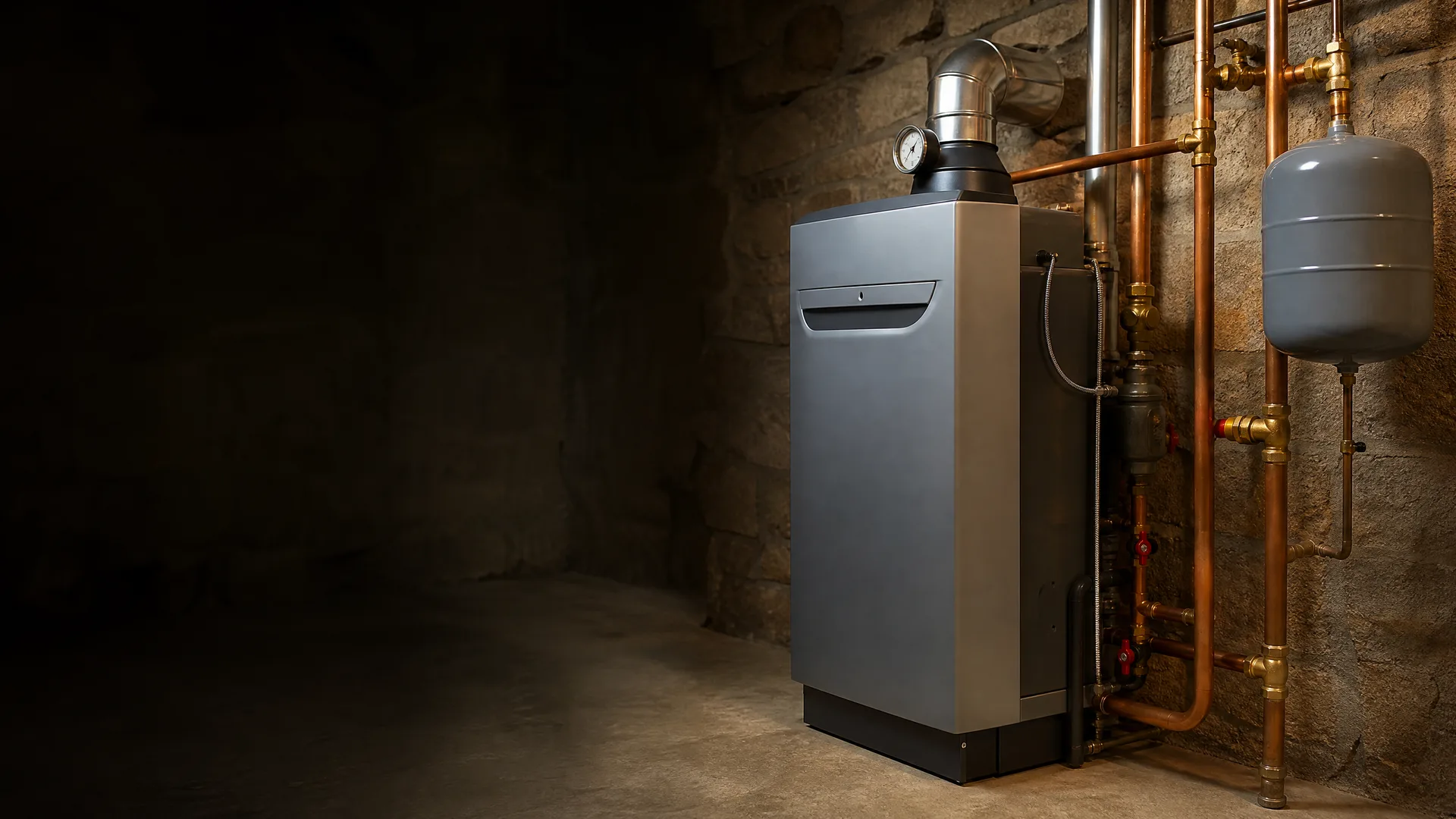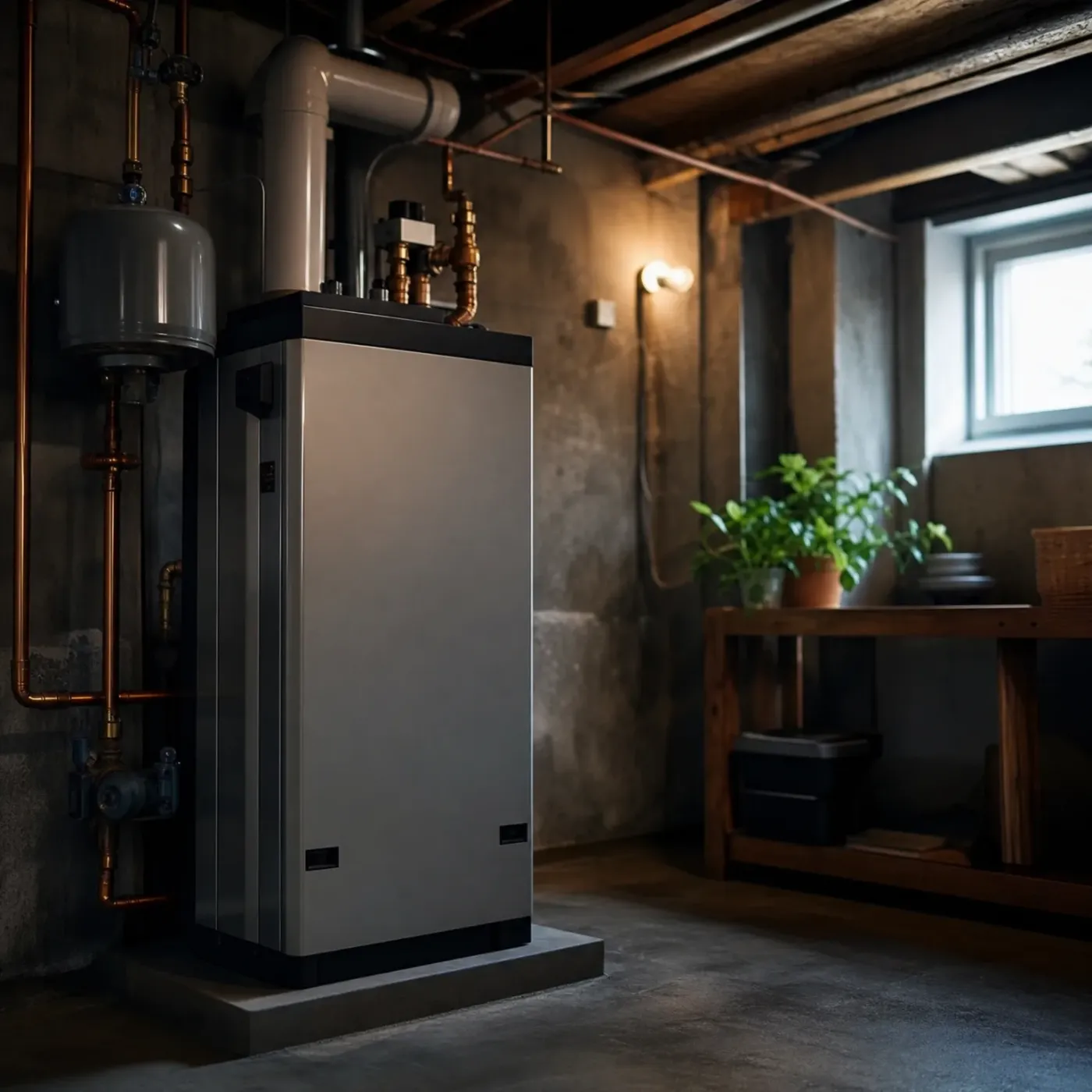
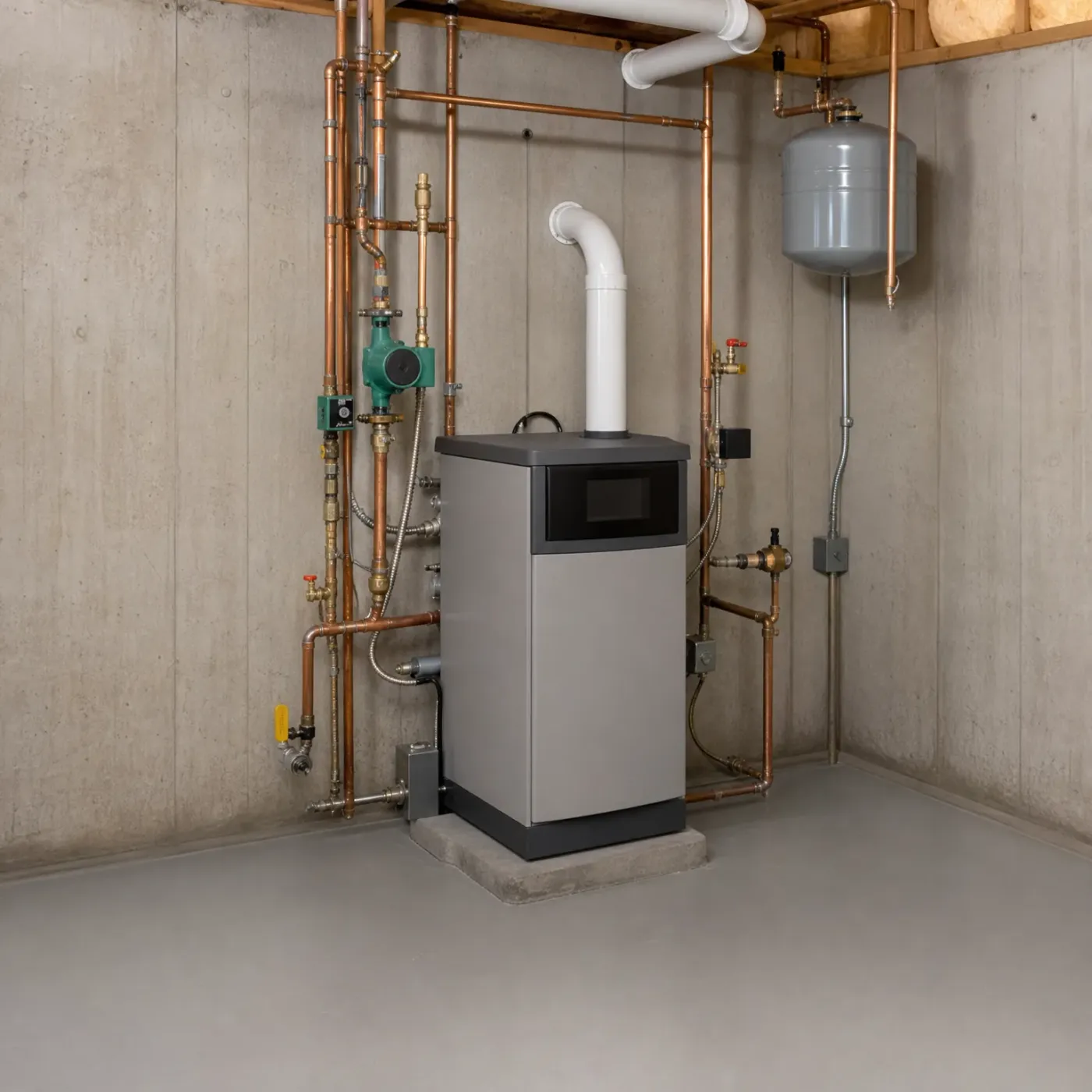
A floor-standing gray boiler unit on a concrete plinth in a basement, with copper pipes, an expansion tank, and a flue pipe above, a wall light, a small potted plant on a wooden shelf, and a window in the background.

The right pro for this job

Repair or replace an old boiler in South Dakota

An old boiler can usually be patched one more time, but at some point the next repair costs you almost as much as starting fresh with a new one. This page walks through how to tell which stage yours is at. When you're ready, send your details and a contractor who installs boilers in South Dakota will follow up with you directly.

Get matched

A boiler that's twenty years old or more and starting to need repairs most winters is usually worth replacing rather than fixing again. Boilers run a long time, longer than most furnaces, but the burner, the heat exchanger and the controls all wear down the same way, and once one part fails the others tend to follow within a year or two. A cracked heat exchanger or a boiler that won't hold pressure is a sign the unit is done, not a repair. One with a leaking valve or a bad igniter and no other issues is usually still worth fixing. Gas is how most homes here stay warm through a South Dakota winter, and a boiler that's struggling costs more to run every month it keeps going, on top of whatever the next repair bill is. If yours is newer and this is its first real problem, a repair is the right call. If it's old and this isn't the first, a new boiler will cost less over the next few winters than keeping the old one alive.

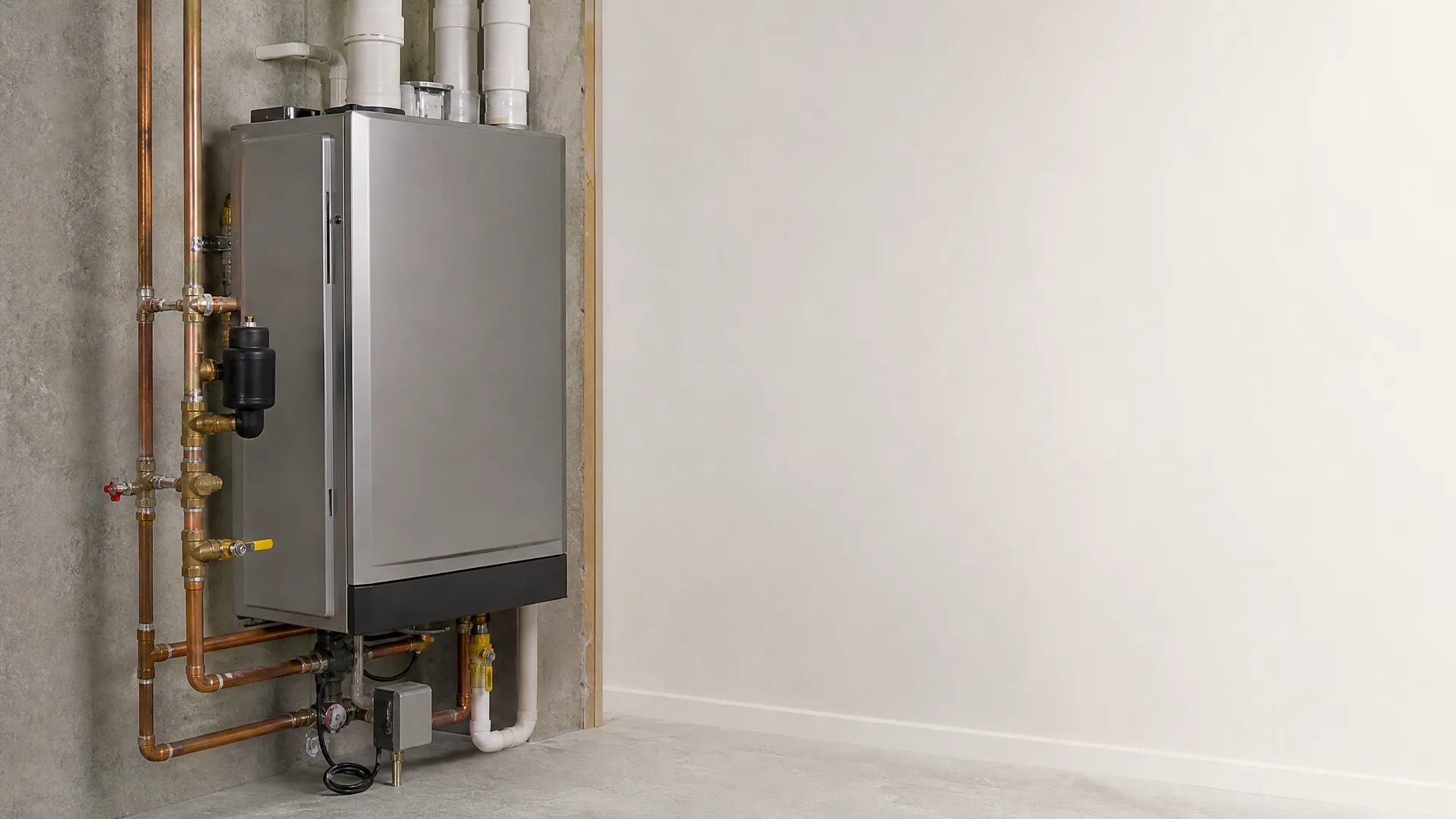
A wall-mounted grey boiler with copper pipework and white flue pipes installed against a concrete wall in an empty room with a plain pale wall to the right.

What wears out first

The heat exchanger is the part that usually decides a boiler's fate. Years of heating and cooling cycles stress the metal, and small leaks start there before anywhere else. Once it's pitted or cracked, there's no patch that holds for long. The burner and controls can be replaced piece by piece, but a heat exchanger failure on an older unit is the point most contractors call it instead of pricing another repair.

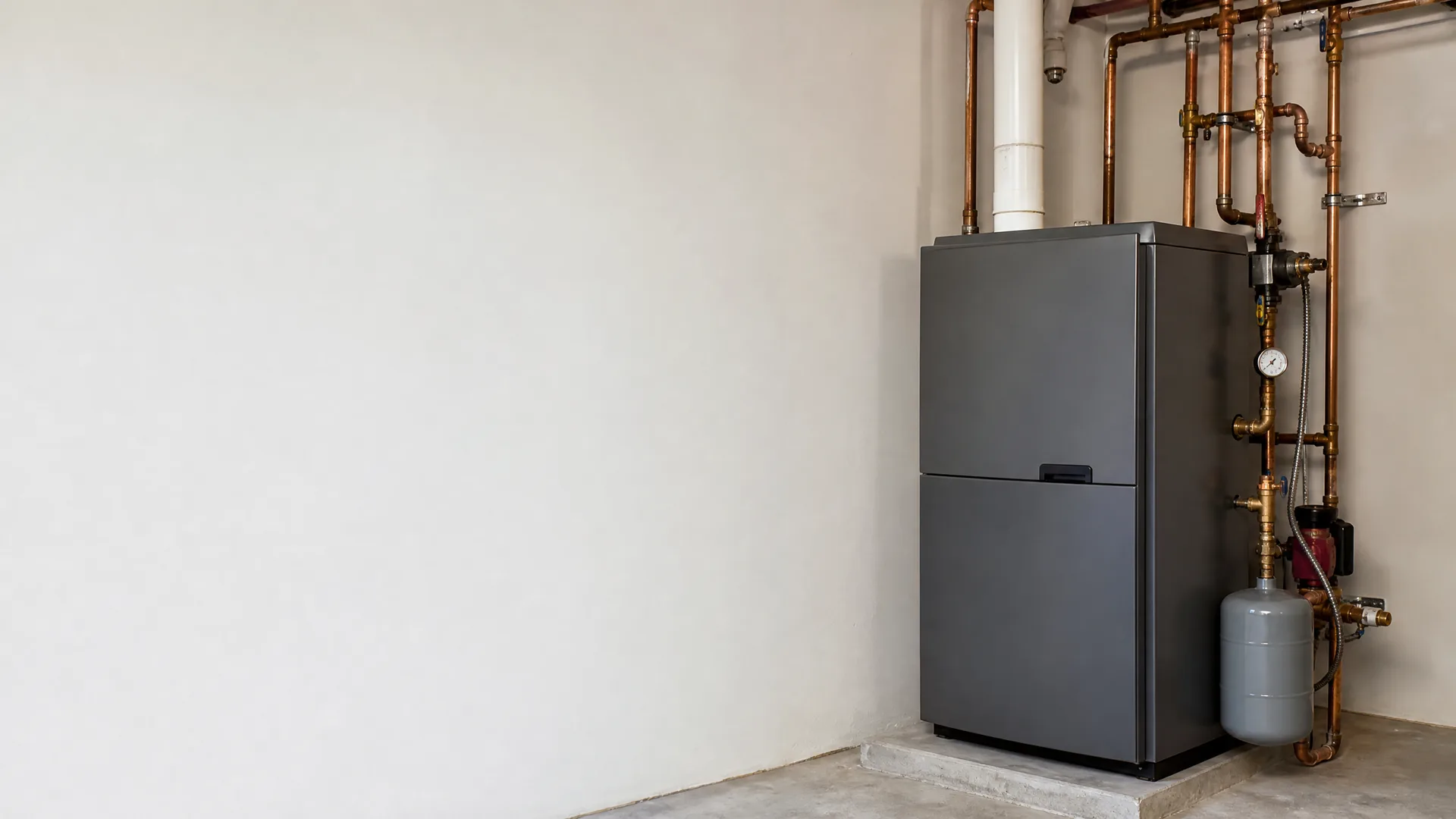
A dark grey boiler unit stands on a concrete pad against a plain light wall, connected to copper pipes, a pressure gauge, a pump and a grey expansion tank.

Why South Dakota winters matter

A boiler here runs hard from the first cold snap through the last frost, often six or more months without a real break. That kind of steady demand is different from a system that cycles on and off in milder weather. The longer the run time each winter, the more wear accumulates on the same parts, year after year, which is why a twenty-year-old boiler in South Dakota has usually worked harder than the same age unit somewhere warmer.

Is your boiler telling you something right now?

Listen for banging or kettling in the pipes before the heat even reaches the radiators. Look for water pooling near the base, or a rust color staining the floor underneath. Check if one or two rooms stay cold while the rest of the house heats fine, a sign the boiler is struggling to push heat where it used to. Notice if the pilot or burner flame looks more yellow than blue, or if you smell something faintly off when it fires. A boiler losing pressure on its own, needing water added every few weeks, is wearing from the inside. Left alone, a cracked heat exchanger can let exhaust gases drift where they shouldn't, which is why a failing one isn't something to wait out through another South Dakota winter.

A gray floor-standing boiler on a concrete pad in a basement corner, with copper piping, a circulator pump, a white PVC flue, and a gray expansion tank mounted on the wall.

Running the way it should

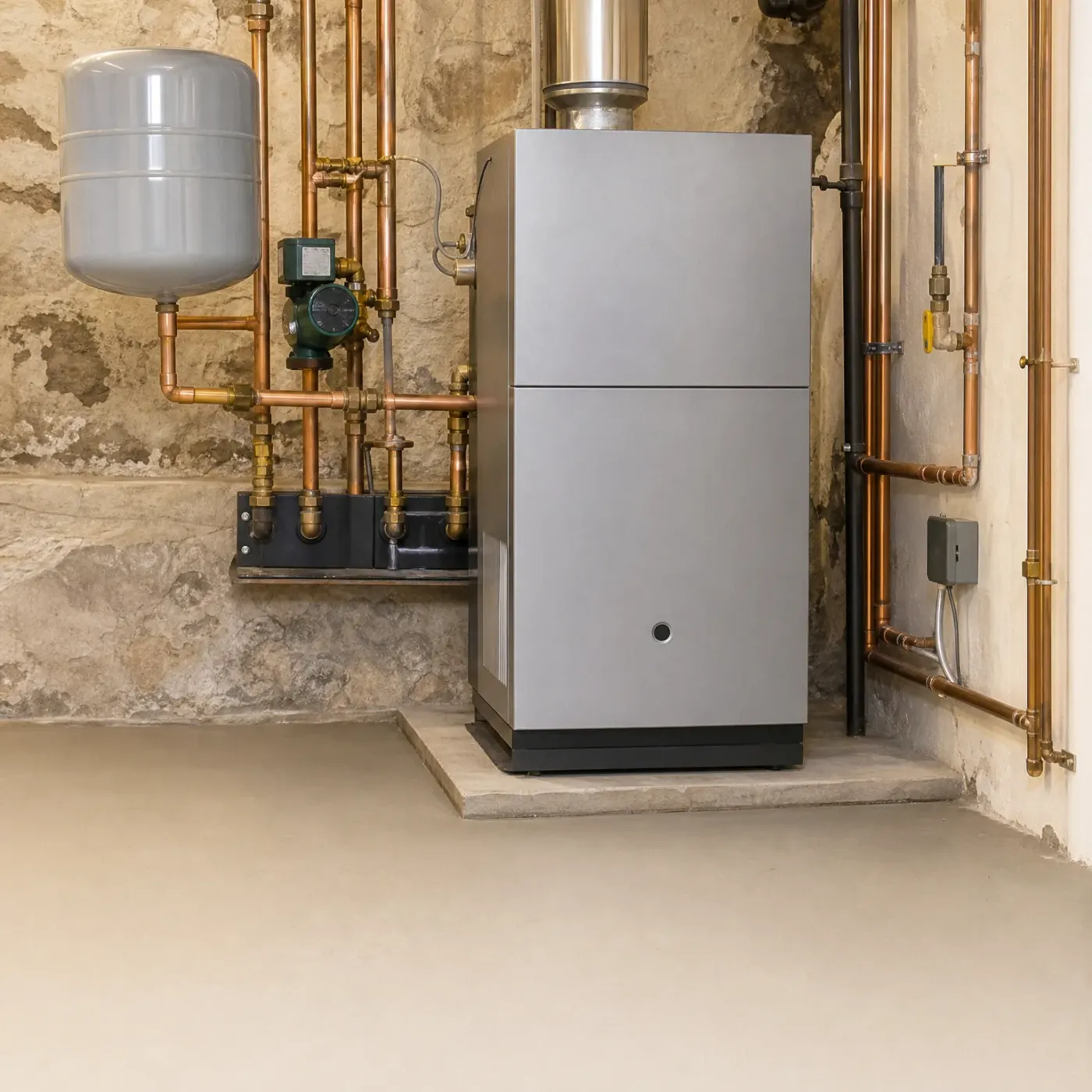
A boiler that's still doing its job keeps steady pressure, heats evenly, and holds its connections tight. The copper lines stay dry, the pump runs quiet, and the expansion tank does its work without complaint. If yours looks like this, a repair now and then is normal upkeep, not a warning sign.
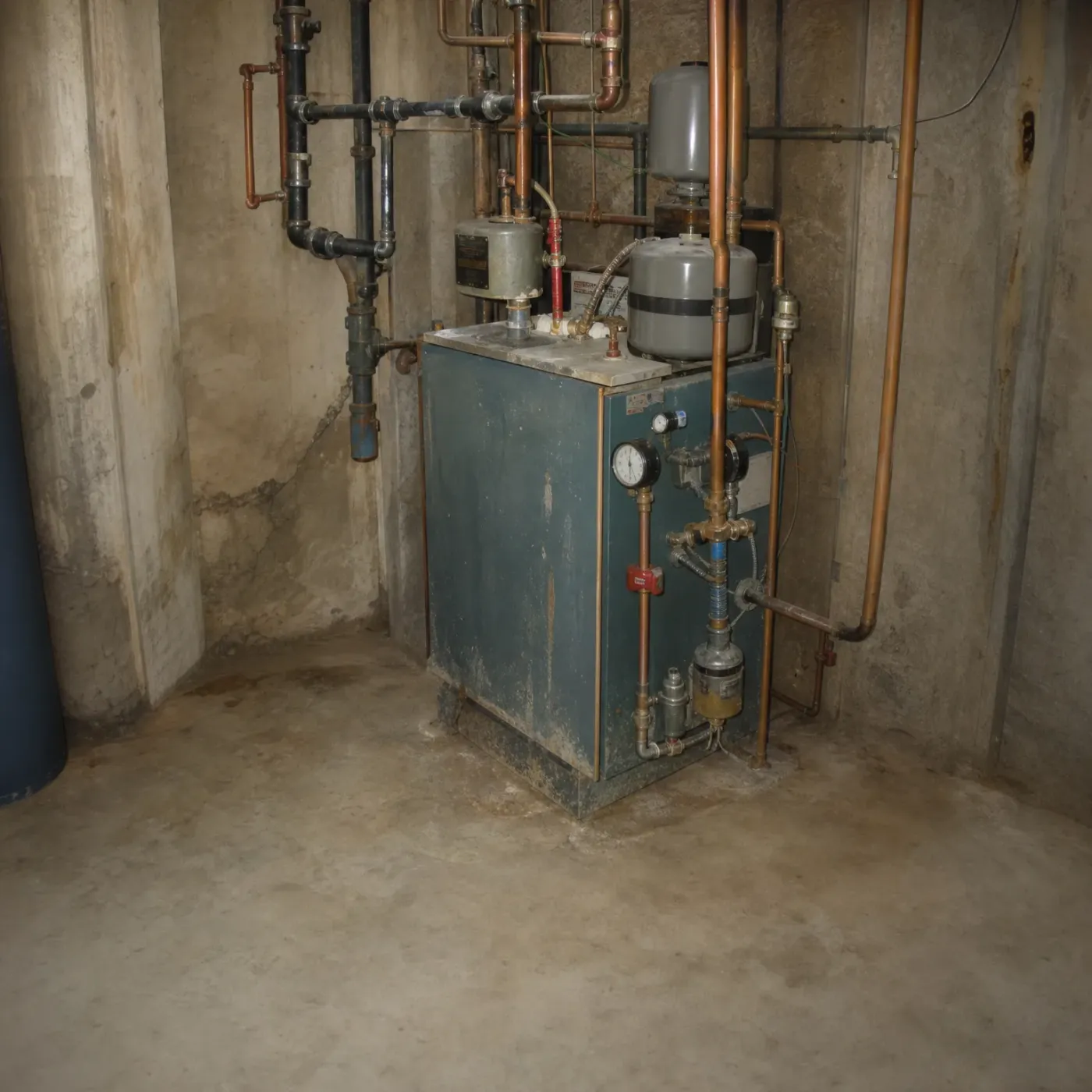

A green metal boiler with pressure gauge stands in a concrete basement corner, surrounded by copper and black iron pipes and two tank-shaped vessels.

Breaking down for good

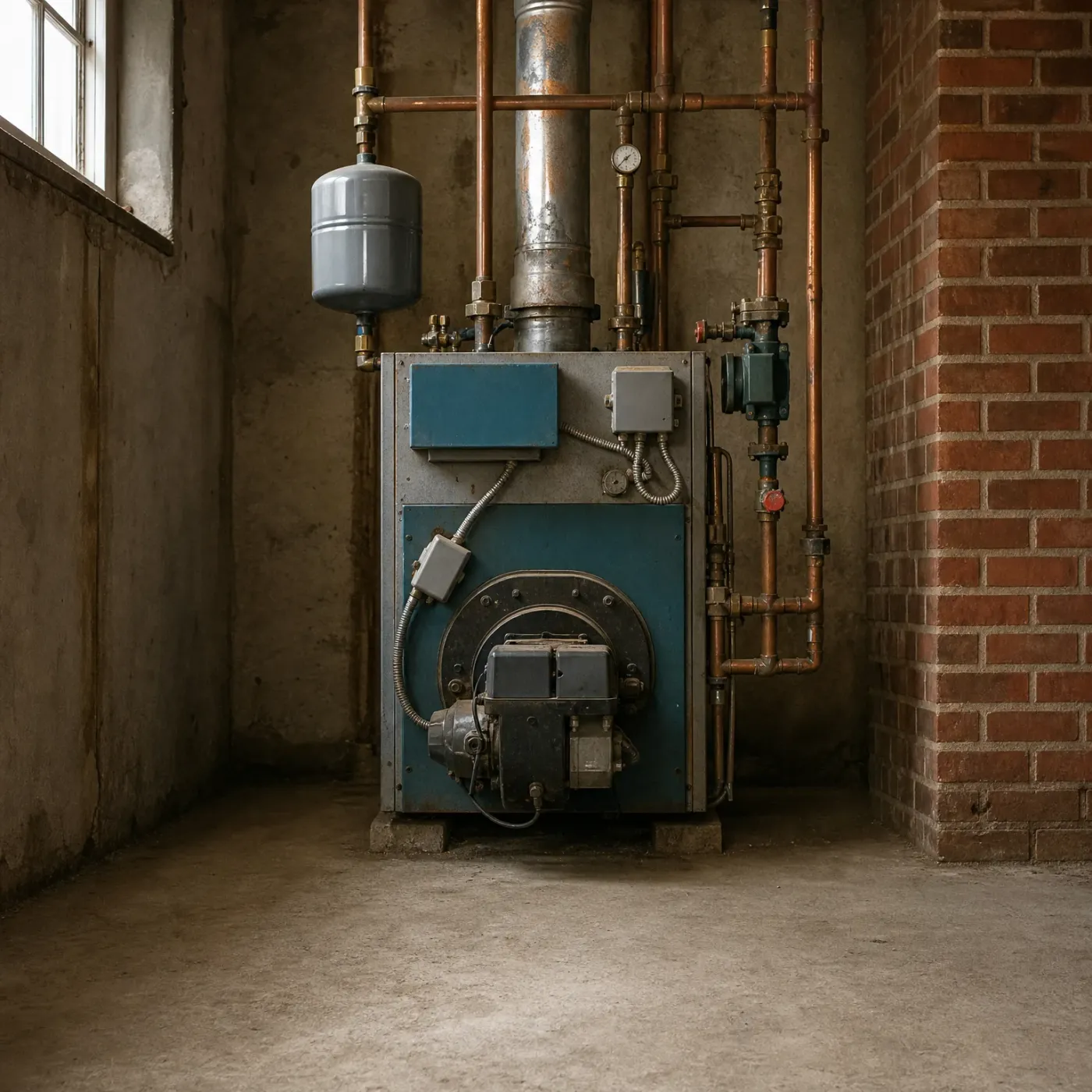
Rust staining the concrete under an old cast-iron boiler means a leak has been going on for a while. Corroded fittings and a gauge that won't hold steady pressure point to a unit near the end of what it can do. At this stage, each repair buys less time than the one before it.

Repair the Boiler or Replace It

Repair

  • A cracked circulator pump or a failed zone valve is a straightforward fix that doesn't touch the boiler itself.
  • If the heat exchanger is still sound, a new igniter, thermocouple or control board can buy several more winters.
  • Repairing makes sense if this is the first real breakdown and the unit hasn't needed attention before now.
  • Gas is the common fuel here, and a boiler built for it keeps running efficiently once the failed part is swapped out.
  • A repair now costs less upfront, even if it isn't the last money the boiler asks for.

Replace

  • Once the heat exchanger itself is leaking, there's no part to order that fixes that.
  • A boiler calling for repairs most winters is telling you the next failure is already on its way.
  • A new boiler matched to the house runs more efficiently than one patched together with twenty-year-old parts.
  • With power cheap here, a new boiler's main running cost stays tied to gas, and a tighter unit uses less of it.
  • Replacing now means setting the budget once instead of guessing what the next repair will run.
A gray-haired, bearded man in a dark coat dusted with snow stands smiling in a dimly lit room with a lamp, mirror, framed art, and a sofa in the background.
An older man with white hair and a beard, wearing a dark snow-dusted coat and scarf, stands in a warmly lit interior hallway with a framed landscape picture, a table lamp and a potted plant behind him, and a snowy view through a window at left.
An older man in a dark snow-flecked overcoat and scarf stands smiling in a warmly lit home entryway, with a glass-paned door showing darkness outside and a lamp-lit room visible through a doorway behind him.
An older man with gray hair and a beard, wearing a dark snow-dusted jacket and scarf, stands smiling in a warmly lit interior hallway with a lit table lamp, a vase of dried branches, and a framed picture in the background.

Matched to your boiler job

Winters here are what run your boiler hard, month after month, and that's when an old one finally gives out, usually on the coldest night it can find. Gas is how most South Dakota homes heat, and gas is cheap to run here, which is exactly why an aging boiler's falling efficiency and rising repair bills stand out so clearly on a utility bill. A new boiler sized right for your house won't fight the thermostat the way a tired one does, and it won't leave one room always a little cold. You don't have to figure out on your own whether what you're hearing in the pipes or seeing at the base means another repair or a replacement. A contractor who works on these systems in your area can look at what you've got, tell you plainly which stage it's at, and lay out what a replacement would involve for your home. Send your details and let that conversation happen instead of guessing through another winter.

How a boiler actually runs

  • A gas valve opens only after the igniter proves it can light, so a cracked igniter stops the whole cycle before heat starts.
  • Circulator pumps push hot water through the loop, and a seized bearing inside one will starve radiators on the far end of the house first.
  • The aquastat reads water temperature and tells the burner when to fire, so a drifting sensor can run a boiler longer than it needs to.
  • Expansion tanks absorb the water as it heats and swells, and a waterlogged tank is what causes the pressure relief valve to spit water.
  • Zone valves open one at a time to send hot water where a thermostat calls for it, and a stuck valve leaves that zone cold no matter what the burner does.
  • Low water cutoffs shut the burner down if the water level drops too far, protecting the heat exchanger from firing dry.

A boiler fires in a set order, and knowing it helps you figure out what a repair tech is actually telling you. The gas valve won't open until the igniter proves it can light, which is why a bad igniter kills the whole cycle before any water gets hot. Once it's burning, the circulator pump pushes the hot water out through the loop to every radiator in the house. If that pump's bearing seizes, the rooms furthest from the boiler go cold first, since they're the last stop on the loop. The aquastat is what tells the burner when to stop, by reading the water temperature. When it drifts out of calibration, the burner keeps firing longer than the house needs, which shows up as a higher gas bill before it shows up as anything else. Zone valves work the same way, opening one at a time depending on which thermostat is calling for heat, so a stuck valve leaves one zone cold while the rest of the house is fine. The expansion tank handles the water as it heats and swells, and once that tank waterlogs, the pressure relief valve starts spitting water as its backup. The low water cutoff is the safety piece, shutting the burner down before it can fire against a heat exchanger that's run dry.

Winter nights average 11°F statewide

An 11°F night is routine here, not a cold snap, and your boiler has to hold the house against that for hours at a stretch. That's steady, hard running, and it's what finally wears out a heat exchanger that's already old.

NOAA nClimDiv 1991-2020 county normals weighted by homes

If you repair it again

You keep the boiler you know. The radiators heat the way they always have, the pipes are where they've always been, and there's no decision to make about where a new unit goes or what size it needs to be. A repair now might run you through this winter and the next without trouble, especially if what failed was a part like a circulator pump or a zone valve rather than the heat exchanger itself. You avoid the cost of a full install today. But every repair after year twenty is a bet that the next failure is small too, and boilers that age don't always lose one part at a time.

If you replace it now

You're not choosing this on the coldest night, which is when most people end up choosing it. A new boiler installed on your schedule means picking the contractor and the unit without a house going cold while you decide. South Dakota winters don't ease up once they start, and a boiler put in during October is tested hard by December. Gas is cheap here, so a new unit's efficiency shows up in a real way over a winter of steady use. The upfront cost is the real tradeoff, there's no way around that, but it's a cost you control instead of one that lands on you at 2 a.m. in January.

A blue cast-iron boiler with a burner unit, gauges and copper piping stands in a concrete-floored basement room beside a red brick pillar and a window.
Before you get your boiler installation
A gray boiler unit with a flue pipe stands on a concrete pad in a basement, surrounded by copper piping, a circulator pump, an expansion tank mounted on a stone wall, and an electrical outlet.
After you get your boiler installation
A two-story house with a porch stands alone on a snow-covered field during falling snow, with a weathered wooden split-rail fence partly buried in drifts in the foreground.

Statewide, winter nights average 11°F, and your boiler doesn't get much of a break from that between November and March. That's the National Weather Service's number for South Dakota, not a cold snap reading. Night after night near that mark, the burner is firing long and often just to hold the house steady, and an old heat exchanger that's already thin or pitted is working its hardest exactly when you need it most. If yours has been short-cycling or taking longer to bring the house up to temperature, these are the nights that show it.

NOAA nClimDiv 1991-2020 county normals weighted by homes

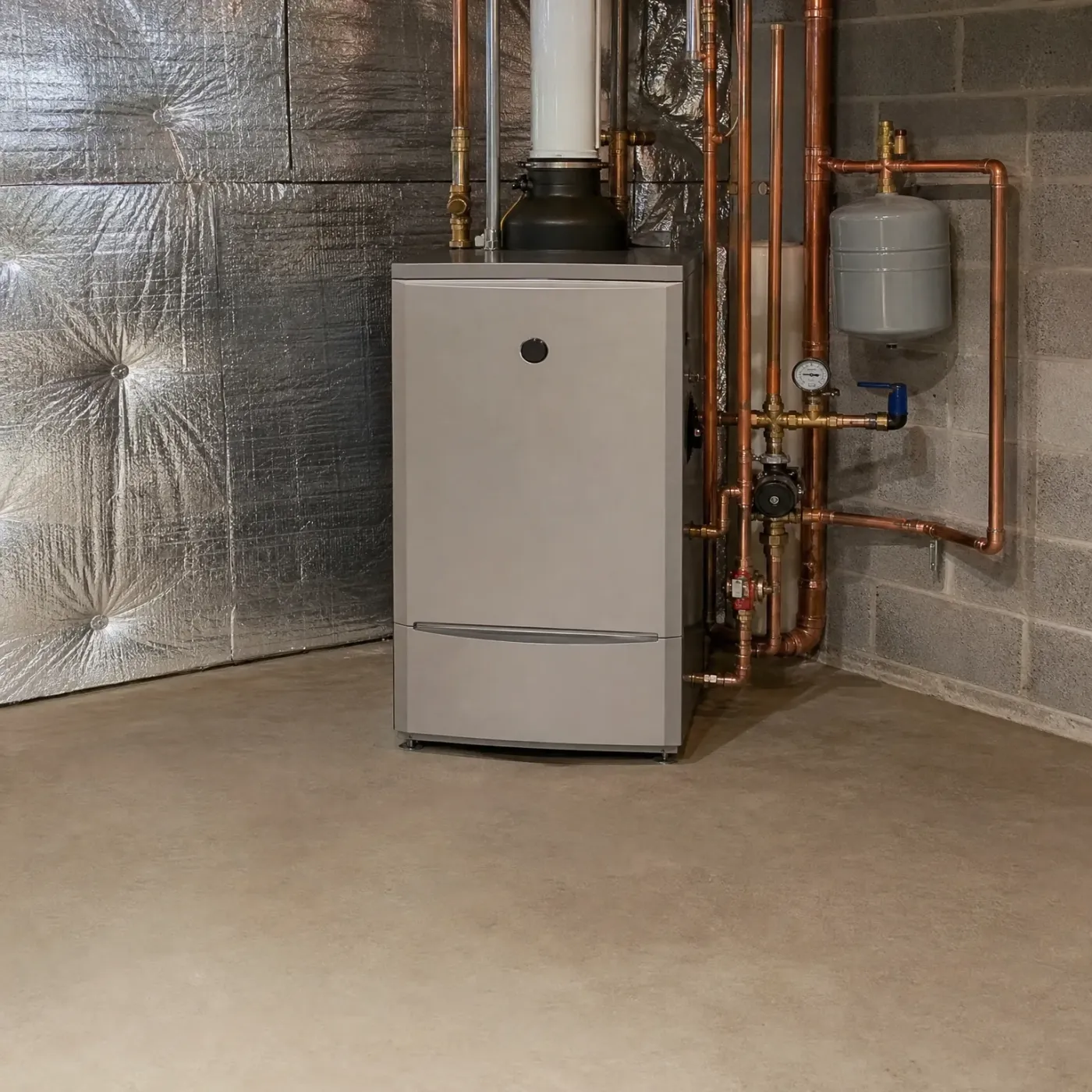
A gray residential boiler in a basement corner with copper piping, a circulator pump, pressure gauge, blue-handled valve and gray expansion tank against a concrete block wall, next to a foil-insulated wall.
Steady pressure, tight fittings, a pump that runs without ticking or groaning.
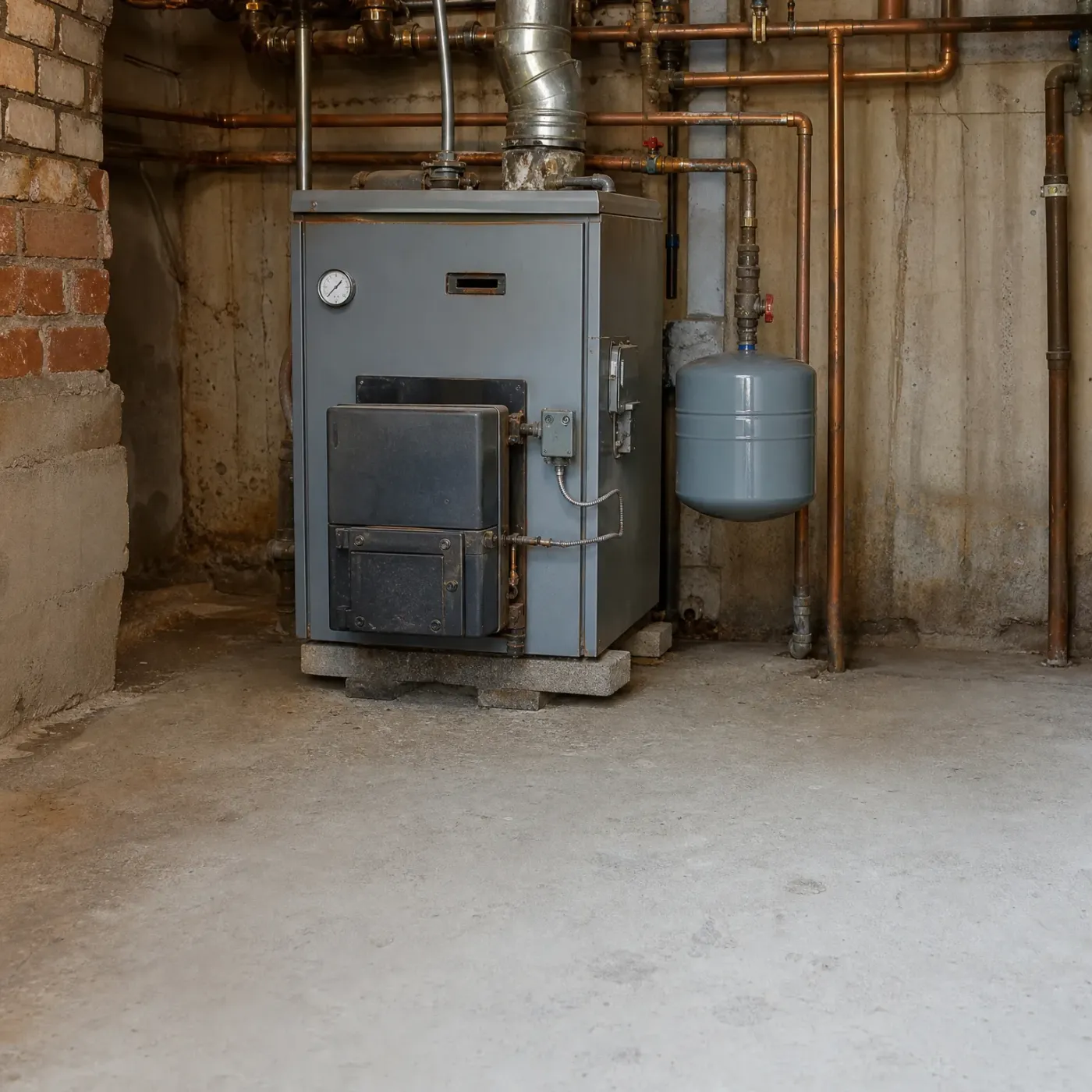
A gray boiler on a concrete block base in a basement, with copper piping, a metal flue, and a gray expansion tank mounted beside it against a concrete wall.
Bare steel, a flue showing its age, valves and pipework left to carry more than they should.
A woman wrapped in a cream textured blanket sits in an armchair beside a lit lamp and a dark window, with an open book in the foreground.
An older woman with gray hair in a bun and glasses, wearing a beige knit sweater, smiles while looking to the side in a warmly lit kitchen, with a loaf of bread on the counter in the foreground and a snowy scene outside the window.
A woman stands in the open doorway of a white stucco house holding the dark door, facing a man in a black cap and shirt seen from behind in the blurred foreground, with a potted flowering plant beside the entry.

Where that leaves you

An old boiler that's kettling, leaking rust-colored water, or losing a room to the cold tells you plainly what stage it's at. If the heat exchanger is sound, a repair is the right call. If it's cracked or pitted, you're past the point where another repair is worth paying for, and a new boiler is the better use of the money.

Once you've decided replacement is the right move, the next step isn't yours to carry alone. Send in your details and you'll be matched with a contractor who can look at your specific setup, the radiators, the pipework, the space the new unit needs, and reach out to talk through what fitting it in your home actually involves. You've done the hard part already, reading the signs correctly. The rest is a phone call away.

Interior corner of a dining room with a round wooden table, a ceramic vase holding olive branches, a dark spindle-back chair near a curtained window, and a sideboard with a lamp against beige walls.
A gray floor-standing boiler with a flue pipe and pressure gauge stands against a stone basement wall, connected to copper and brass piping and a gray expansion tank.

A boiler pro near you

Step 1 of 3: Equipment