Signs your boiler won't last a South Dakota winter
After you send the request, you're done searching.
A boiler that's struggling in November doesn't get better in January. Cold here settles in and stays, and whatever your boiler is doing now, it will have to do more of it for months straight. That's worth knowing before the first real cold snap, not after.
A few things point to trouble. Banging or kettling sounds from the tank. A pilot or ignition that won't hold. Rooms that used to heat evenly now have cold spots. Water that takes longer to get hot, or a boiler that short cycles, kicking on and off more than it used to. Any one of these can mean the difference between a boiler that gets you through winter and one that quits on the coldest night of it.
If you've noticed any of that, the next step is normally figuring out who to call. That part is the slow part. Looking up contractors, checking who actually works on boilers and not just furnaces, calling two or three, explaining the banging noise or the cold bedroom to each one, then waiting on quotes to compare. It eats an evening, sometimes more, and it's easy to put off until the problem gets worse.
This page skips that. Send the form and the search part is done. No more calling around, no repeating yourself to a third contractor because the first two didn't call back. A licensed contractor who works on boilers gets your information and takes it from there.
You don't have to know what's wrong before you send it. You don't need the make and model memorized or a theory about the ignition. Just what you've noticed and where you are. That's enough to get it moving.
Winter here isn't the time to find out a boiler can't keep up. Better to know now, while there's still time to do something about it.
A boiler that short cycles, takes longer to heat the house, or makes banging and kettling noises in the tank is telling you it can't keep up, and South Dakota winters don't give it a break to catch up. Those noises usually mean sediment building up on the heat exchanger, which makes the boiler work harder to move heat into your water. Cold water coming back slow, radiators that heat unevenly room to room, or a pilot light that won't hold are the same warning in different forms. None of these fix themselves once the cold sets in around November and doesn't let up until spring. A boiler running on a failing part in December is running on that same part in February, except by then it's colder outside and the system is working harder every day. If your boiler is already showing one of these signs, it's worth finding out now what's wrong, while there's still time to get it sorted before the hardest part of winter arrives.
One request and it's handed off
Describe your boiler job once, to one pro.
Send the request today and stop worrying about who to call.
It costs nothing to send, and you don't have to hire anyone.
What is your boiler telling you right now
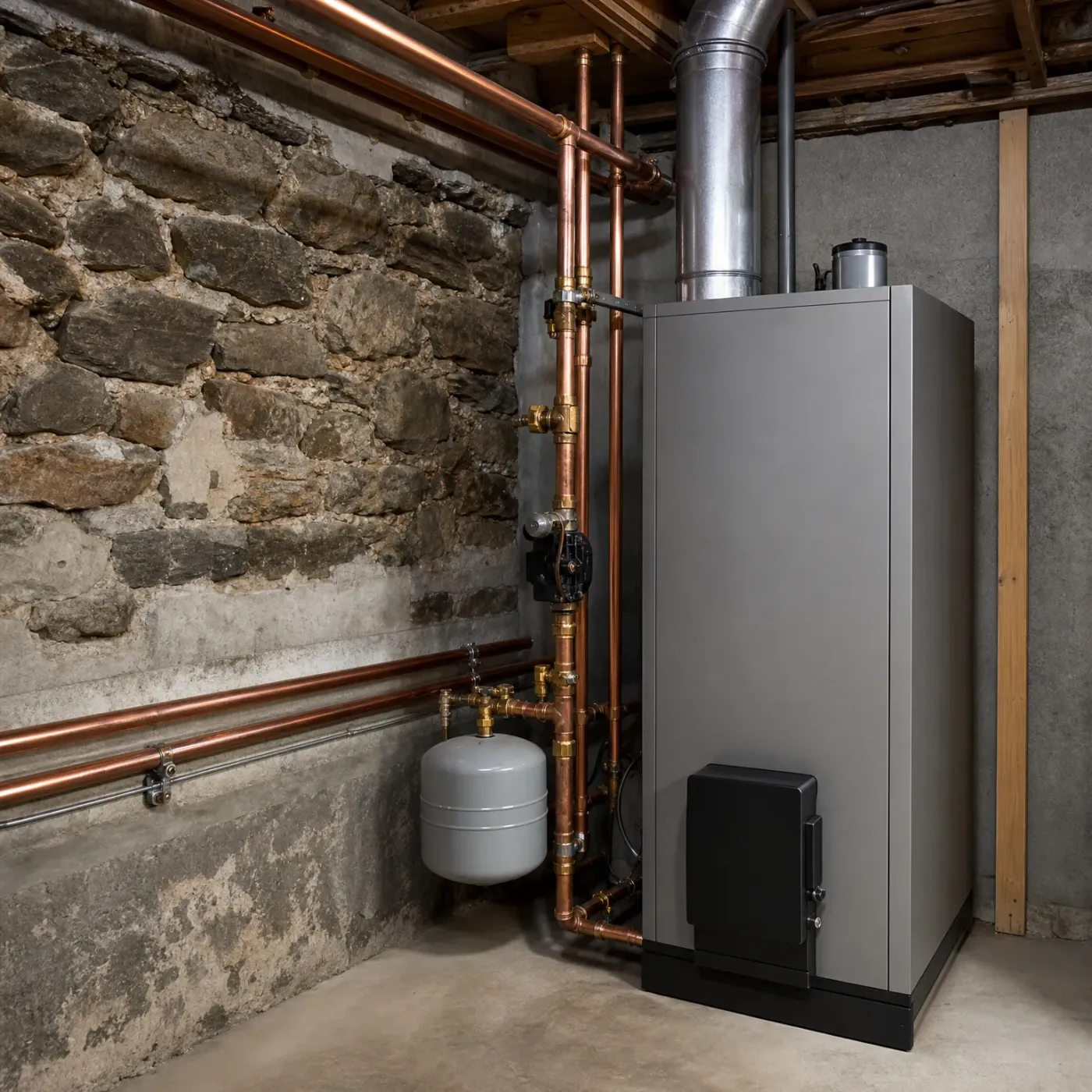
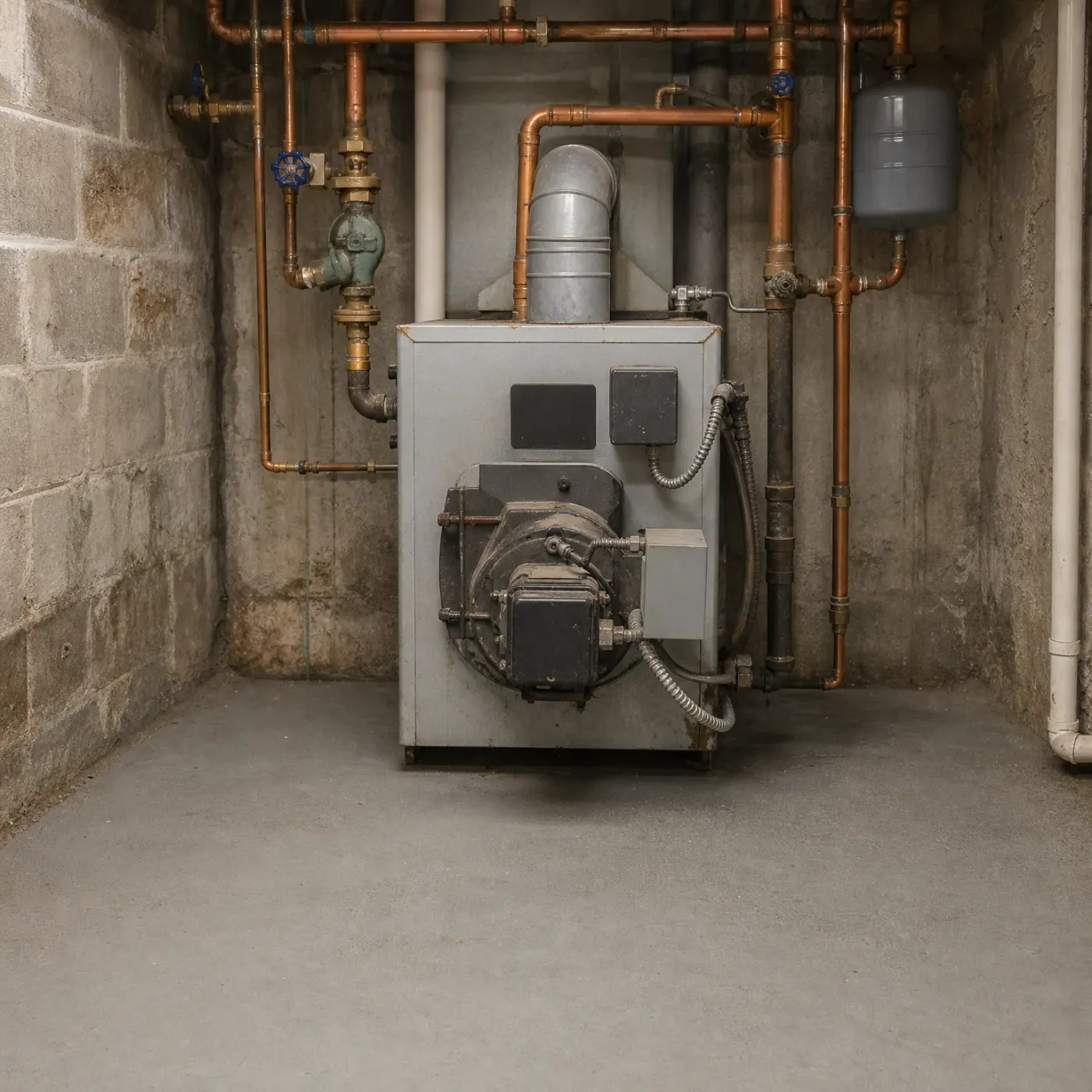
Walk through the house when the boiler is running. Are some rooms warm and others still cold, even with every radiator or baseboard turned up? Does the burner click on, run for a few minutes, then shut off and start again before the rooms have actually warmed? Listen at the tank itself for banging, knocking or a rumble like water boiling in a kettle. Look at the water around the base for any dampness, and check if the pilot or burner flame looks yellow instead of blue. Any one of these on its own is worth a look. Together, they mean the boiler is already working harder than it should to keep up, and a hard January stretch will ask more of it than it has left to give.
Running the way it should
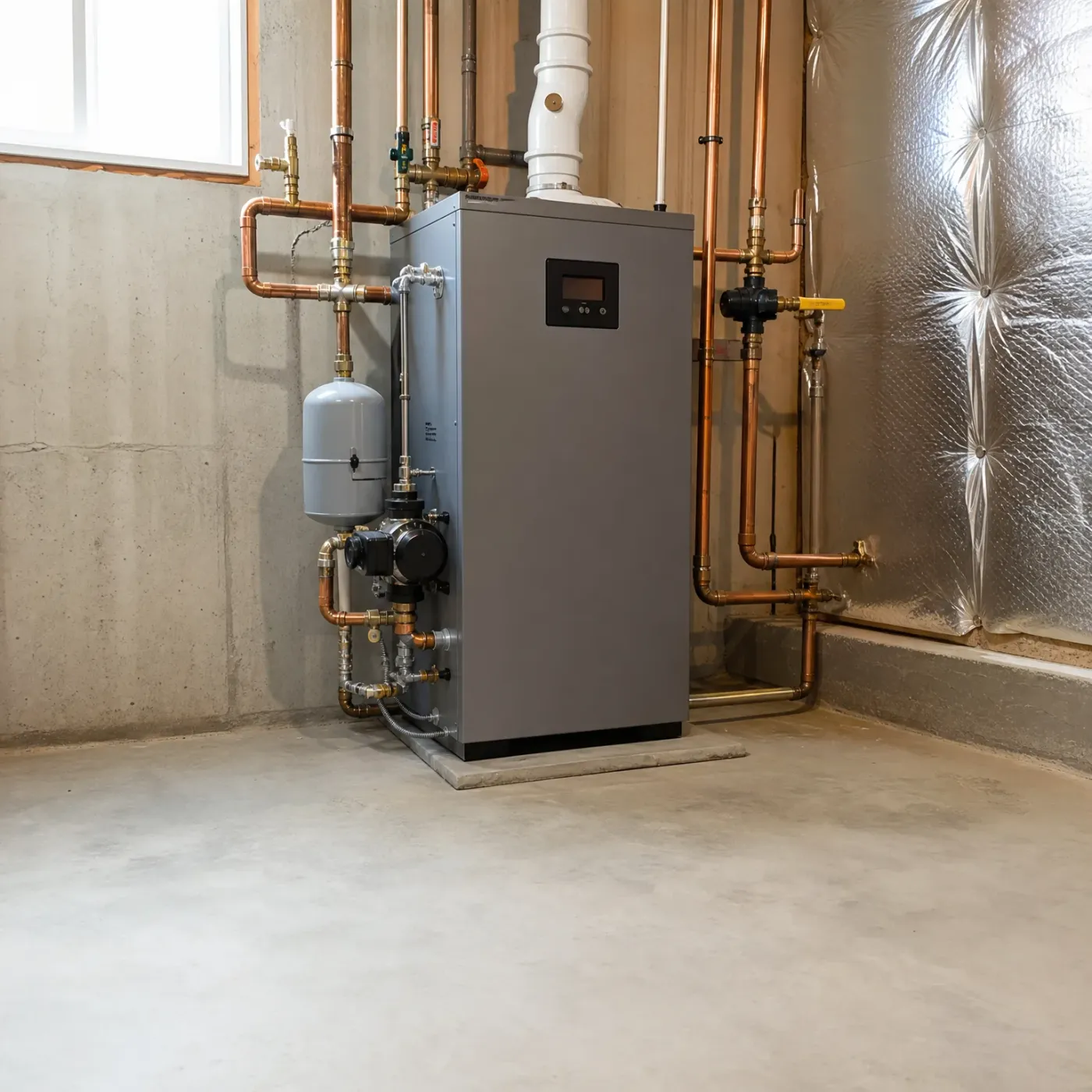
A boiler like this heats evenly, holds pressure, and cycles on a normal schedule. The pipes and valves are dry, the expansion tank is doing its job, and the flue vents clean. Left alone, a system in this shape gets through a South Dakota winter without drama.
Wearing out underneath you
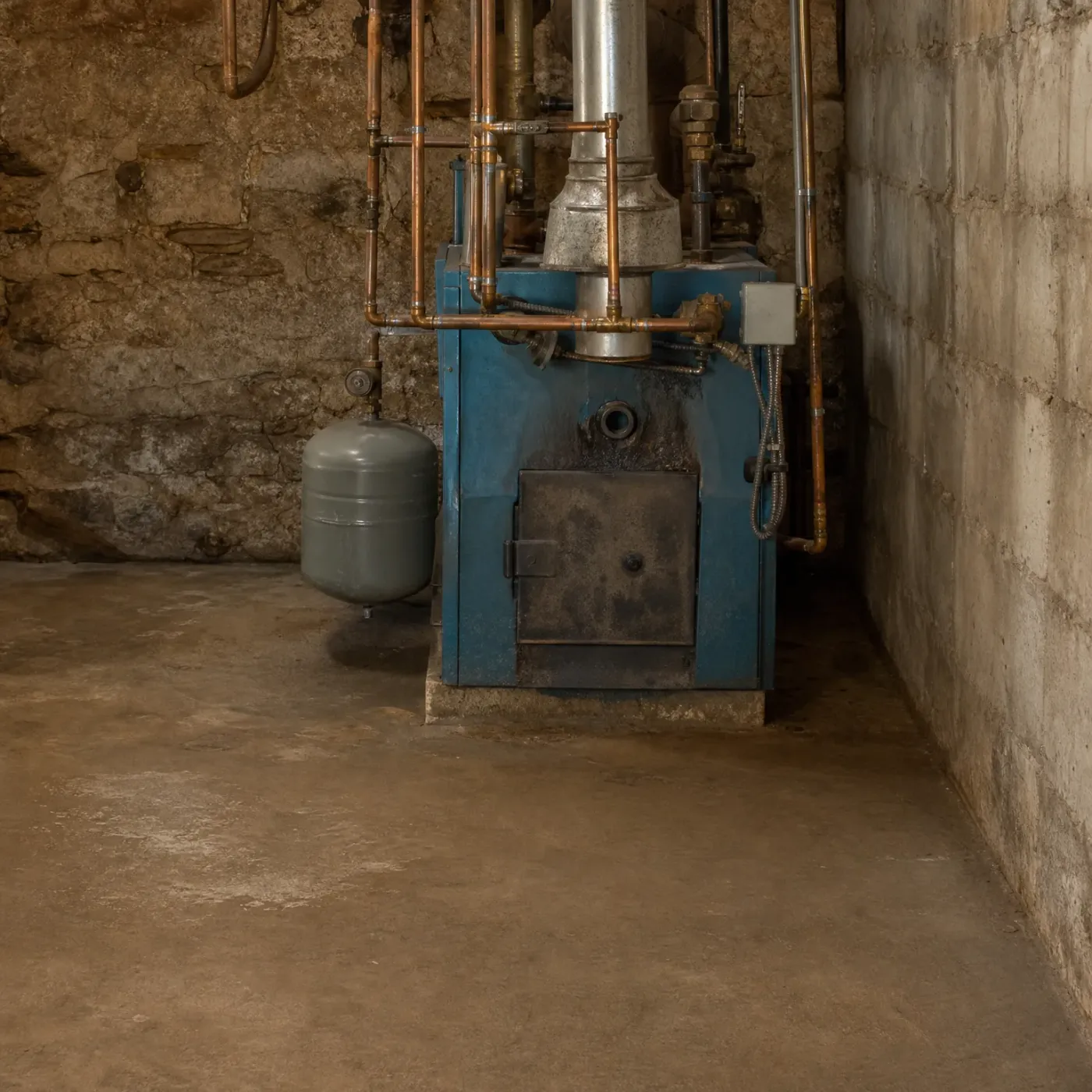
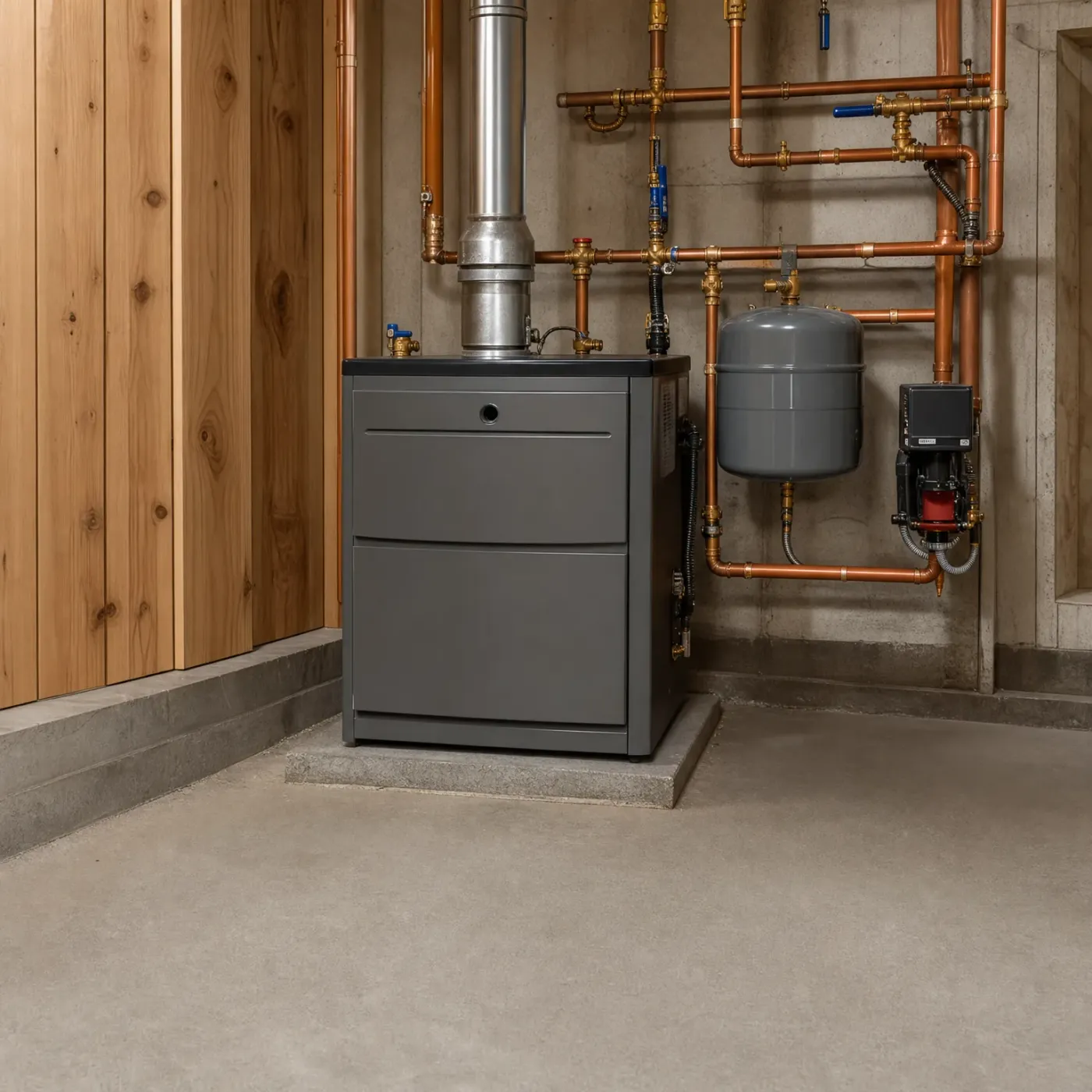
Corrosion around the access door and a floor-standing expansion tank showing its age point to a boiler near the end of its run. Cast iron like this can crack instead of just leaking, and a crack in January is not a repair you want to be finding out about then.
Before you get your boiler repairAfter you get your boiler repair
Kettling means sediment on the heat exchanger
That rumbling or popping sound is water boiling under a layer of scale. It cuts how much heat gets into the house and stresses the metal around it.
At 11 below zero, a boiler doesn't idle. It runs most of the night just to hold the house steady, and it keeps doing that for months. If it's already falling behind on a mild evening, those long cold nights are what push it past its limit.
NOAA nClimDiv 1991-2020 county normals weighted by homes
1
Sediment settles on the heat exchanger and blocks heat transfer
2
Water trapped under that layer boils and pops, which is kettling
3
The burner runs longer to make up for the lost heat
4
Longer burner cycles stress the heat exchanger and the igniter
A boiler that's falling behind now won't catch up in January
Uneven heat, a burner that won't settle into a normal cycle, kettling in the tank: these are a boiler telling you where it's weak before the worst of the cold asks it to prove that weakness. None of that fixes itself once the temperature drops and stays down for months.
Getting it looked at now means one call instead of a list of them. You won't be searching through contractors, checking who's licensed, calling around to see who answers, or explaining the same banging noise three separate times to three separate people before anyone shows up. Send the form once and that search is someone else's job from there. What's left is the actual work on the boiler, and knowing it's in hand before the hard cold settles in.
Boiler Repair
It's off your list after this
Explain the job once and skip repeating it on every call.