Running the way it should
Pipes tight, pumps turning, pressure holding steady on the gauge. A boiler like this has been checked before the cold set in, and it shows in how quiet the mechanical room is. Nothing to notice means nothing is wrong.

A boiler tune-up before winter means a technician checks the parts that keep you from losing heat when it's below zero outside. That includes testing the pressure and temperature, checking the pilot or ignition system, bleeding air out of the radiators or lines, inspecting the heat exchanger for soot or cracks, and checking that the circulator pump is moving water the way it should. Most of South Dakota heats with gas, and a boiler that misfires or loses pressure in January isn't a small problem. A tune-up catches a failing igniter or a slow leak while it's still an easy fix, not an emergency call during the coldest week of the year. It also means the boiler runs the way it was built to, so it isn't working harder than it needs to for the same heat. For a system that has to carry your whole house through a long winter, this is the one check that matters most before the cold sets in.
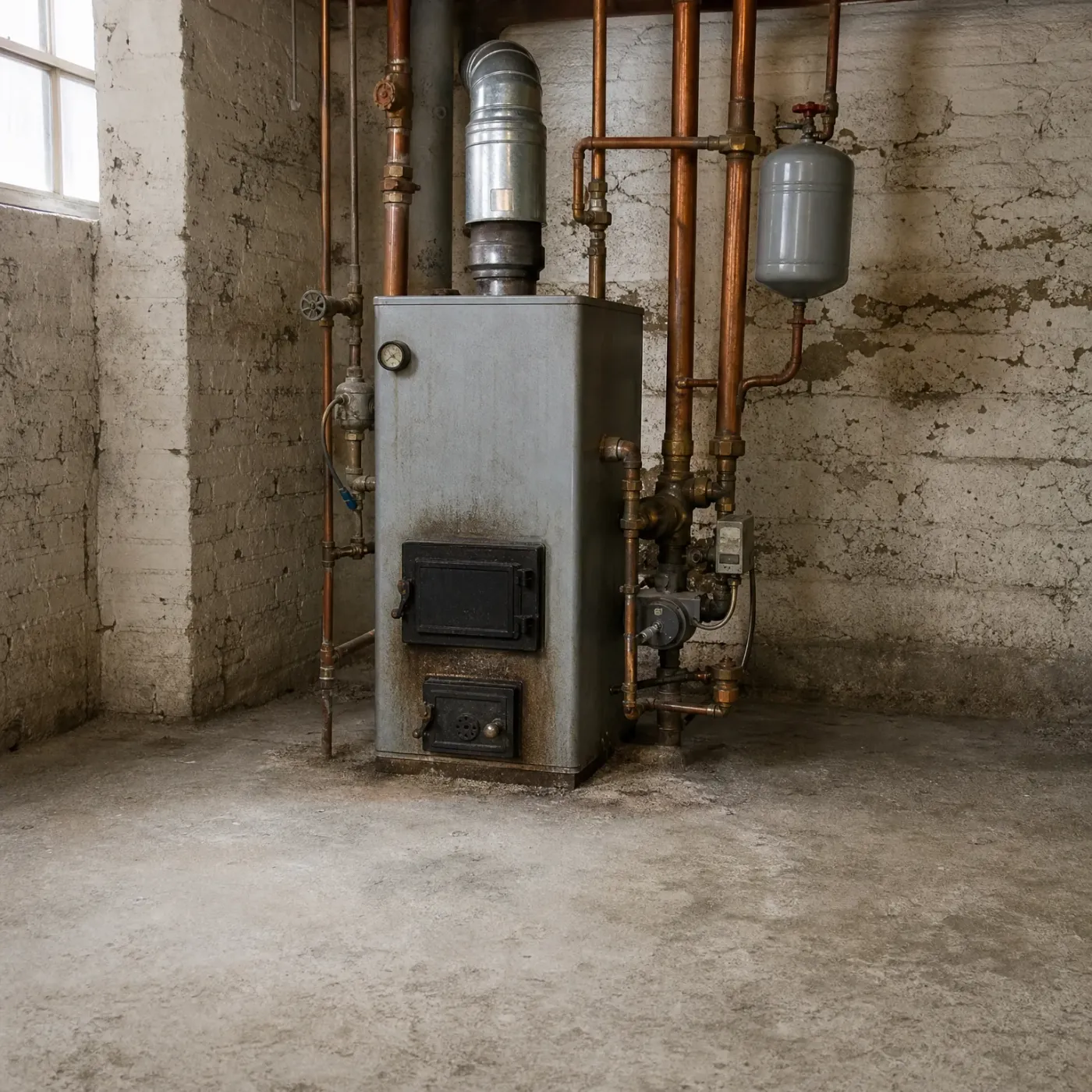
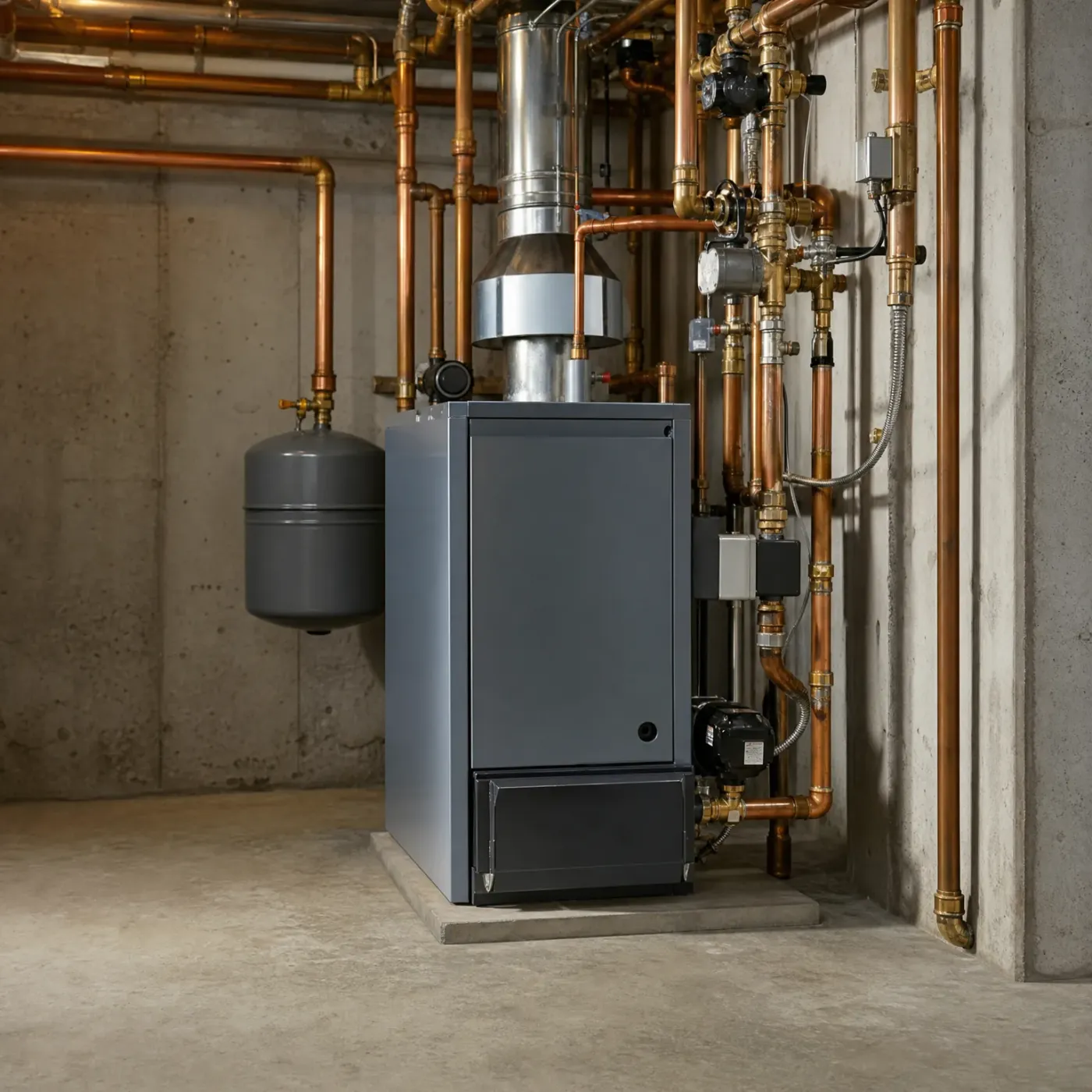
A technician starts at the aquastat, the control that tells the boiler when to fire and when to shut off, and checks it's holding the right water temperature. Next comes the burner. A clean flame burns blue. Yellow or soot on the combustion chamber means the gas isn't burning the way it should, and that gets addressed before winter, not after. The low water cutoff gets tested too, since that's what shuts the boiler down if water level drops instead of letting it run dry and damage itself. Every radiator valve and zone valve gets worked by hand to make sure each one opens and closes all the way, because a stuck valve means a cold room once the heat's running every day. The expansion tank gets checked for waterlogging. If it's holding water instead of air, you'll hear it in the pipes as banging or knocking. Last is the flue connection, checked to confirm exhaust is actually leaving the house instead of finding its way back in.
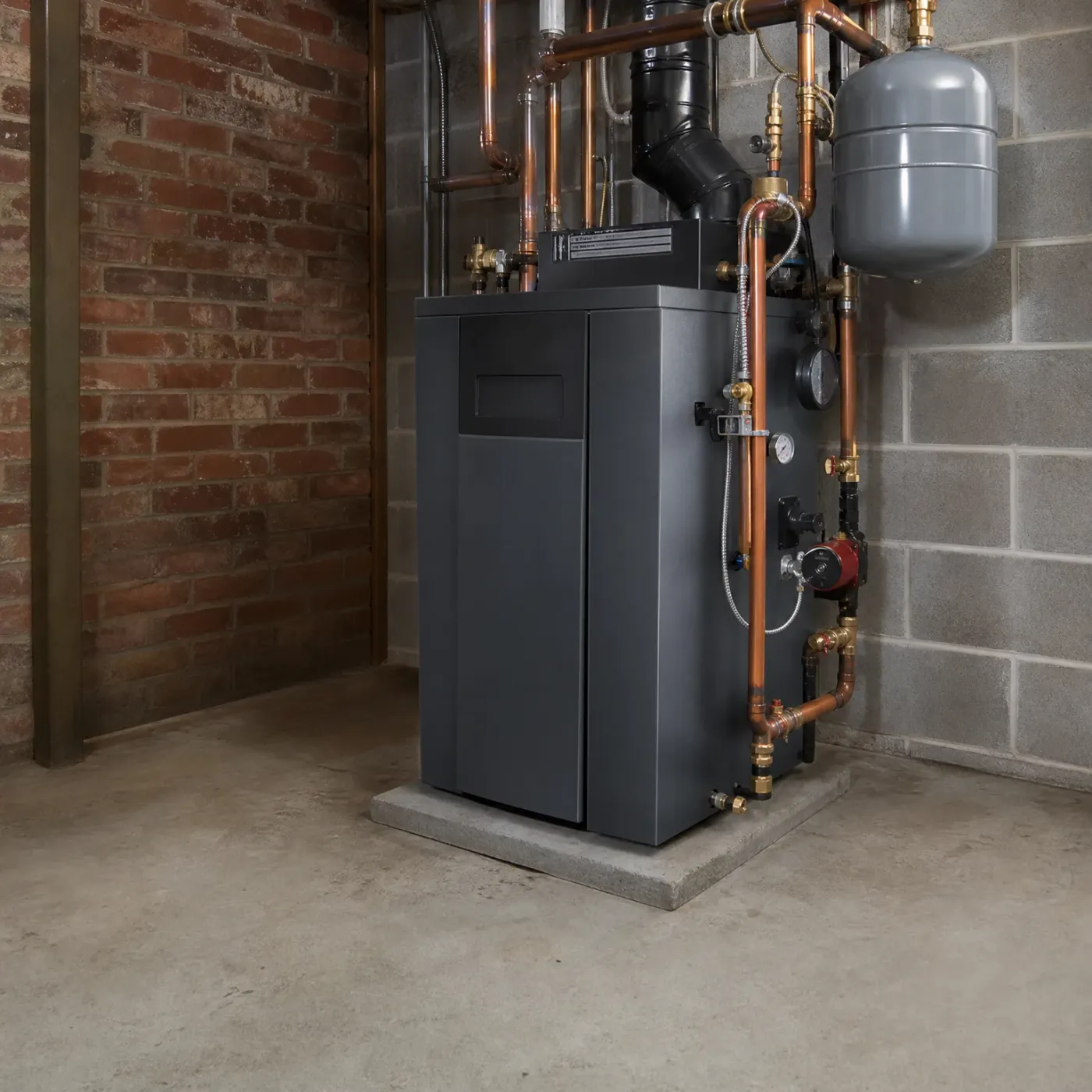





Pipes tight, pumps turning, pressure holding steady on the gauge. A boiler like this has been checked before the cold set in, and it shows in how quiet the mechanical room is. Nothing to notice means nothing is wrong.

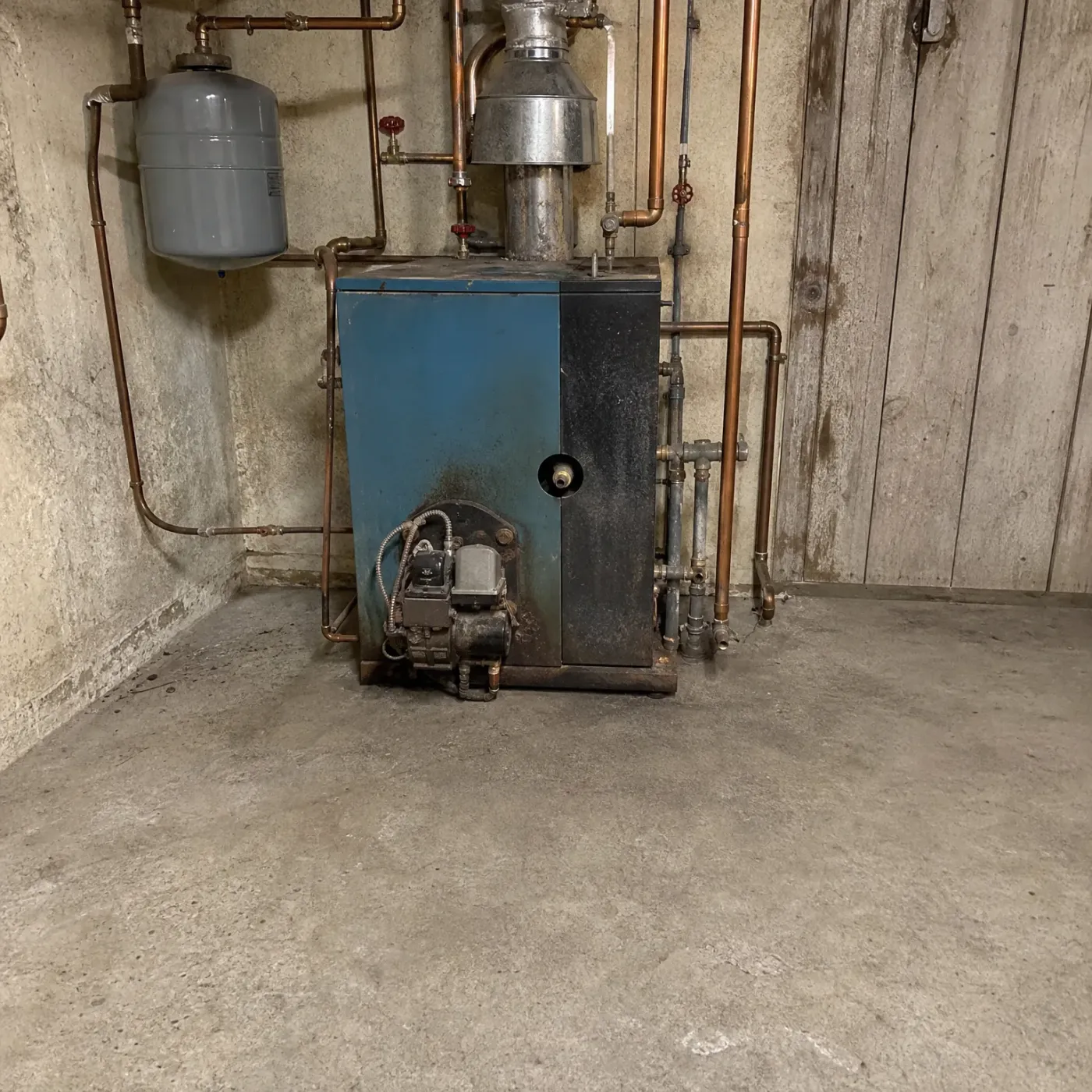
Same kind of unit, same tangle of copper pipe, but nobody has been down here to look at it. The flue is doing its job for now. Whether the burner underneath it is still burning clean is the question a winter in South Dakota will answer for you.
You might notice a radiator that stays cool at the top while the bottom warms up, or one that clangs when it first kicks on. Maybe the boiler takes longer to bring the house up to temperature than it did last January, or the pilot flame looks more yellow than blue. A pressure gauge sitting low is easy to miss until a cold snap pushes the system harder than it's been pushed in months. None of this means you're about to lose heat tonight, but a boiler that's been ignored tends to find the coldest night of the year to show you what it's been hiding, and that's a bad night to be without a plumber.
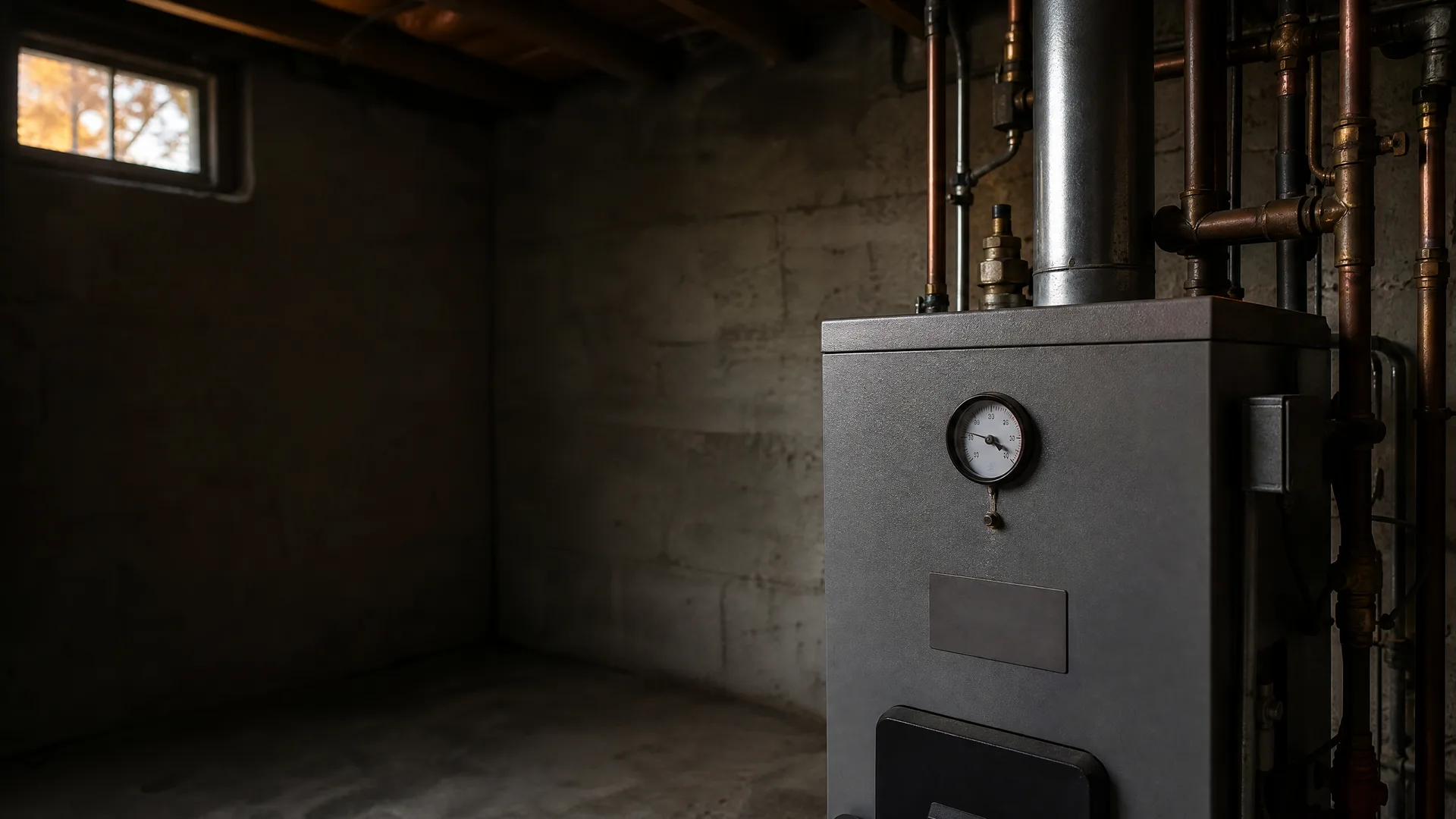
The basement is cool enough now that you notice it on the stairs. Outside, the leaves are mostly down, and the first hard frost hit the truck windshield this morning. You crouch by the boiler and check the gauge out of habit, the way you do every October. The needle sits low, closer to zero than the green band you remember. Nothing is leaking. Nothing smells wrong. But the needle tells you something you can't argue with, and you know this boiler has to carry you through a Rapid City winter, not just a mild night. A tech who works on these all season would know in a glance whether that reading means something or nothing.
A boiler that hasn't been looked at since last winter is carrying a year of sediment, a year of trapped air, a year of whatever the aquastat has drifted toward. South Dakota doesn't give you a mild stretch to find that out gently. Below zero finds the weak spot for you, usually at night, usually on the coldest night of the stretch. Getting someone out now, before that, is less a chore than a thing you stop carrying once the form is sent. The request goes to one contractor, someone local who works on boilers like yours all season and already knows what tends to fail first in a Carrier or a Weil-McLain that's gone too long between checks. Not five companies competing for your attention. One person who shows up knowing the equipment. That's what moving on this now buys you, before the nights get long and the basement gets cold enough to notice on the stairs.
Winter nights statewide average 11°F, per National Weather Service records, and your boiler is what stands between you and that cold once the sun goes down. At that temperature, a boiler runs long stretches without cycling off, and anything already working against it, a weak aquastat, a burner laying down soot, air trapped in a radiator, gets pushed harder for hours at a time instead of minutes. You'd notice it as a room that won't quite warm up, or a mechanical room that never goes quiet. A tune-up before those nights arrive catches what's already drifting out of spec while it's still an easy fix.
NOAA nClimDiv 1991-2020 county normals weighted by homes
You've read what gets checked, but not the order it happens in. You spend your evenings keeping track of the things that matter in your house, and this is one of them. A technician doesn't just pick a part at random and start there. There's a sequence to it, because some checks depend on the boiler being cold and others depend on it running, and doing them out of order means redoing work.
A technician starts with the boiler cold and off, looking at the pressure gauge, the pipes, and the burner for soot before anything is running. Next the boiler gets fired up, so combustion and flame color can be checked while it's actually working. Air gets bled from the radiators once the system is moving water, since trapped air only shows itself under pressure. The aquastat and low water cutoff get tested last, while the boiler is at operating temperature, because that's the only time you can confirm they're switching at the right point. Checking the aquastat cold would tell you nothing. The order isn't arbitrary. It's built around what the boiler is doing at each step.
Shut the system down and bleed pressure before opening anything up.
Pull the burner cover and inspect it for rust or soot buildup.
Clean the burner and check the flame once it's reassembled.
Test the aquastat and low water cutoff with the system running.
At 11°F, your boiler isn't cycling off much. It's running near continuously to hold the house steady, which means every part already under strain, a weak seal, a sticking valve, stays under strain for hours at a stretch.
NOAA nClimDiv 1991-2020 county normals weighted by homes


A tune-up before winter comes down to a handful of checks: the aquastat, the burner, the low water cutoff, the pressure gauge, the radiators. Each one gets confirmed working before the nights settle in below zero. That's the whole answer. What it means for your house is simpler than the list makes it sound. A boiler that holds steady pressure, fires clean, and shuts off at the right temperature is a boiler that can run near continuously at 11 degrees without anything giving out. One that's carrying a year of sediment or a sticking valve into that same stretch of cold has no slack left when it matters.
Finding someone to do this work shouldn't be the hard part of your evening. Once you send the request, it goes to one licensed contractor working in South Dakota, not three or four companies competing for the callback. That contractor is someone who services boilers through every winter here and already knows where the aquastat usually drifts, where the burner collects soot first, which low water cutoffs tend to fail quiet instead of loud. That's the kind of familiarity that catches a problem on the bench instead of at 2 a.m. during a cold snap.
The radiator that stays cool at the top, the room that takes longer to warm than it used to, the mechanical room that's gone strangely quiet because nothing's cycling right. All of it traces back to the same handful of parts. A tune-up checks them before the coldest night asks them to prove it.





The pro who reaches out is licensed in South Dakota.
It costs nothing to send, and you don't have to hire anyone.