
What size boiler a South Dakota home needs

A local installer who puts in boilers gets your project.

Get a boiler pro

There's no single size that fits every house. A boiler has to match your home's heat loss, meaning how fast the place loses heat on the coldest day of the year, not its square footage. A contractor figures this with a room by room load calculation, checking your walls, windows and insulation, because two homes the same size can need very different output. This matters more here than in milder states. South Dakota winters push well below zero, and a boiler sized too small will run constantly and still leave rooms cold, while one sized too large will short cycle, wearing out faster and heating unevenly. Most homes here already run on gas, so the question isn't whether to switch fuels, it's getting the BTU output right for your specific house. Guessing based on your old boiler's size just repeats whatever mistake was made the first time.

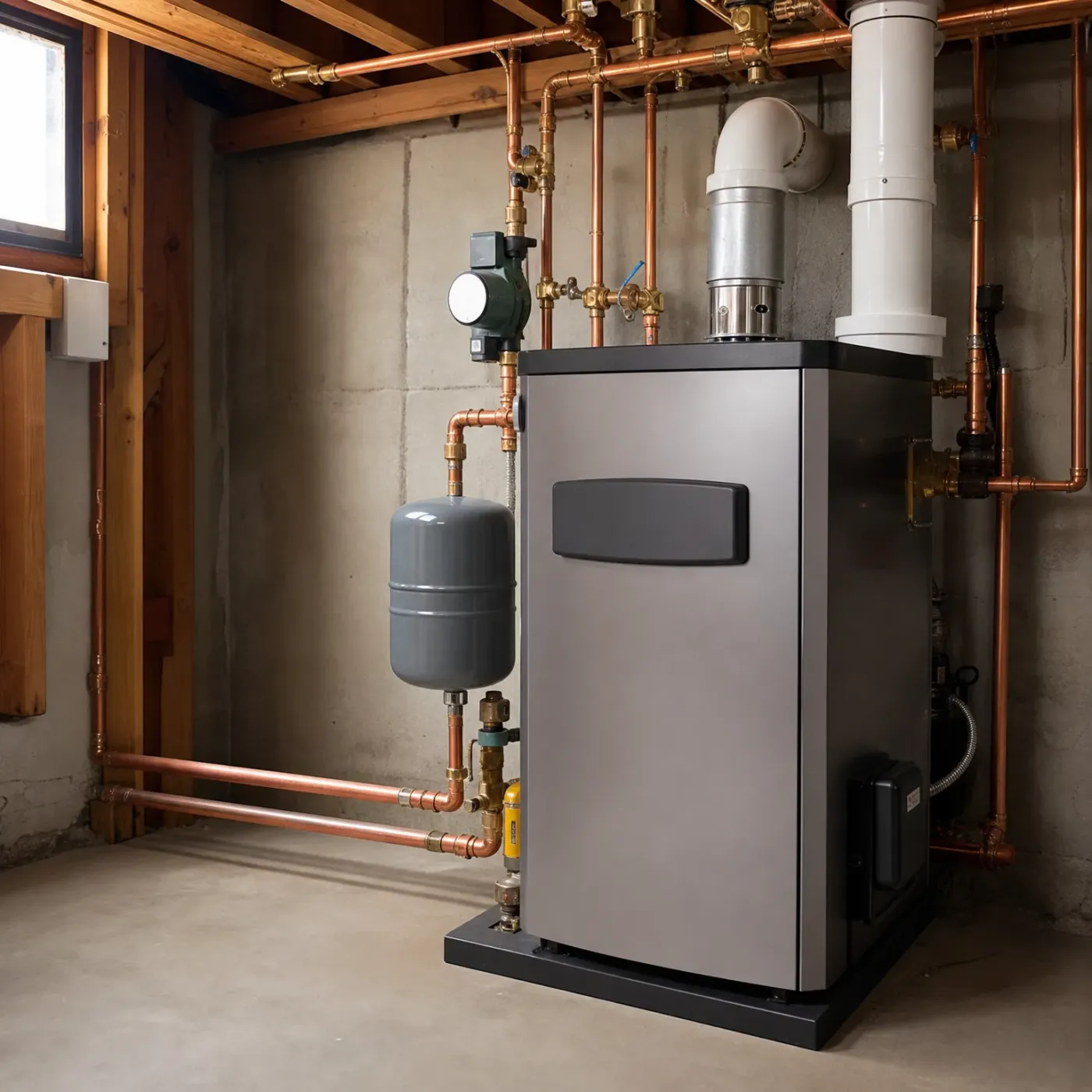
A gray floor-standing boiler on a concrete pad in a basement corner, connected to copper piping, brass valves, a circulator pump, an expansion tank, and a metal flue, with a window at upper left.

Sized Correctly

A boiler sized to your home's heat loss runs long, steady cycles on the coldest days. The circulator pump moves hot water through the system without the boiler shutting on and off every few minutes. Rooms heat evenly, and the unit lasts as long as it's built to.
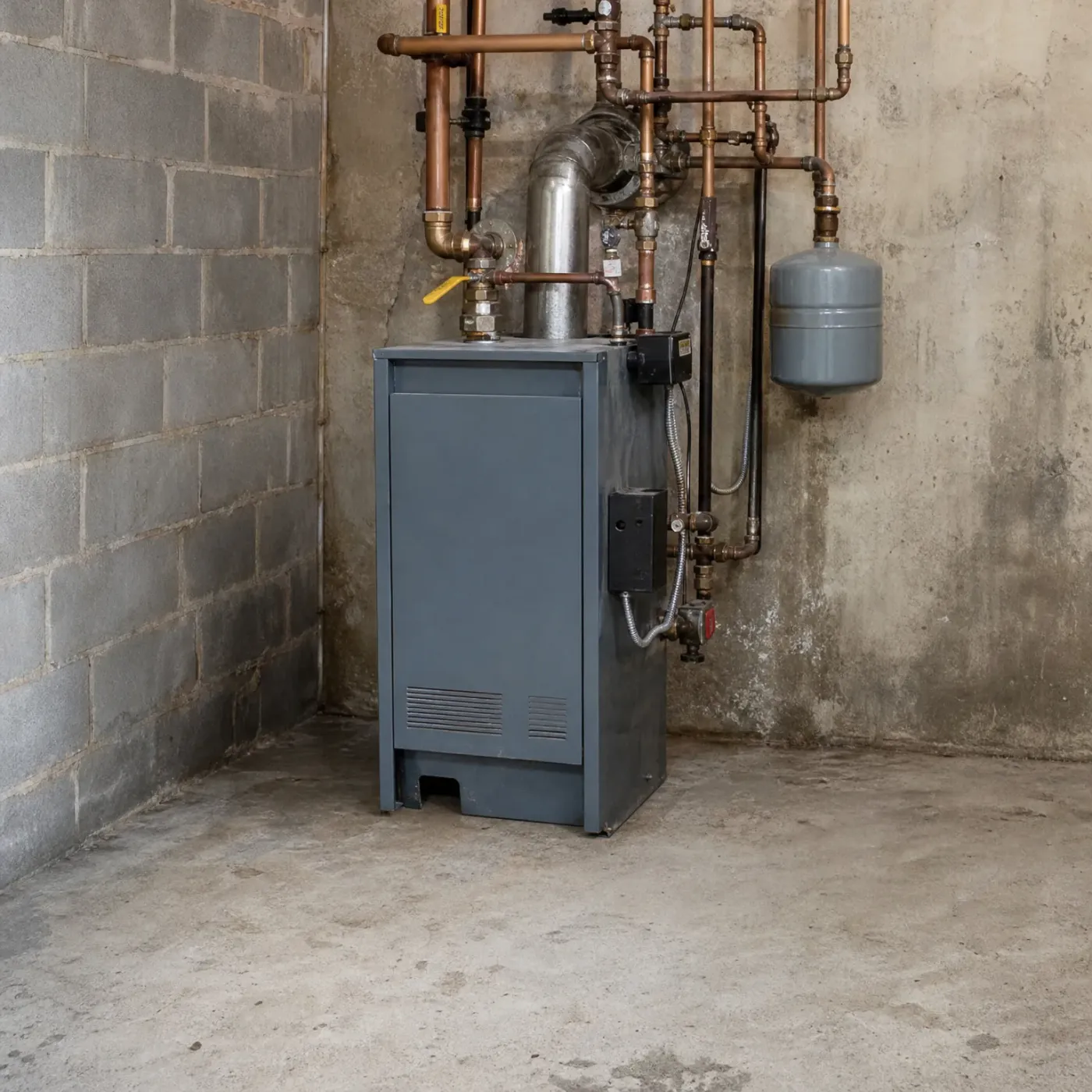

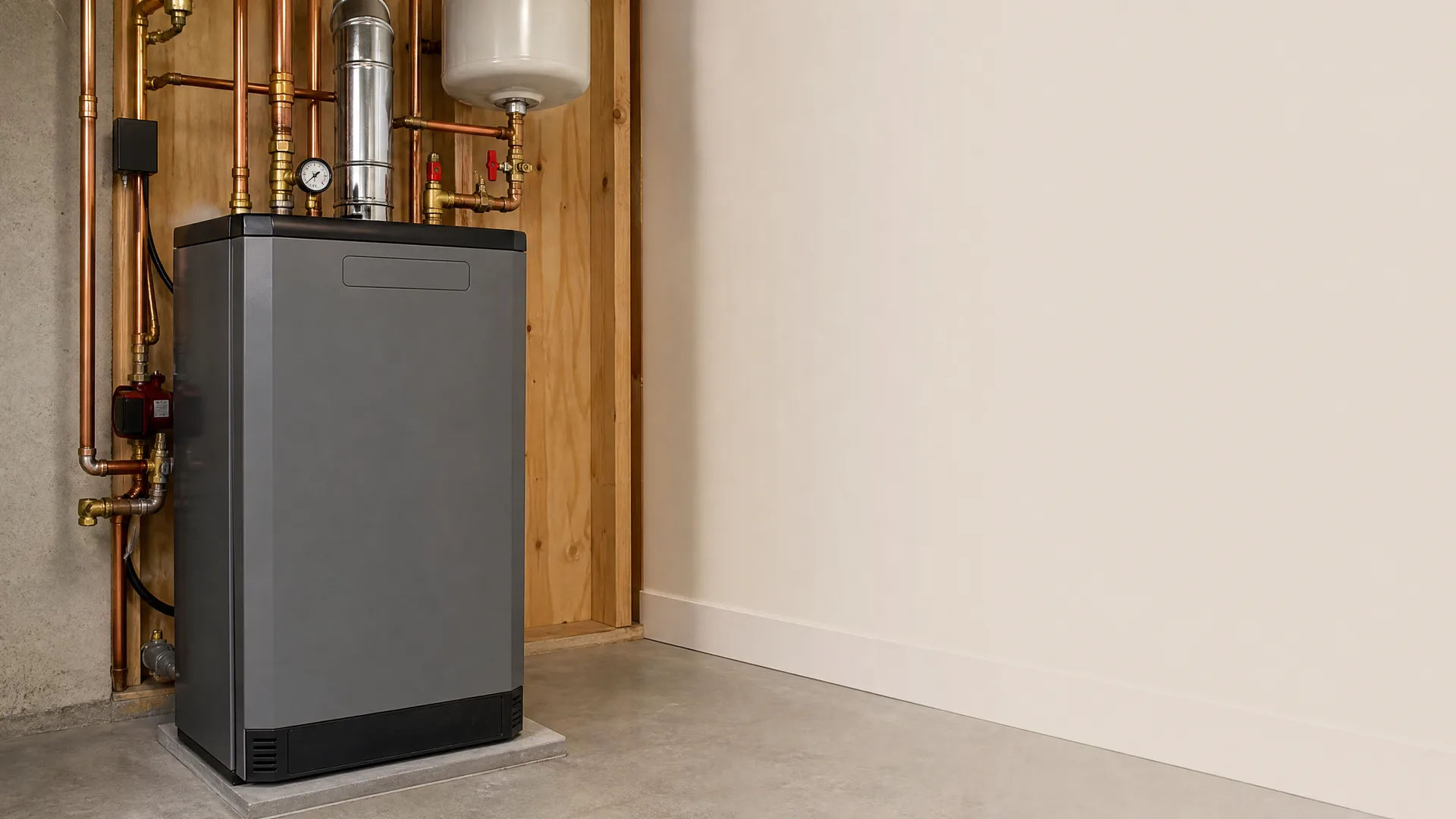
A gray floor-standing boiler in a basement corner with copper and black piping above it, a flue vent, and a gray expansion tank mounted on the concrete wall beside a concrete block wall.

Sized Wrong

An oversized boiler fires, satisfies the thermostat fast, then shuts off, over and over through the day. That short cycling wears on the parts and leaves some rooms warm while others stay cold. An undersized one just runs all day and still can't keep up when it's below zero outside.

Winter nights average 11°F statewide

Eleven below zero is a real load on a boiler, not a once-a-winter cold snap. At that temperature your boiler needs to hold a long, steady burn through the night to keep the house warm. If it's undersized, it'll run flat out and still lose ground by morning.

NOAA nClimDiv 1991-2020 county normals weighted by homes

How a Boiler Gets Sized

  • A contractor measures heat loss using Manual J, which checks every wall, window and ceiling for how fast heat escapes.
  • Square footage alone misses insulation, window count and ceiling height, all of which change the real heat loss number.
  • An oversized boiler short cycles, turning on and off before the water loop ever reaches a steady temperature.
  • A boiler sized too small can't keep pace once outdoor temperatures drop near zero and will run continuously without catching up.
  • Heat loss is measured in BTUs per hour, and that number, not the boiler's price or size, drives the sizing decision.
  • Radiators and baseboard length factor into the calculation too, since they determine how fast heat actually leaves the water and reaches the room.

A contractor sizing your boiler starts with Manual J, a room by room check of every wall, window and ceiling to see how fast each one loses heat. Square footage alone won't tell anyone that. Two houses the same size can lose heat at different rates depending on how many windows they have, how high the ceilings run, and how much insulation is behind the walls. The calculation accounts for all of it, then adds up the result in BTUs per hour, which is the number that actually drives the sizing decision, not the price tag on the unit or how big the old one was.

The radiators or baseboard matter too. Their length and type set the pace at which heat leaves the water and reaches the room, so the contractor factors that into the same calculation rather than treating the boiler as a standalone number.

Getting the BTU figure right matters on both ends. A boiler sized above your home's heat loss short cycles, switching on and off before the water loop settles into a steady temperature, which wears on the parts that start and stop the burn. One sized below it can't keep up once temperatures drop near zero. It'll run straight through without ever catching up to the thermostat. The right size runs long and steady instead, matched to what your house actually loses, not what it measures on a tape.

A gray-haired bearded man in a dark coat and scarf dusted with snow stands smiling in a dimly lit entryway with a white front door, a side table with a lit lamp, an oval mirror, and a patterned rug.
An older bearded man in a dark snow-dusted coat and gray scarf stands just inside a dimly lit home entry, with a framed picture, lit table lamp, and an adjoining room with a fireplace behind him, and snow visible through the open door.
A gray-haired, bearded man in a dark snow-dusted coat stands smiling in a dimly lit entry hall with a staircase, a lit table lamp, a framed picture, and a living room visible through a doorway.
An older man with gray hair and a beard, wearing a dark jacket dusted with snow, stands smiling in a dimly lit hallway with lamps and a living room visible behind him.
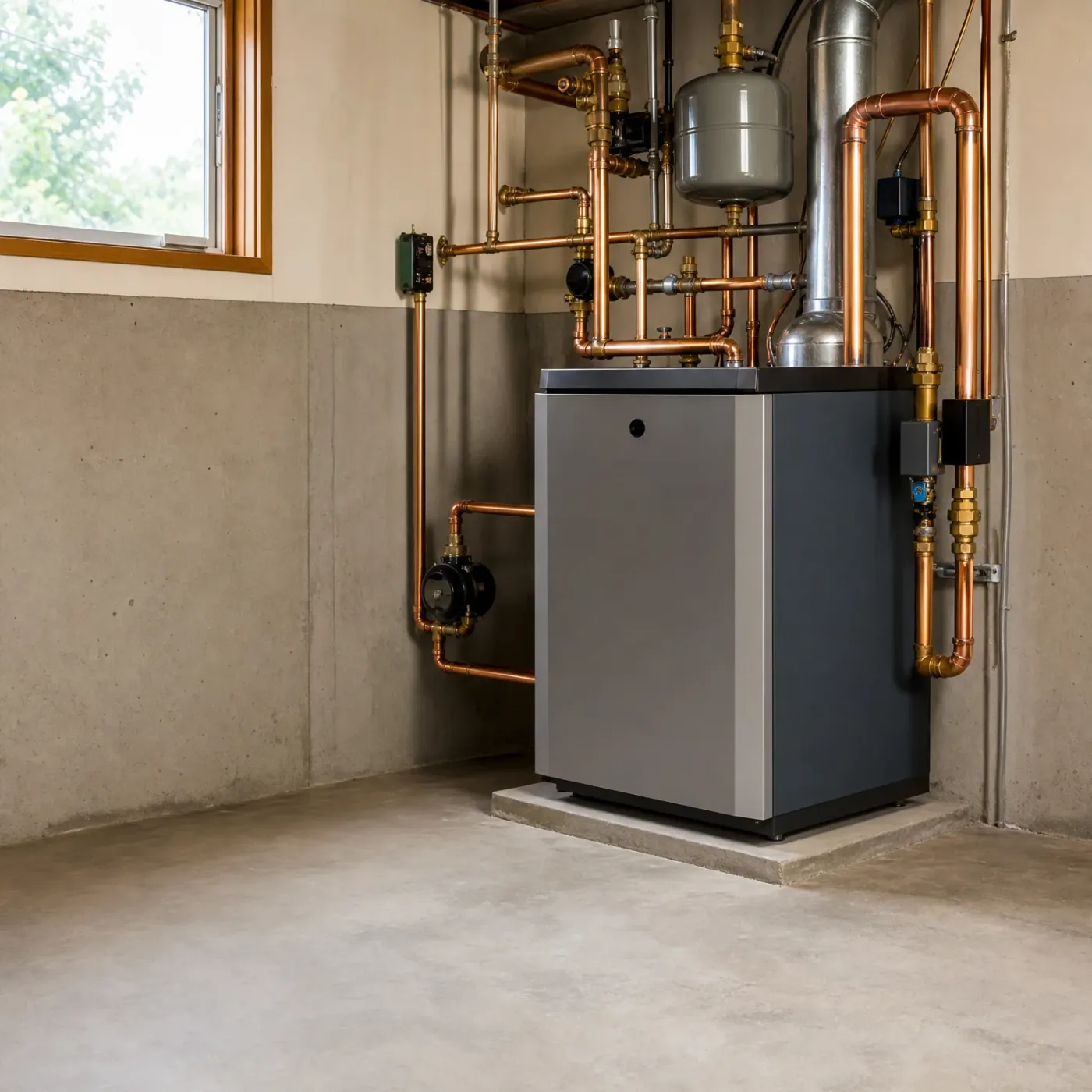
A gray boiler on a black base in a basement with concrete walls, connected to copper piping, a circulator pump, a gray expansion tank, and white and metal flue vent pipes.

Matched to your boiler job

Send the form and the search for an installer is over.

A local pro who knows boilers gets your details and gets in touch.

Hand it off

No fee to send it, and nothing to sign.

Why does my boiler short cycle if it's too big for my house?

You've noticed the boiler kicks on, runs for a few minutes, then shuts off, over and over, instead of holding a steady burn. It seems backwards that a bigger unit would cause this, since you'd expect more power to mean better heat. But the short bursts and the uneven warmth around the house are telling you something specific about how the boiler was sized when it went in.

An oversized boiler satisfies the thermostat too fast, so it shuts off before the water and the rooms catch up

A boiler that's too big throws more heat into the system than the house needs in that moment. The room where the thermostat sits warms up fast, the thermostat sees the temperature it wants, and the burner cuts out. But the water in the pipes and the iron in the radiators haven't caught up yet, so other rooms stay cold. A few minutes later the thermostat calls for heat again, and the cycle repeats. Each start puts wear on the ignition system and the heat exchanger that a long, steady burn wouldn't. A correctly sized boiler matched to your home's heat loss runs longer cycles and heats the whole house evenly instead of chasing one thermostat.

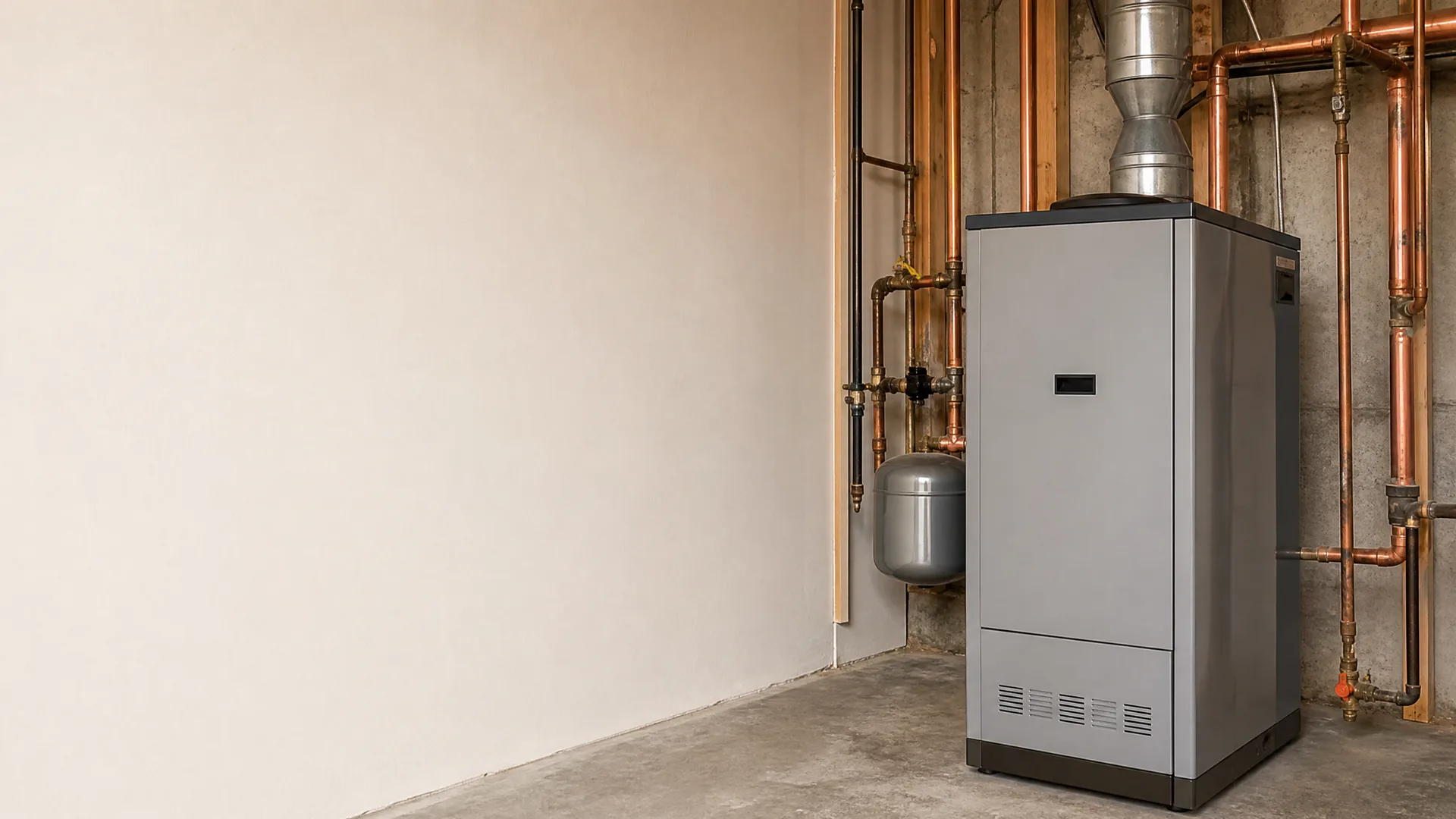
A dark grey floor-standing boiler on a concrete floor in front of a plywood wall, with copper pipes, valves, a pressure gauge, a flue pipe and a white expansion tank above it, beside a plain light-coloured wall.

What a boiler actually measures

BTU output is the number that matters, not the boiler's physical size or price. It tells you how much heat the unit can put into your home per hour. A contractor works backward from your heat loss number to land on the right BTU output, then picks a boiler built to deliver that output without straining to get there or overshooting it on a mild day.

A gray boiler unit with a metal flue pipe stands in a basement corner, surrounded by copper piping and an expansion tank against a plain light wall and concrete floor.

Why the near-zero nights count most

South Dakota winters push well below zero some nights, and that's the number a contractor sizes to, not the average January day. A boiler that holds steady at ten or twenty below will coast through the milder stretches without trouble. Size it to an average day instead, and the first hard cold snap exposes it, leaving the house unable to hold temperature when it matters.

A smiling man in a denim shirt and white t-shirt stands in an open dark doorway of a stucco house, facing a woman with long brown hair and a green jacket seen from behind in the foreground.

The right size comes from the math, not the model number

A boiler sized to your home's heat loss keeps you warm at eleven below and doesn't short cycle on a mild day in between. That number comes from a room by room look at your house, not a guess based on square footage or whatever the old unit happened to be. Get that number right and the rest of the decision follows it.

You don't have to run that calculation yourself. A contractor matched to your home can walk through it with you, room by room, and land on the output your house actually needs. Once you send in what you're looking for, the search is off your plate. The contractor takes it from there and reaches out to you directly, and you can go back to thinking about something other than BTUs.

A living room corner with a light beige sofa holding a textured taupe cushion, a large ceramic vase of olive branches by a window, a framed neutral artwork on the wall, and a dark bowl with stacked books in the foreground.
A woman wrapped in a thick beige fleece blanket sits on a sofa with an open book on her lap, beside a lit table lamp, with a frost-covered window behind her.
A gray-haired woman in a cream knit sweater stands in a dimly lit kitchen at night, looking to her right, with a round loaf of bread in the foreground and a dark window and potted plant behind her.

Boiler Installation

A boiler pro near you

Send the request and finding a pro stops being your problem.

A black-framed smartphone standing upright against a plain white background, its screen filled with solid green.
Step 1 of 3: Equipment