What your boiler pressure should be in South Dakota
Describe your boiler job, and a local pro who handles it gets in touch.
Most boilers want 12 to 15 psi when the system is cold. If yours sits lower than that, or the needle drops every few days, something is letting water or pressure out somewhere, and the gauge is telling you before anything else does.
Winters in South Dakota put a boiler through real work, and a system running low on pressure doesn't heat the way it should. Cold rooms, a boiler that short cycles, a pressure relief valve that keeps weeping. Those are the kinds of problems that get worse through January and February, not better.
Checking the gauge is the easy part. Finding out why it keeps dropping, and whether it's a loose valve, a small leak in the piping, or something at the expansion tank, takes someone who can actually look at your system. That's not something to sort out over the phone with three different companies while your house gets colder.
This page can put you in front of a contractor who handles boiler maintenance and knows what a pressure problem usually means in a system like yours. You tell them what you're seeing, and they take it from there. No calling around, no repeating the same description of your boiler to five different voices, no guessing which company actually answers the phone this time of year.
Gas heat is common here, and most of these systems run for months without much thought from anyone, which is exactly why a pressure problem can sit unnoticed until a cold snap forces the issue. Getting someone to look at it before that happens is worth more than figuring out the right number on your own.
The rest of this page walks through what your pressure should read, what it means if it's too high or too low, and what usually causes it to move. Keep reading, or get matched with someone who can check it in person.
What should my boiler pressure be in South Dakota?
A boiler gauge that reads outside the normal range is easy to notice but hard to interpret on your own. You want to know what number you're aiming for before you decide whether to bleed a radiator, add water, or call someone about a leak.
12 to 15 psi cold, 20 to 30 psi running
That 12 to 15 psi reading is for a cold system, before the burner has fired. Once the boiler heats up, the water expands and the needle climbs, usually to somewhere between 20 and 30 psi. That rise is normal and expected. What matters is where the needle sits when the system is cold and quiet. If it's below 12 psi at that point, the system is short on water. If it won't come down from the high end even when cold, that's a different problem, often a faulty expansion tank or a fill valve stuck open. Either way, the cold reading is your baseline, and it should hold steady day to day rather than drift.
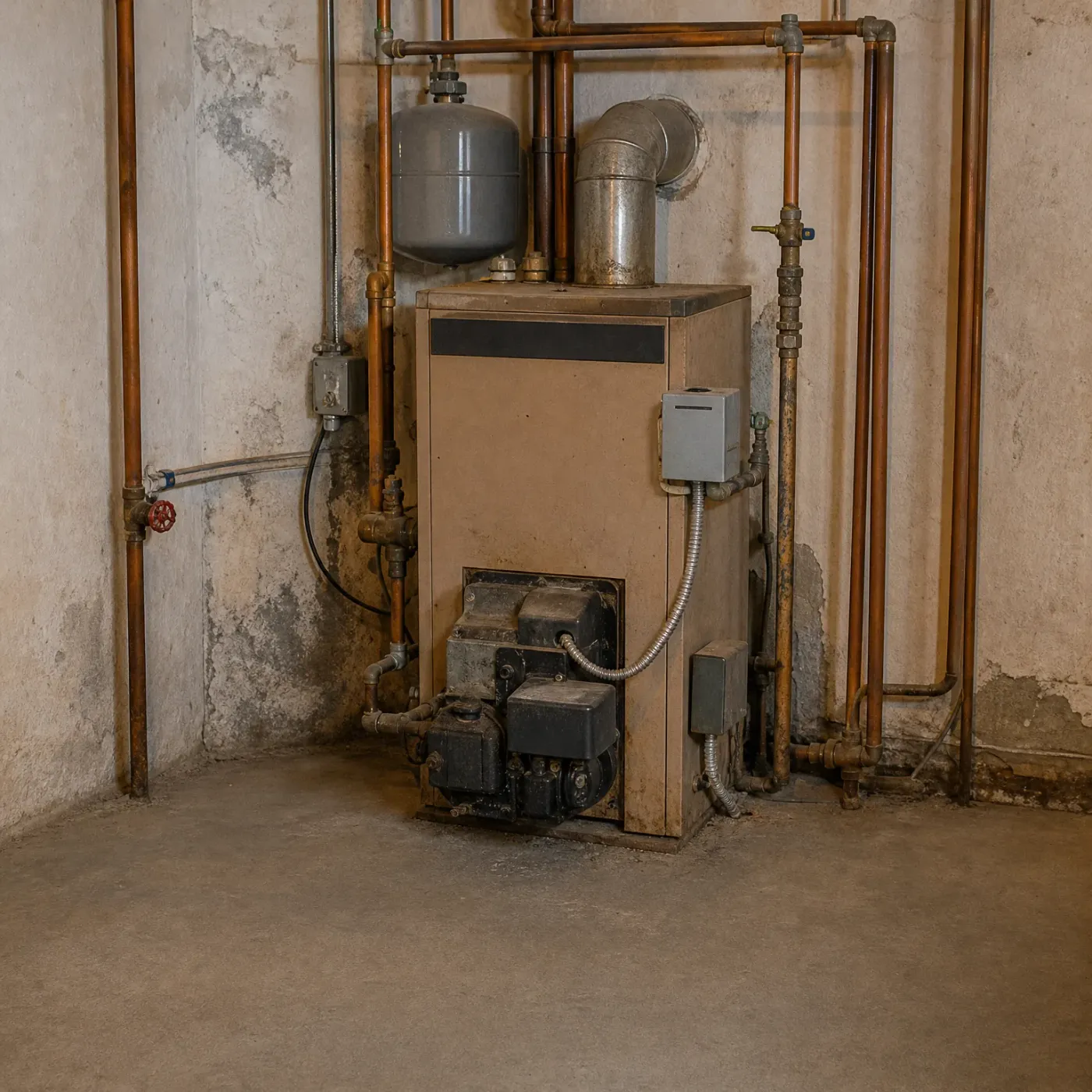
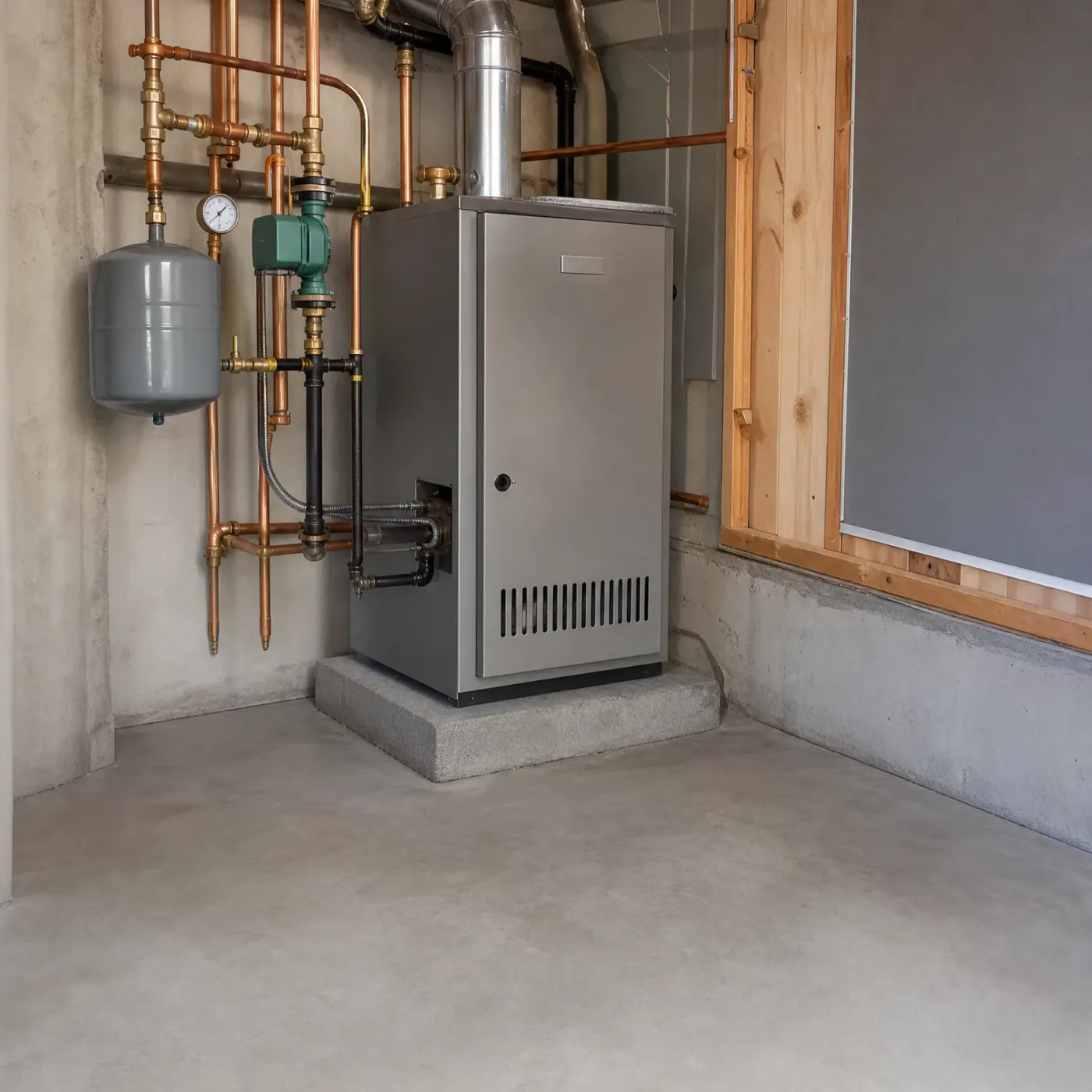
Before you get your boiler maintenanceAfter you get your boiler maintenance
Why cold pressure matters
The 12 to 15 psi number is a cold reading, checked before the boiler fires up and the water inside expands. Once the system runs, that same gauge can climb a few psi higher, and that is normal. What is not normal is a cold reading that keeps landing below 12. Water contracts as it cools, so if the system loses even a little, you will see it on the gauge first thing in the morning, before anything else in the house gives you a reason to suspect it.
What a falling needle means
A gauge that reads fine today and low in a week is not a fluke. Boilers are sealed systems, so pressure does not disappear on its own. It drops because water is leaving through a valve, a fitting, or the expansion tank, usually in small amounts that show up on the floor or the walls of the unit before they show up as a puddle. Catching that slow drop early, with a yearly check, is a lot less trouble than catching it after it stops the boiler from firing at all.
Winter nights average 11°F statewide
On a night that sits at 11°F, your boiler is working hard and staying at the right pressure matters more. A system that's low or losing pressure on a cold night like that will struggle to push heat through, right when you need it most.
NOAA nClimDiv 1991-2020 county normals weighted by homes
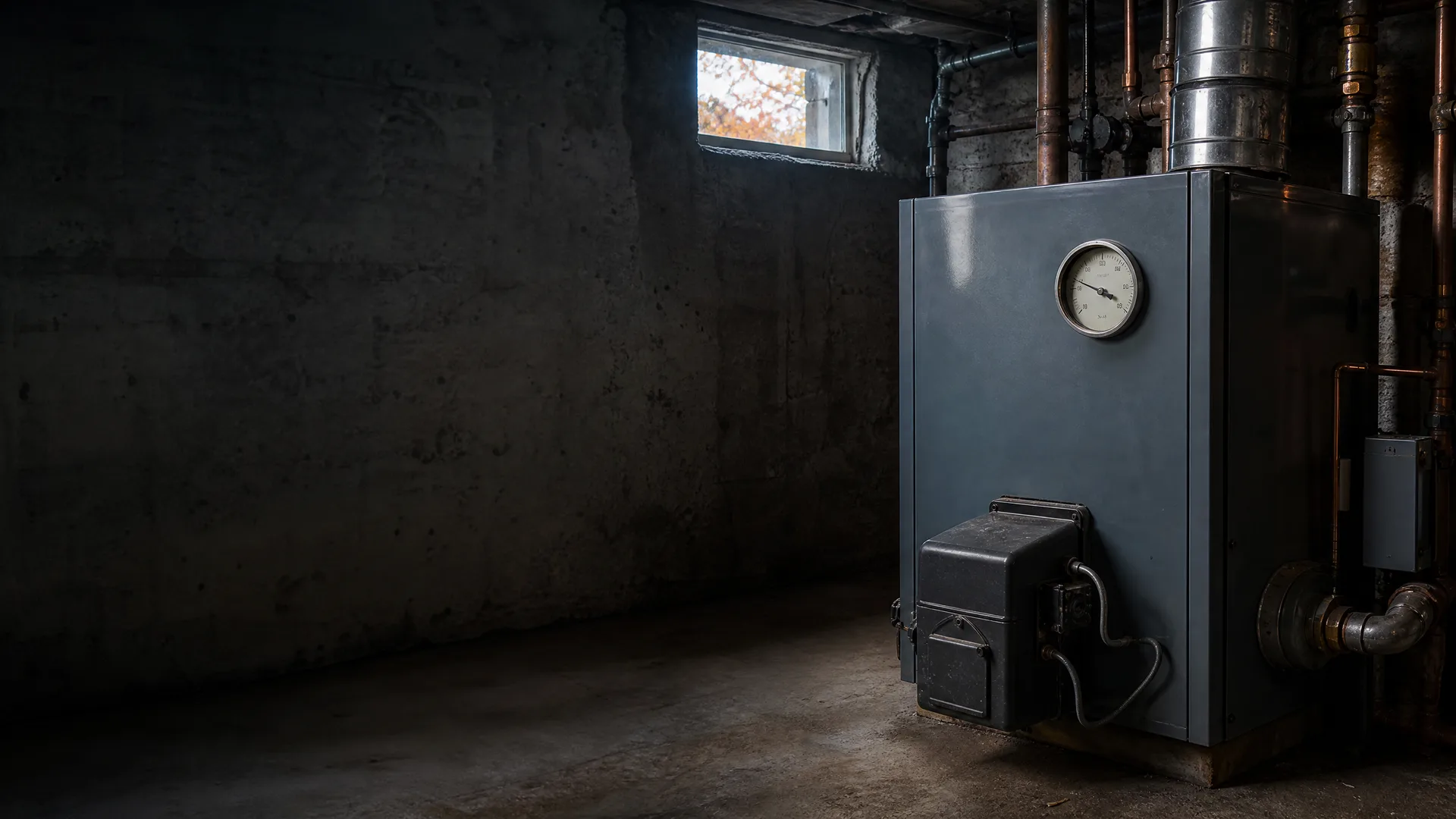
You go down to check the thermostat setting and the basement is cold enough that you notice your breath. It's late October, that first real cold snap. The boiler kicks on while you're standing there, and you glance at the gauge out of habit. The needle sits under 10, lower than it was last month. Nothing's leaking that you can see, no puddle under the unit, no hiss. You tap the glass once, the way you always do, and the needle doesn't move. You stand there a second longer than you need to, listening to the burner run, trying to decide if this is something you can still get ahead of or something that's already past that point.
Answer a few questions instead of calling shop after shop.
Sending the form costs nothing.
Topping off pressure yourself
You can add water to the system through the filling loop or feed valve and watch the gauge climb back to 12 to 15 psi. It takes ten minutes and the pressure reads right again. What it does not tell you is why the pressure dropped in the first place. A system that is low once a season might just need a top-off. One that is low every few weeks has water going somewhere, through a valve, a joint, or the expansion tank, and topping it off again only resets the gauge, not the leak.
Having it looked at instead
A contractor checking your boiler can trace where the pressure is going instead of just restoring it. That means pulling the expansion tank, checking valves and joints, and testing whether the pressure holds once the system is back up to temperature. It takes longer than refilling the loop, and it does not make the repair itself any smaller if something is worn out. What it does is tell you whether what you're dealing with is a five-minute top-off or a part that needs replacing before the next cold snap finds it for you.
Why does my boiler pressure keep dropping
You top it off and a few days later the needle has slid back down again. Maybe you hear a faint hiss near a pipe joint, or you find a damp patch on the floor near the boiler. Sometimes there's no sign at all except the gauge itself creeping lower each time you check it. A system that loses pressure over and over usually has water escaping somewhere, through a small leak in a pipe, a valve, or the boiler itself, and topping off the pressure doesn't fix that. Left alone through a South Dakota winter, a boiler running low on pressure can shut itself off or struggle to heat the house on the nights you need it most.
A gauge you top off every few weeks
You keep catching the drop and adding water, but nobody's looked at why it keeps happening. The loss is still there, just out of sight again for now.
You can read the gauge in a few seconds, and you already know the range you want to see: 12 to 15 psi cold.
Topping off through the filling loop takes about ten minutes and gets the needle back where it belongs for now.
You can watch how fast it drops, which tells you whether the leak is slow or worth worrying about sooner.
You can look around the boiler and nearby pipe joints for a damp patch or a hiss, but a leak behind a wall or under the floor won't show itself to you.
You won't know if the drop is coming from a worn valve, a loose joint, or the expansion tank unless you open things up, and that's not something most homeowners do on their own.
Having a contractor look at it
A contractor can pressure test the system and trace a drop to the actual joint, valve or tank causing it, not just treat the number on the gauge.
You get one visit instead of searching for someone, calling a few places, describing the same dropping gauge three times, and comparing quotes before anyone shows up.
A contractor checks the expansion tank and relief valve along with the pressure, since either one can cause the same symptom you're seeing on the dial.
Once the source is found and dealt with, you stop needing to check and refill the system every few weeks.
You're matched with a contractor who handles this in South Dakota, and they reach out to you directly instead of you chasing down who's available.
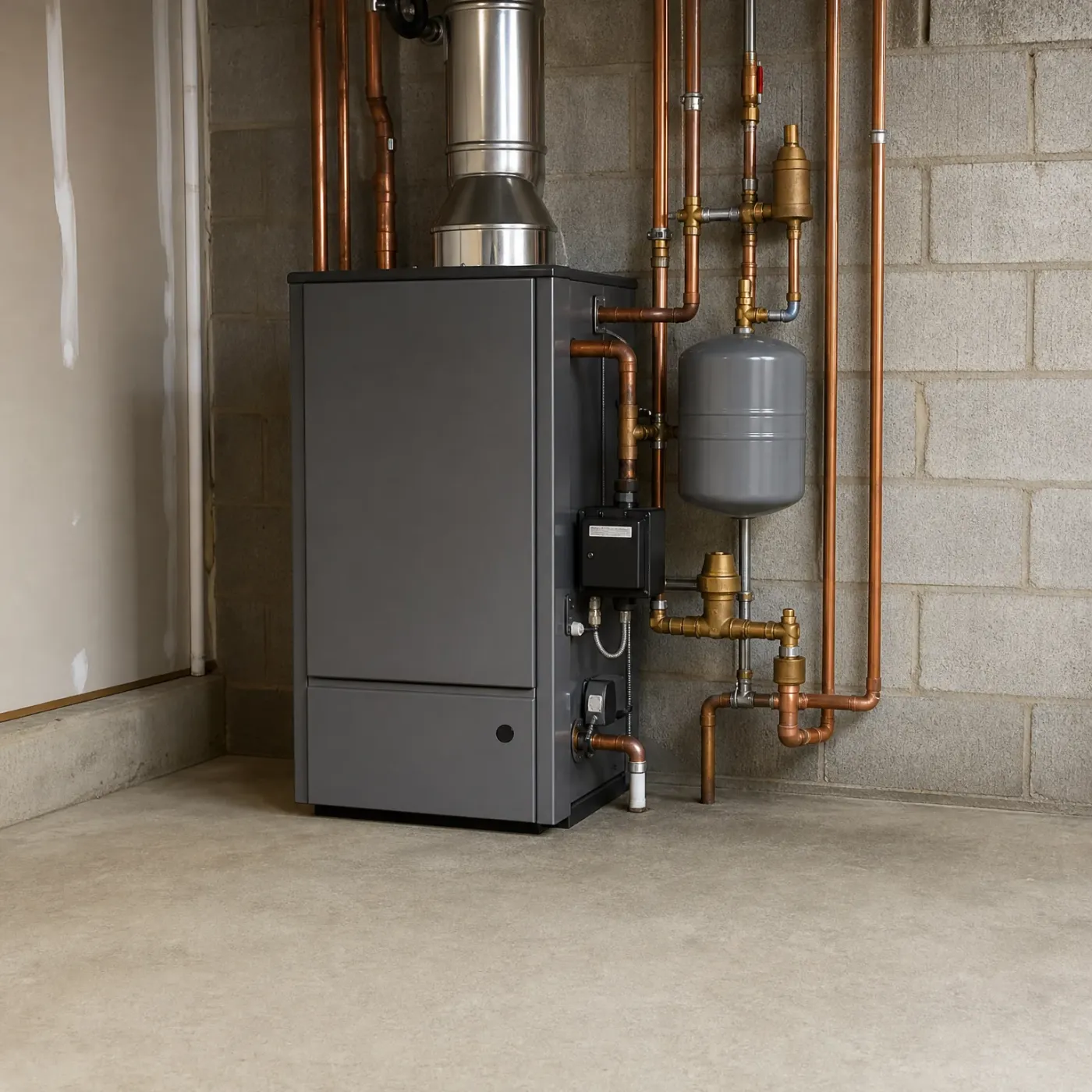
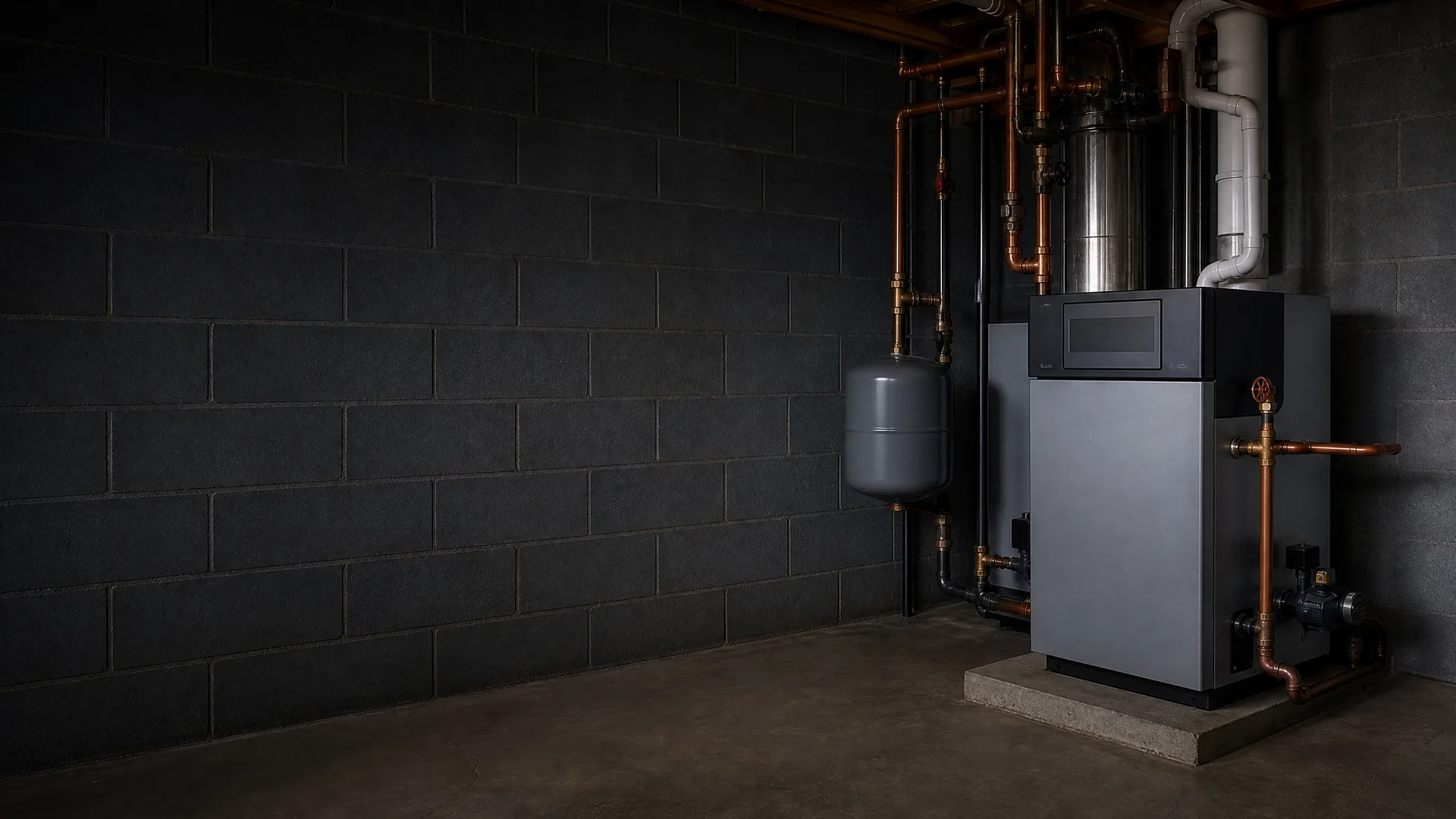
A boiler like this holds pressure on its own, feeding steady heat through the copper lines without anyone touching the gauge.
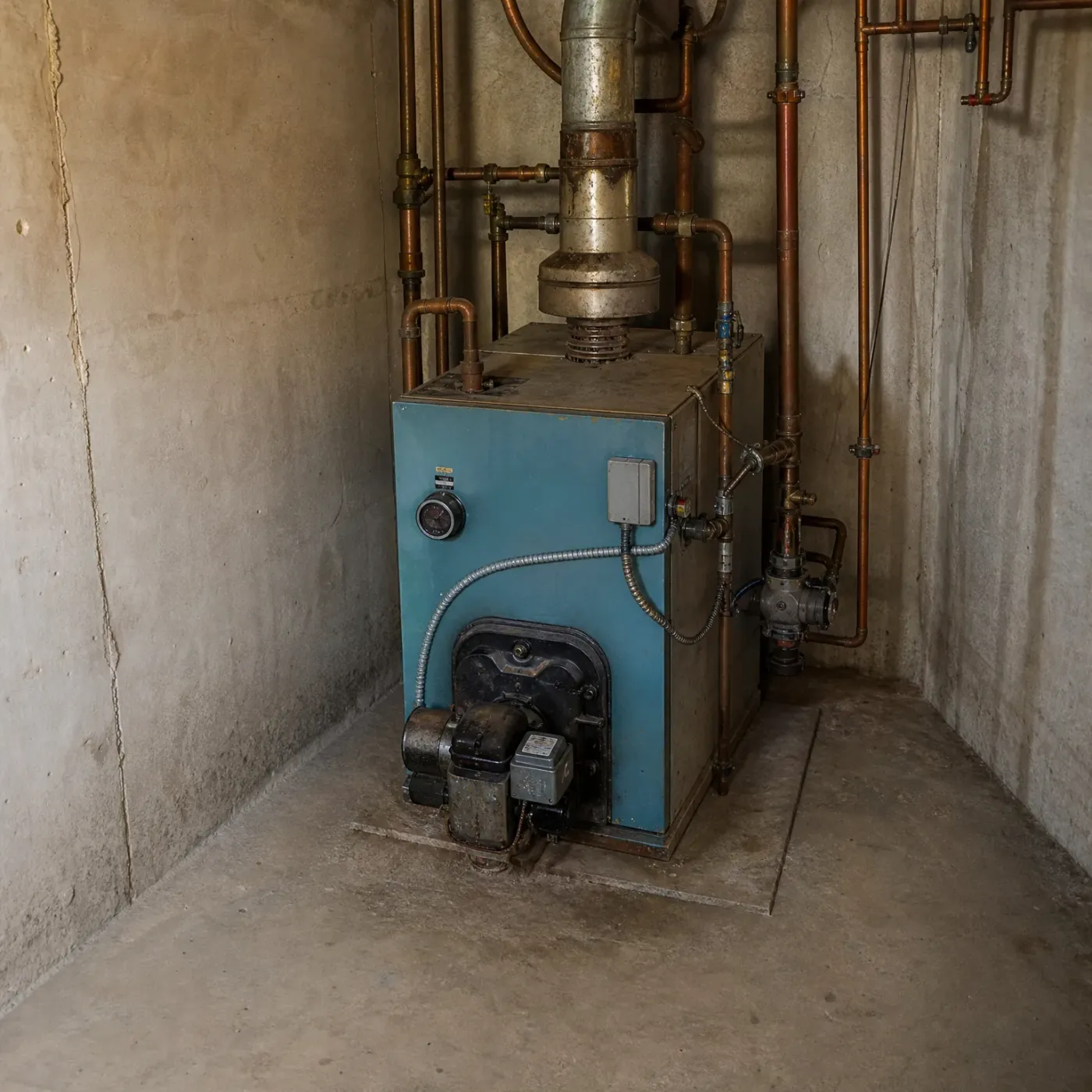
A teal boiler like this often means an older setup, where a pump or fitting can wear down and start losing pressure quietly.
Statewide, winter nights average 11°F, according to NOAA climate data. At that temperature your boiler is running close to nonstop to keep the house warm, and the system is under more strain than it is on a mild December evening. A unit holding steady at 12 to 15 psi cold handles that load fine. One that's already low starts the night at a disadvantage, and a small leak that was easy to ignore in October shows up fast when it's this cold outside. If the gauge has been creeping down, a night like that is when you'll feel it, usually as rooms that take longer to warm up or radiators that stay lukewarm near the end of the house.
NOAA nClimDiv 1991-2020 county normals weighted by homes
12 to 15 psi cold, holding steady on its own
That's the number. Cold, before the boiler fires, you want 12 to 15 psi on the gauge, and you want it to still read that way next week without you touching it. Anything that drifts down on its own has a reason, even when nothing is dripping or hissing where you can see it.
You already check the gauge, top it off when it needs it, and notice when something's off faster than most people would. What you can't do from where you're standing is find the leak or the worn part causing the drop, and chasing that down usually means calling around, explaining the same thing to each one, and sorting through quotes before anyone sets foot in your basement. Answer a few questions about your boiler and you'll be matched with a contractor suited to this kind of job, and they'll reach out to you directly. No searching, no repeating yourself, no guessing who's worth calling.
A pro who works on boilers
Fill out one form instead of calling around for a boiler tune-up.