





Why one radiator stays cold in a South Dakota winter

Step 1 of 3: Equipment

A cold radiator while the rest of the house heats up usually means air is trapped inside it, or the valve feeding it is stuck. Hot water boilers push water through pipes to each radiator, and if a radiator has an air pocket at the top, the water can't fill the space and that radiator stays cold while its neighbors work fine. The same thing happens if the inlet valve is closed, half closed, or seized from sitting untouched for a year or more. Bleeding the radiator fixes the air problem in most cases. If bleeding it does nothing, the valve itself may need to come apart or be replaced, and on an older boiler the circulator pump or a balancing issue elsewhere in the loop can also leave one room shortchanged. A single cold radiator in a South Dakota winter is worth fixing before it turns into a room you give up on heating altogether.

A smiling man in a gray long-sleeved shirt stands in a kitchen looking to the side, with open shelves of dishes, a white mug on the counter, a potted plant, and a view through a doorway into a living room.
A smiling bearded man in a green sweater sits at a white marble kitchen island with a mug, potted plant and bowl of fruit, in a bright white interior with open shelving and an arched doorway.
A smiling man with dark curly hair and a beard, wearing a dark green knit sweater, stands at a white marble kitchen counter with a dark blue mug, with open shelving, pendant lights and a houseplant behind him.
A smiling man in a green ribbed sweater stands behind a wooden table holding a ceramic mug of coffee in a kitchen with white subway tile, shelves of potted plants, and a bowl of fruit.

One radiator cold while the rest of the house is warm

You'll feel it when you put a hand on the radiator: cold at the top, maybe warm lower down, or cold straight through while every other one in the house is doing its job. Sometimes there's a faint gurgle or knock from inside it that the others don't make. The room it heats runs colder than the rest of the house, and in a South Dakota winter that gap shows up fast, especially if that room has a thermostat of its own or sits over an unheated space. Left alone, the boiler keeps working to heat a radiator that isn't giving the room anything back, and the stuck valve or trapped air that's causing it doesn't clear itself.

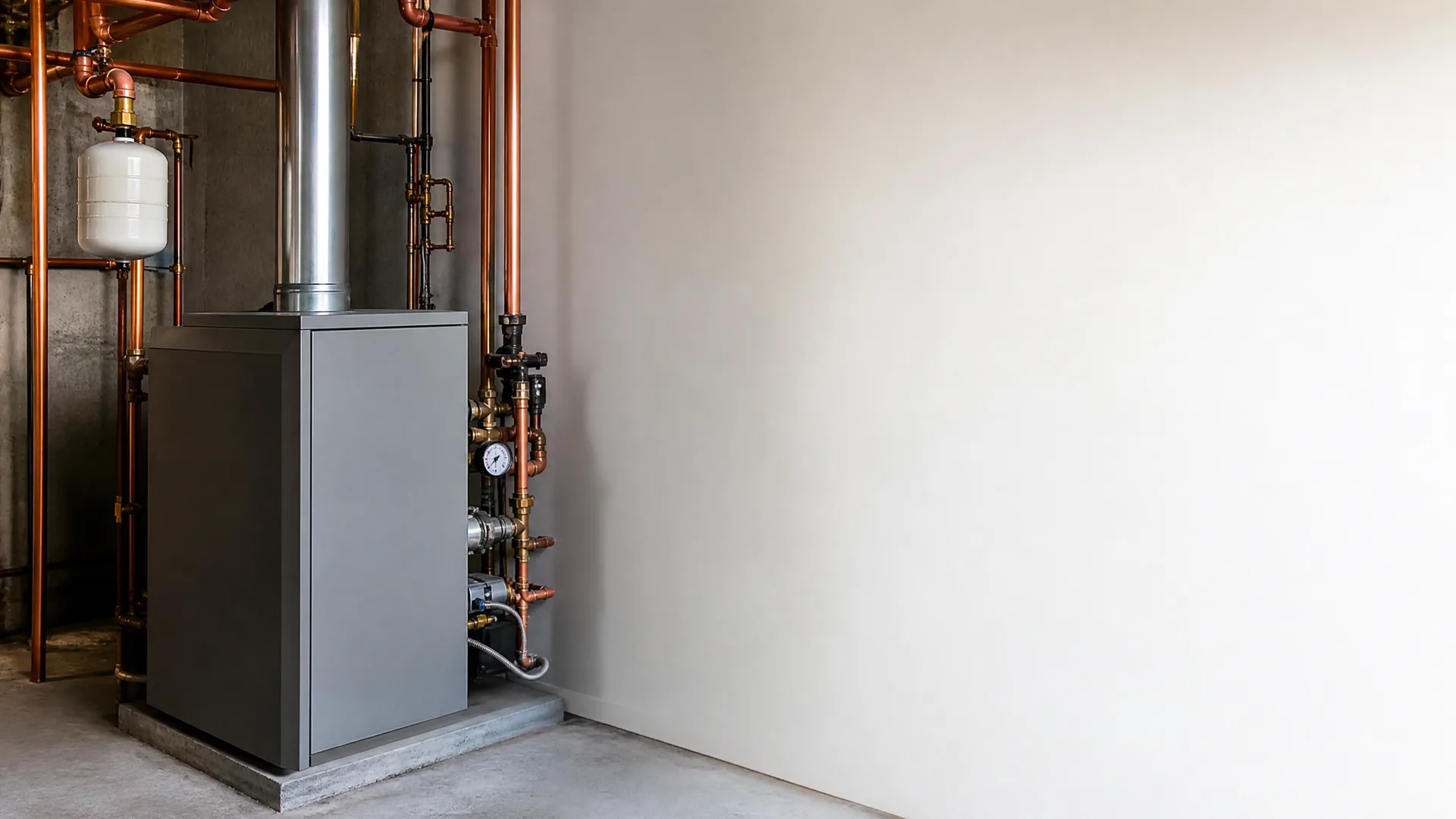
A grey floor-standing boiler with a metal flue and copper pipework, valves and a pressure gauge stands in the corner of a room with plain light walls and a concrete floor.

Why bleeding it usually works

Every radiator has a small valve near the top, usually square or with a slot for a key. Opening it lets trapped air hiss out until water replaces it, which is why a radiator that was cold starts to heat once water reaches the top. Boilers refill automatically, so the system doesn't lose pressure for long. It's a five-minute job, but the valve has to be reached and turned the right way, and some are seized shut from years of sitting untouched.

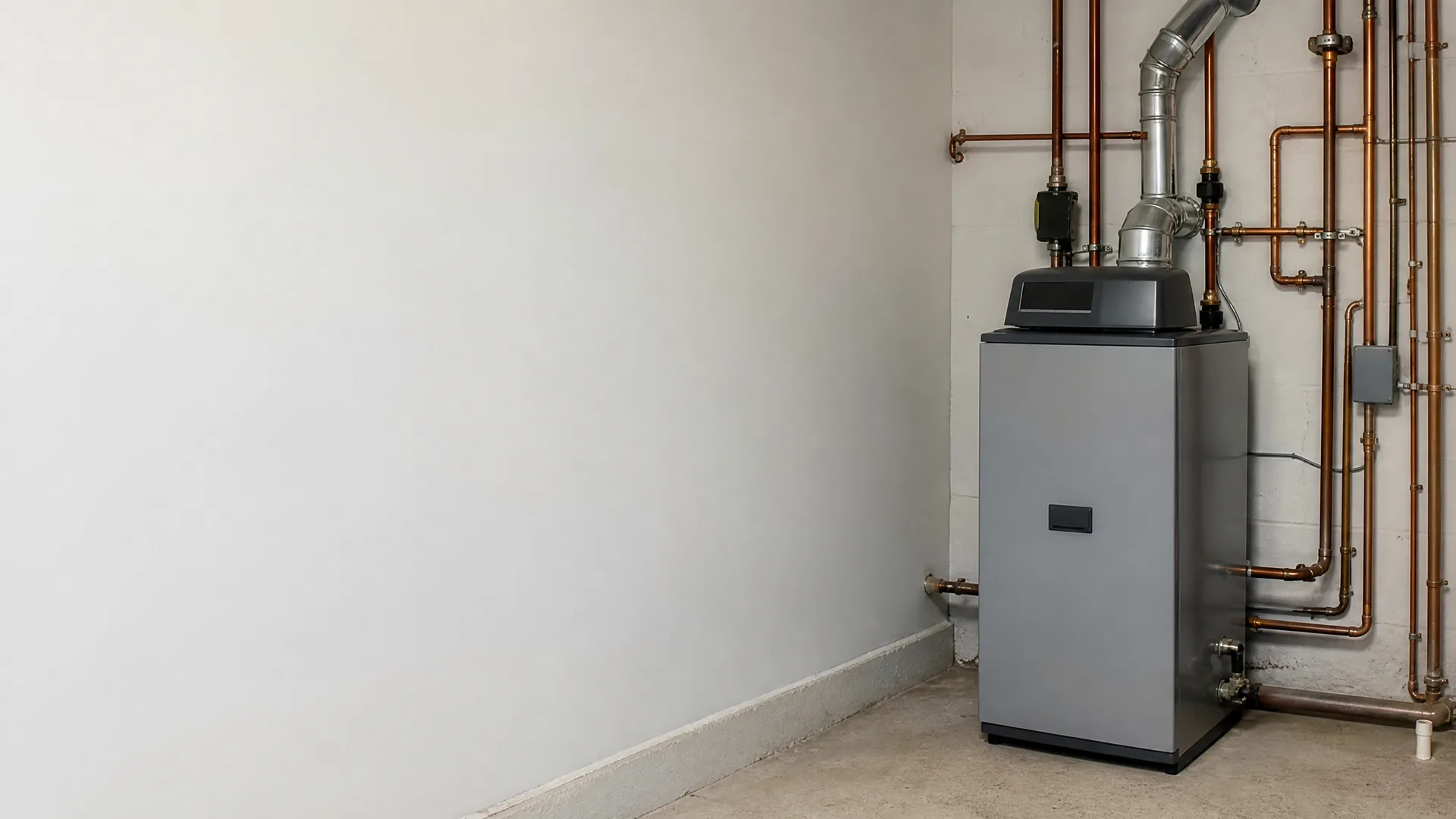
A gray floor-standing boiler with a metal flue pipe stands in the corner of a plain painted basement room, connected to copper pipes running along the wall.

When the problem is the valve, not air

If bleeding brings water right away with no hiss of air, the radiator isn't airlocked. The inlet valve at the bottom is more likely stuck closed, or a thermostatic valve head has failed in the shut position. Water never gets in, so there's nothing for a key to release. That valve can seize from mineral buildup inside, especially in a system that's gone a long time between services, and it won't free itself by bleeding the top.

Bleed It Yourself or Call for Repair

Bleed it yourself

  • You need a radiator key or a flathead screwdriver, depending on the valve, and a rag to catch the water.
  • Hold a cloth under the valve, turn it slowly, and wait for the hiss of air to turn into a steady trickle of water.
  • If water comes out right away with no hiss, the radiator wasn't holding air and something else is blocking it.
  • A radiator that heats evenly after bleeding was just air-locked, and the fix holds unless air keeps coming back.
  • If the same radiator needs bleeding every few weeks, air is getting in somewhere and that points to a different problem.

Call for repair

  • A radiator that stays cold after bleeding usually has a stuck valve, a closed loop, or a problem further back at the boiler.
  • A contractor can tell a shut valve from a buildup of sludge or scale inside the radiator, which bleeding won't touch.
  • Sending the form once means you stop calling around South Dakota for someone licensed to work on a boiler system.
  • You explain the problem a single time instead of repeating it to every contractor you call for a quote.
  • Getting it checked now, while it's one cold radiator, is easier than waiting until the valve seizes or the boiler loop backs up.
A gray boiler with a metal flue pipe stands in a basement against concrete and concrete-block walls, connected to copper piping, a circulator pump, and two gray expansion tanks.

The system working right

One radiator cold doesn't mean the boiler itself is failing. The rest of the house is proof it's doing its job, pushing hot water out through the pipes to every other radiator in the home. The problem is local, somewhere between the boiler and that one cold spot.


A gray boiler on a concrete pad in a basement with painted concrete block walls, copper piping, a metal flue, and electrical control boxes.

When it's more than air

If bleeding the radiator doesn't fix it, something downstream of the boiler needs a closer look. A stuck valve, a clogged line, or a circulator pump that isn't moving water where it should. That's a job for someone who can trace the pipes and test the parts, not guess at them.

A man in a blue T-shirt sits on a light gray sofa, laughing while looking at an open laptop in the foreground, with a framed picture, lamp and potted plant behind him.
A bearded man in a blue and brown plaid flannel shirt stands indoors looking out a window at snow-covered trees, with a ceramic mug on the windowsill.

Hand off the boiler problem

One form replaces the calls you'd make to find a boiler pro.

No charge to send it. You decide if you hire them.

How water actually reaches a radiator

  • Water in a hot water boiler system flows out from the boiler and back again, and each radiator sits on that loop like a stop along the way.
  • The feed valve at one end lets water in, and the air vent or bleed valve at the other lets trapped air escape so water can fill the whole radiator.
  • A shutoff valve where the pipe enters the radiator controls flow, and if it's closed partway or stuck, water never reaches the far end.
  • Gravity and the pitch of the pipe running to that radiator affect how easily air gets pushed out ahead of the water.
  • A circulator pump near the boiler keeps water moving through the whole loop, and if a branch is blocked, water takes the easier path and skips that radiator.
  • Sediment or a stuck valve stem inside the radiator can block flow the same way trapped air does, just further in.

Your boiler doesn't heat each radiator on its own. It pushes hot water through one loop of pipe that runs from radiator to radiator and back to the boiler again. Each radiator is a stop along that loop, not its own separate system. Water comes in through a feed valve at one end. At the other end, an air vent lets trapped air out so water can take its place and fill the whole radiator, top to bottom. Between the pipe and the radiator there's a shutoff valve, and that valve has to be fully open for water to get through. If someone closed it partway years ago, or the stem inside is stuck with sediment, water stops right there and never reaches the far end of the radiator. The pipe running to that radiator also has a pitch to it, and that pitch matters for how easily air works its way out ahead of the water. A circulator pump near the boiler keeps everything moving, but water takes the path of least resistance. If one branch is even slightly blocked, more water flows through the branches that are open and skips the one that's giving it trouble. That's why a single cold radiator doesn't mean the boiler is struggling. It means something between the main pipe and that one radiator, whether it's air, sediment, or a valve, is stopping water from getting where it needs to go.

A gray boiler unit on a concrete pad in a basement corner, connected to copper piping, valves and a metal flue against painted concrete block walls.
One radiator, fed and venting right, heats evenly while the rest of the house stays comfortable off the same loop.
A blue oil-fired boiler with a burner unit sits on a concrete pad in a basement corner, with copper piping, valves and a gray expansion tank overhead against concrete block walls.
A stuck valve or a blocked line on one radiator in an otherwise sound system is a local fix, not a boiler replacement.

Winter nights average 11°F statewide

At 11°F overnight, your boiler is working the whole night through, not just the coldest snap. A radiator that's not pulling its weight means another one is carrying extra load to keep the room comfortable, and that gap shows up fast when it's this cold out.

NOAA nClimDiv 1991-2020 county normals weighted by homes

A closed laptop and a cream mug of coffee on a coaster sit on a dark wooden table, with a potted plant at left and a kitchen counter, tiled backsplash and shelf of ceramics in the background.

A local problem, not a boiler problem

One cold radiator points to a stuck valve or trapped air, not a boiler that's failing you. The rest of the house staying warm all winter, even on the nights South Dakota gets into single digits, is the proof. A plumber who works on hot water boilers can bleed the line, free the valve, or check for a blockage in a visit, without touching anything else in the system.

What this really saves you is the hunt. No scrolling through reviews trying to tell one plumbing company from another, no calling three of them to ask if they even work on boilers, no explaining the same cold radiator story over and over to get a quote you can compare. Send the form once and that part of it is off your plate. The fix still takes a visit and a trade to do it right, but finding the right person to show up stops being something you have to manage.

Interior corner of a room with a window and sheer curtain at left, a gray upholstered sofa with a cushion at right, and a round wooden table holding stacked books and a round vase with an olive branch.
A dark wood cabinet with a paneled door and a ceramic pot of green foliage on top stands in a beige-walled room with white baseboard, a window at left, hardwood floor, and a patterned area rug.
A dark wood glass-front cabinet holding folded towels, woven baskets and a ceramic vase stands in a bathroom corner beside a window, with a potted fern and stacked towels on top and a freestanding tub partly visible at left.
A woven basket holding a green cushion and a cream fringed knit throw sits on a wood floor in a room corner beside a window and a dark wooden cabinet.
Corner of a room with a dark wood cabinet topped by a round vase, a linen curtain at a window, white baseboard, oak plank flooring with sunlight patches, and a woven jute rug in the foreground.
A dark wood sideboard against a pale wall holds a shallow stone bowl and a round ceramic vase with leafy branches, with sunlight from a curtained window falling across the wall, wood floor and woven rug.

Let someone else find the pro

Describe what your boiler is doing once, in one form.

Hand off my repair

There's no charge for the request.










