





Why your boiler is leaking water in South Dakota

Step 1 of 3: Equipment

A leaking boiler is usually losing pressure somewhere it shouldn't. The most common cause is a worn pressure relief valve, which opens to release water when pressure builds too high and can start dripping even at normal pressure once it wears out. Leaks also show up at the pump seal, where a failing seal lets water seep out slowly around the shaft, or at pipe fittings and the expansion tank, especially once a system has run through a few winters of heating and cooling cycles. A gas boiler heating a South Dakota home works hard once the cold sets in, and that repeated heating and cooling stresses seals and joints over time. Left alone, a small leak can corrode the parts around it or let the system lose enough pressure to shut down. It is not something to watch and wait on. The fix depends on which part is actually failing, and that takes someone who can pressure test the system and find it.

A gray-haired bearded man in a dark knit sweater sits on a light gray sofa in a sunlit living room, looking to his left, with a framed artwork, a potted palm, and a curtained glass door behind him.
A middle-aged man in a dark green sweater sits on a light grey sofa looking toward a sunlit window, with a wooden shelving unit, lamp and potted plants in the background.
A man in a dark green sweater sits on a light grey sofa in a sunlit living room, looking to his left, with a shelving unit, houseplants, framed art and a large window behind him.
A gray-haired bearded man in a dark green sweater sits on a light gray sofa in a sunlit living room with a potted plant, framed picture, and dark shelving in the background.

Where exactly is the water coming from on my boiler?

Water showing up somewhere on or near the boiler doesn't tell you much on its own. A puddle under the unit could be coming from a fitting a foot away, or from the valve itself, or from a crack higher up that's running down the casing. Before anyone can say what's wrong, it helps to know where the water is actually starting from, not just where it ends up.

Trace the water up from the puddle, not across the floor

Water runs downhill once it finds a path, so the wet spot on the floor is rarely the source. The pressure relief valve sits near the top of the boiler with a discharge pipe running down toward the floor, and if that pipe is wet or dripping at the bottom, the valve above it is the one letting go. If the water is coming from a joint or union instead, you'll usually see mineral buildup or rust staining right at that fitting. A leak from the circulator pump shows up at the pump housing itself, not lower down. Following the wet trail upward to where it actually starts is the only way to tell a valve problem from a fitting that's worked loose.

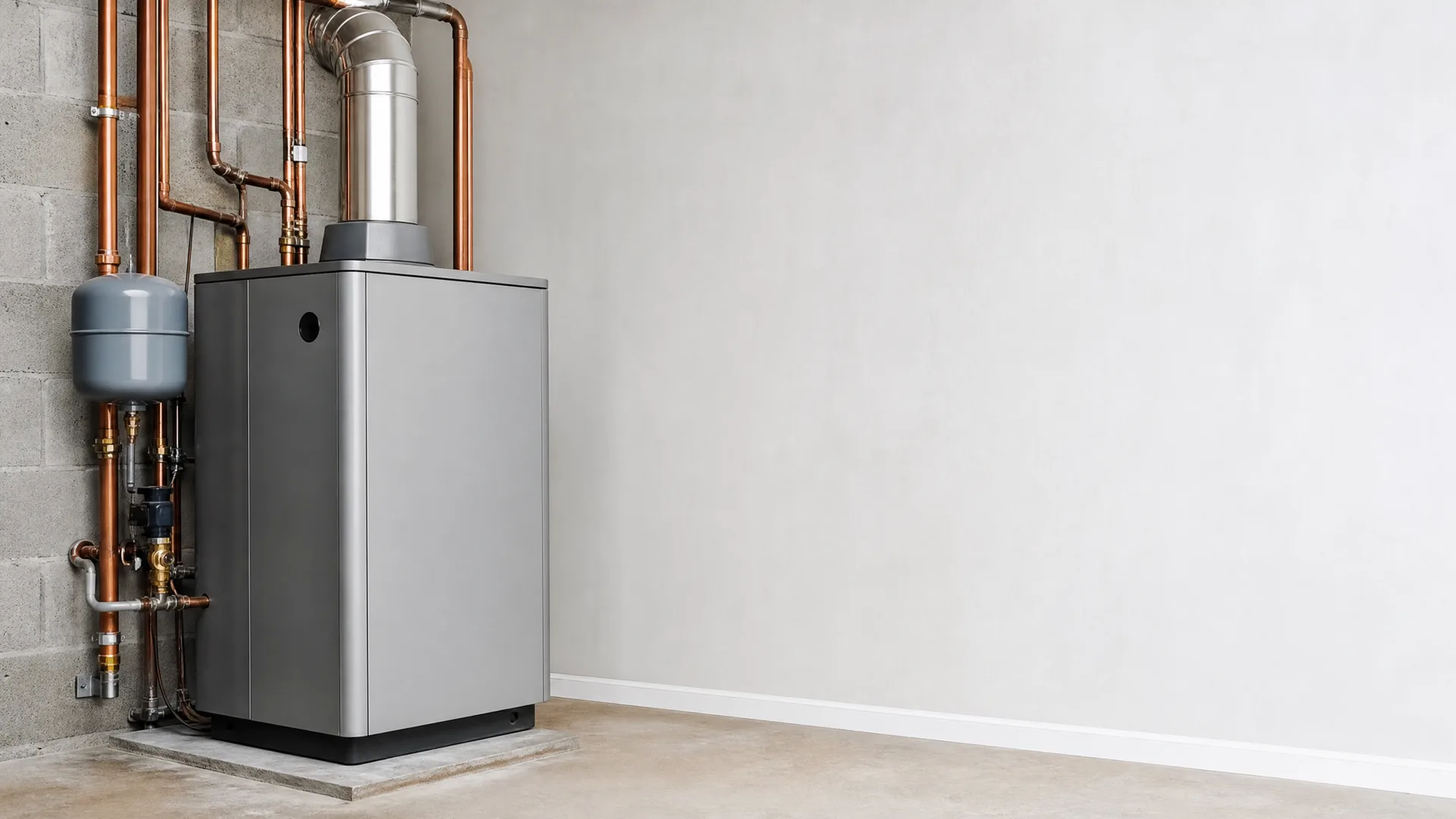
A grey floor-standing boiler with a metal flue and copper pipework and an expansion vessel stands against a concrete block wall beside a plain light-coloured wall.

What the pressure valve is doing

The pressure relief valve sits near the top of the boiler and is built to open at around 30 psi. Below that, it should stay shut. Gas boilers in South Dakota run through long heating stretches each winter, and that valve cycles with every one of them. Years of opening and closing wear the seat, and once it's worn, it can start weeping water well under 30 psi, even when the system is otherwise working fine.

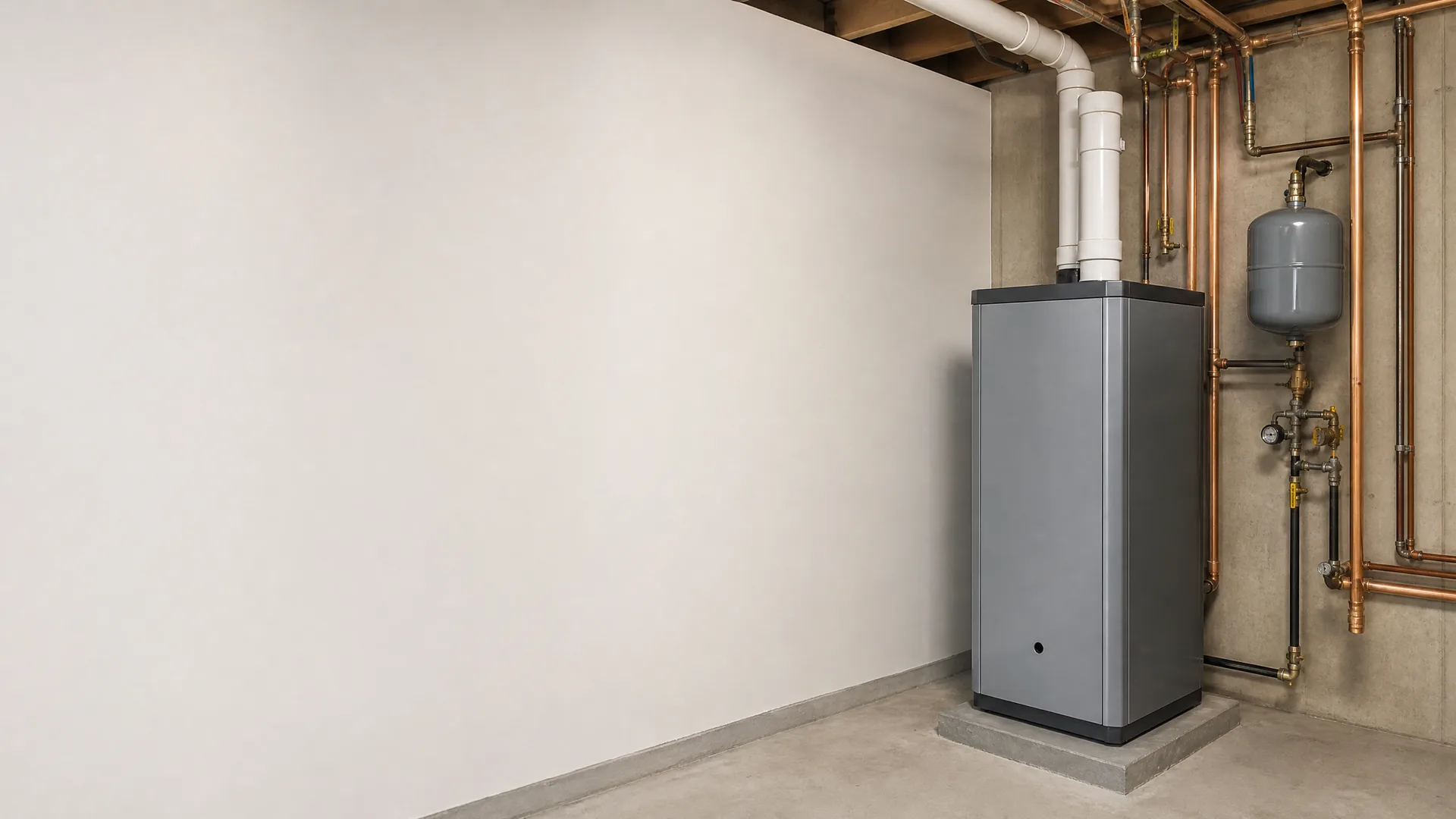
A gray boiler unit on a concrete pad in a basement corner, with white PVC flue pipes, copper piping, and a gray expansion tank on the wall behind it.

How a crack shows up slow

A crack in the heat exchanger or a fitting doesn't always show itself as a steady drip. It can show up as a damp spot that dries between heating cycles, or rust forming on a bracket below the leak. Because gas is the main heat source here, these boilers run often through the cold months, and that repeated heating and cooling expands and contracts metal at the crack, which is often how a small leak turns into a steady one.

Winter nights average 11°F statewide

At 11°F on a typical winter night, your boiler is firing often to keep up, and that means more hours at full pressure. A relief valve or fitting that's already worn gets tested harder on nights like that, and a slow drip can turn into a steady one.

NOAA nClimDiv 1991-2020 county normals weighted by homes

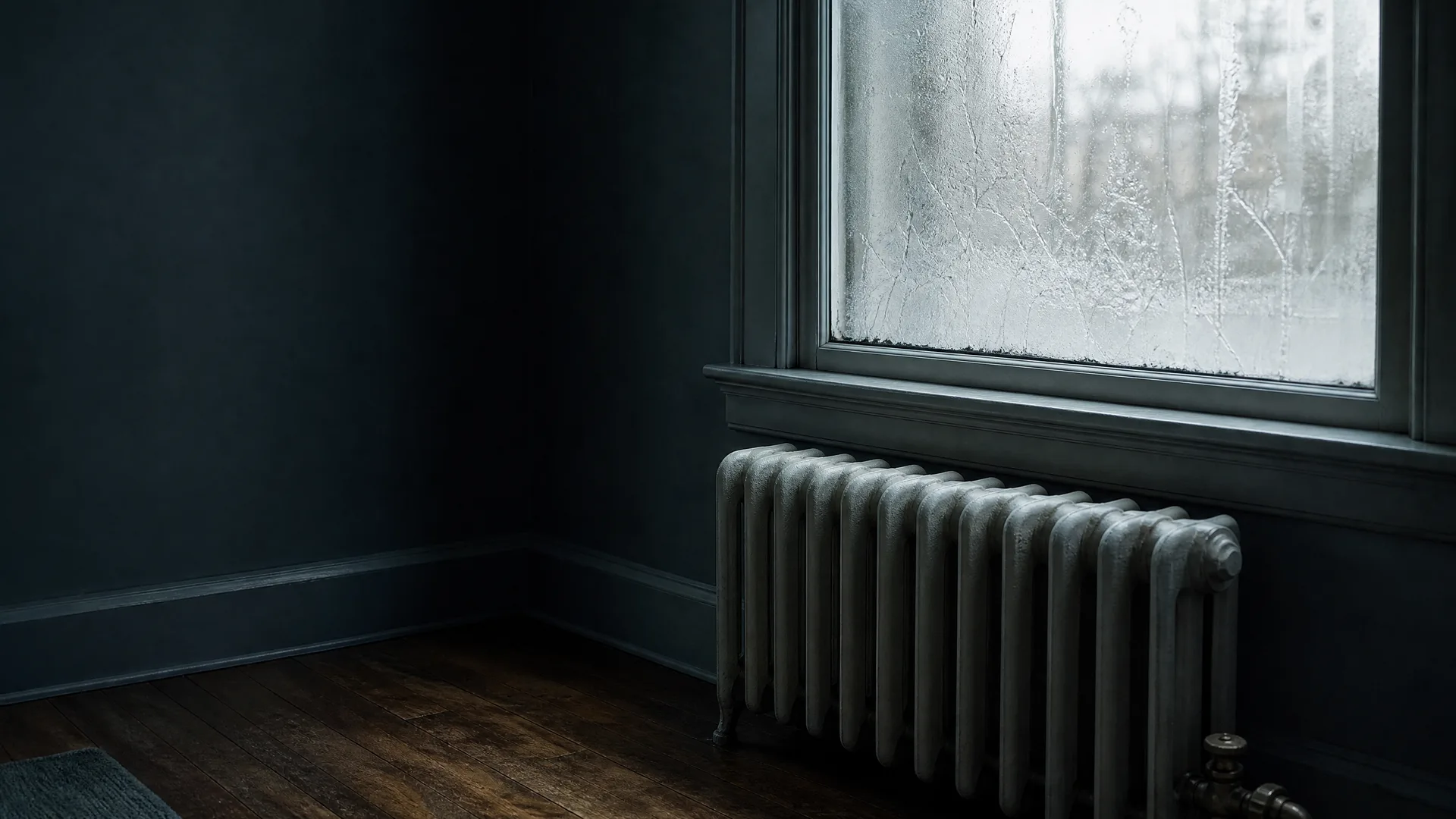
A cast iron column radiator under a condensation-covered window in a dim room with dark walls, dark baseboard trim and a worn wood floor.

It's just past seven on a January morning and the living room is still dark at the edges. Frost has crept across the inside of the window glass above the radiator, a thin white film in the corner panes. The cast-iron radiator under the sill ticks as it heats, and where the supply pipe meets the valve at its base, a bead of water has formed and run down onto the floor. It's not much, just a dark ring spreading slowly on the wood. The room is cold enough that you can see your breath near the glass, even with the radiator working as hard as it can.

Let someone else find the pro

A leaking boiler doesn't fix itself, and a worn valve or a hairline crack in a fitting only gets worse with another cold stretch pushing on it. You don't need to know whether it's the relief valve, a loose fitting, or something inside the cast iron. That's the kind of thing someone who works on boilers all winter in South Dakota can see in a few minutes, because they've already found it in a dozen other basements this season. Send the request and it goes to one local contractor who knows this equipment, not a list of names you have to sort through yourself. You stop guessing at the puddle on the floor and stop checking the pressure gauge every morning wondering if today's the day it gets worse. Someone who already knows what usually fails on these systems takes it from here.

A dark gray floor-standing boiler in a concrete-walled basement, connected to copper piping, circulator pumps, a gray expansion tank, and a cream-colored storage tank to the left.

Running the way it should

Every fitting in that tangle of copper pipe is dry. The pumps circulate, the expansion tank holds its charge, and the pressure gauge sits steady where it belongs. A boiler like this can run a whole South Dakota winter without anyone in the house giving it a thought.


A gray residential boiler with a metal flue pipe stands in a concrete-block basement corner, surrounded by copper piping, valves and a gray expansion tank.

Something's giving way

Water on the floor under a unit like this means a seal, a fitting, or the relief valve itself has stopped holding. The flue pipe and the pipe network look the same as they should. What's changed is somewhere water can now get out that couldn't before.

What does your boiler look like right now

Look at the floor around the base. A damp patch, a ring of dried mineral residue, or rust streaking down from a fitting are all signs water has been finding its way out for a while. Check the pressure gauge too. If the needle sits low or keeps dropping between fill-ups, the system is losing water somewhere even if you can't see it yet. You might notice a faint metallic or musty smell near the unit, or hear a hiss when the boiler is running hard. Left alone, that steady loss of water and pressure means the boiler works harder to keep the house warm, and on a cold South Dakota night that's not something to find out about the hard way.

A gray boiler with a metal flue pipe stands in a basement against concrete and concrete-block walls, connected to copper piping, a circulator pump, and two gray expansion tanks.
Every joint in this one is tight and dry, the gauges holding steady where they should.
A gray boiler on a concrete pad in a basement with painted concrete block walls, copper piping, a metal flue, and electrical control boxes.
This one's seen a crack work loose at a fitting, with rust already trailing down the pipe below it.

Where your boiler's leak stands

  • A leak almost always traces back to the pressure relief valve, a fitting, or a hairline crack in the cast iron.
  • Pressure that climbs past 30 psi or a gauge that won't hold steady points to the valve working harder than it should.
  • A damp patch, dried mineral residue, or rust trailing from a fitting means water has been escaping for a while already.
  • A South Dakota boiler that runs hard all winter puts real strain on a weak valve or a loose joint, and the cold doesn't let up to give it a break.
  • A local contractor who services boilers through every one of these winters knows which part on your model tends to give out first.
  • Sending this to one licensed local contractor means a single call back about your boiler, not a string of them from companies that don't know your system.

A leaking boiler almost always comes down to one of three things: a pressure relief valve that's worked past its limit, a fitting that's loosened over time, or a hairline crack somewhere in the cast iron. The gauge and the floor around the base tell you which stage you're at. A pressure reading that climbs past 30 psi, or won't sit steady, means the valve is being asked to do more than it should. A damp patch, a ring of dried mineral residue, or rust trailing down from a joint means water's already been finding its way out for a while, not just today. South Dakota winters don't give a weak valve or a loose fitting any real break. Once the cold sets in and the boiler is firing for hours at a stretch, whatever's already marginal gets tested again and again until it fails outright.

None of that means guessing at which part it is. A contractor who services boilers through winters like this one has seen which valve or fitting tends to go first on systems like yours, and knows what to check before touching anything else. Send this through and it goes to one licensed local contractor, so you're not fielding calls from a handful of companies trying to size up your system over the phone. Just one person who already knows what a South Dakota winter does to a boiler, looking at the one you've got.

Kitchen corner with cream upper cabinets, oak lower cabinets, white marble-look countertop, beige tile backsplash, a ceramic vase of greenery, a wooden cutting board and bowl, and a black-framed window at right.
Interior corner of a room with a white-framed window and wide sill, beige walls with panel molding, a wooden cabinet holding a ceramic vase with a green leafy plant, and blurred shrubs and trees outside.
A wood-framed armchair with beige cushions and a woven lumbar pillow sits in a corner beside a large window overlooking green trees, with a tall ceramic vase holding leafy branches on the left and plaster walls and wood flooring.
Interior corner with a white-framed window above a sill, beige walls with baseboard molding, a greige shaker-style cabinet with brass knobs and a potted plant on top, light wood flooring and a woven jute rug.
A dark-framed six-pane window with white trim and sill set in gray horizontal lap siding, with hydrangea shrubs below and a white column and shingled roof section at left.

One request and it's handed off

The pro who reaches out is licensed in South Dakota.

Send it today

Sending the form costs nothing.





