
Low pressure shuts it down first
Most boilers cut out below 12 psi. If yours keeps dropping there, a leak somewhere in the loop is the likely reason, not the thermostat.
Your boiler kicking off every twenty minutes or every hour makes a cold evening longer than it has to be, especially when you're home and feeling it right away. It usually isn't random. Boilers shut off on their own for a handful of specific reasons, and most of them trace back to water pressure, airflow, or a safety switch doing exactly what it's built to do.
Boilers shut themselves off on purpose. Low water pressure, a blocked flue, a dirty flame sensor, or a limit switch tripping from too much heat all tell the boiler to stop rather than keep running into a worse problem. In South Dakota, gas boilers run hard and often through long winters, and that steady demand is what pushes a weak part past where it can keep up. A boiler that cycles off repeatedly isn't resetting itself the way it should, and running it that way for long stretches puts more wear on the parts already struggling. The shutoff is a symptom, not the problem, and whatever is tripping it needs to be found and fixed.




Most boilers cut out below 12 psi. If yours keeps dropping there, a leak somewhere in the loop is the likely reason, not the thermostat.
South Dakota runs mostly on gas boilers with cheap electricity behind them. That makes the ignition system and pump worth checking before anything else.
You'll notice it most when you're sitting there wanting the house warm. The boiler fires, runs a while, then cuts off before the rooms catch up, and you're back to resetting it or waiting it out in a coat. Check the pressure gauge on the boiler itself. If it's sitting under 12 psi, that's your answer, and it means water is leaving the system somewhere, whether that's a fitting, a valve, or the expansion tank. Left alone, a slow leak doesn't stay slow forever, and a boiler that keeps tripping out is one that isn't heating the house the way it should on a cold South Dakota night.
Water pressure drops below the point the switch allows.
The pressure switch opens and cuts power to the burner.
A flame sensor reading problem can shut gas off mid-cycle.
The limit switch trips if water runs hotter than it should.
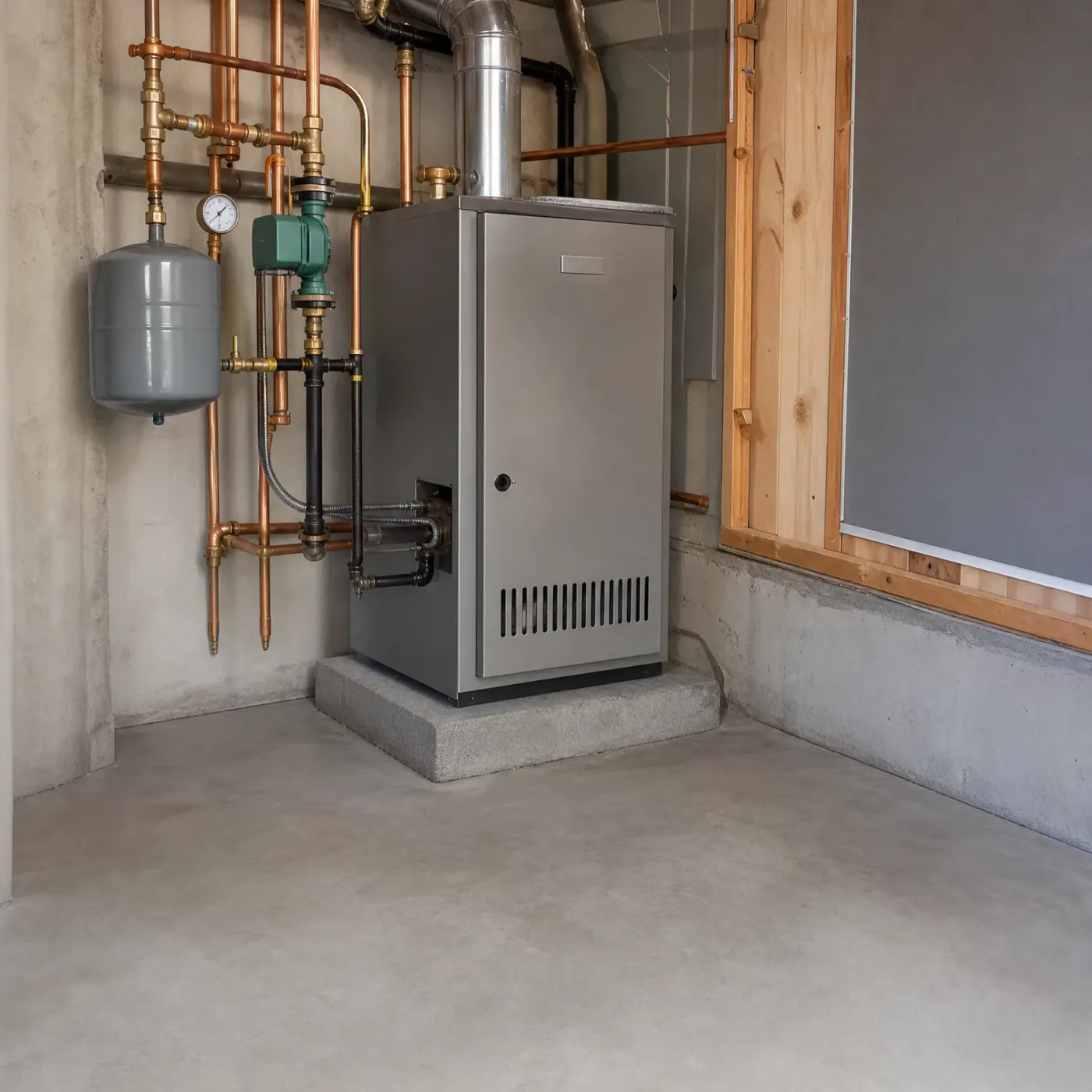
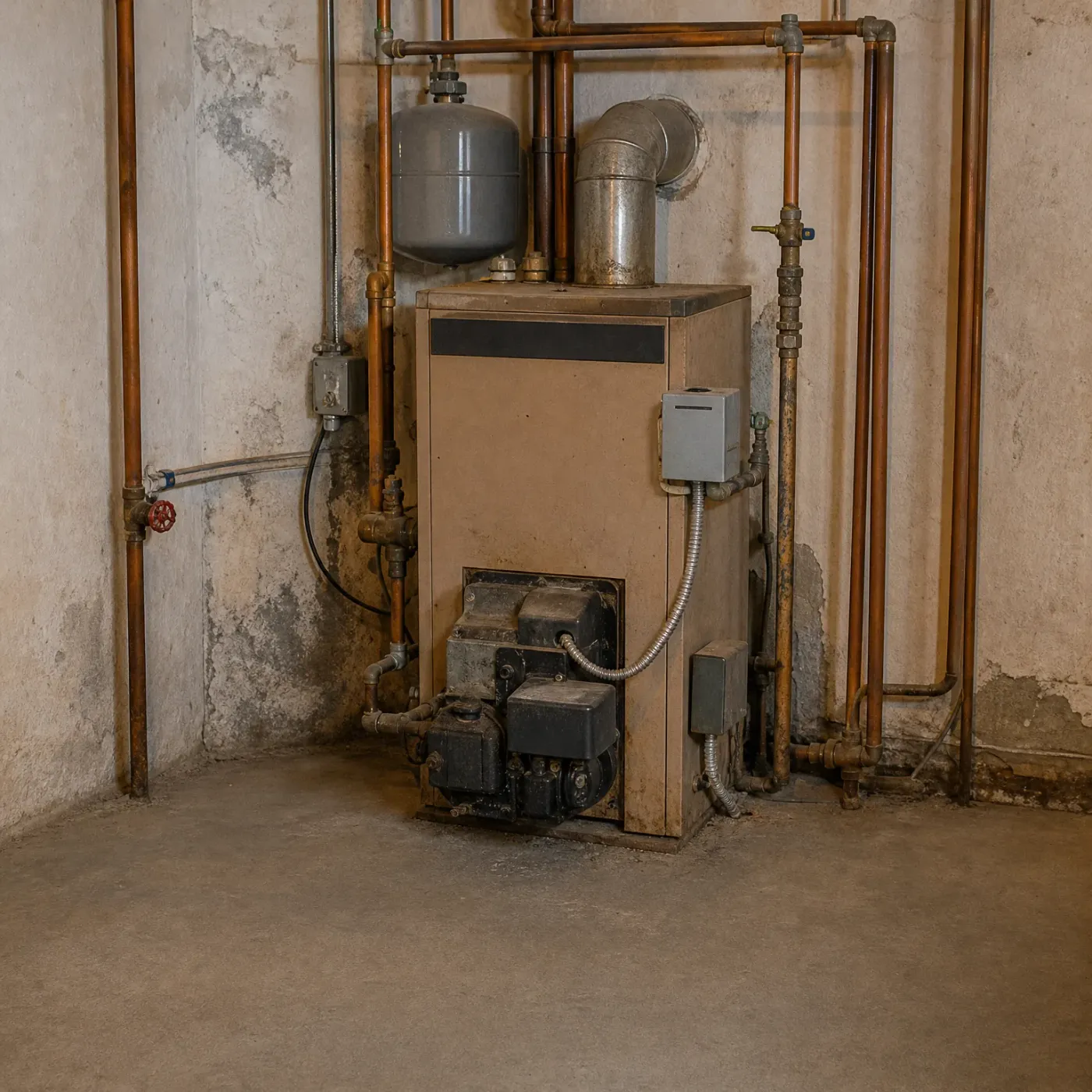
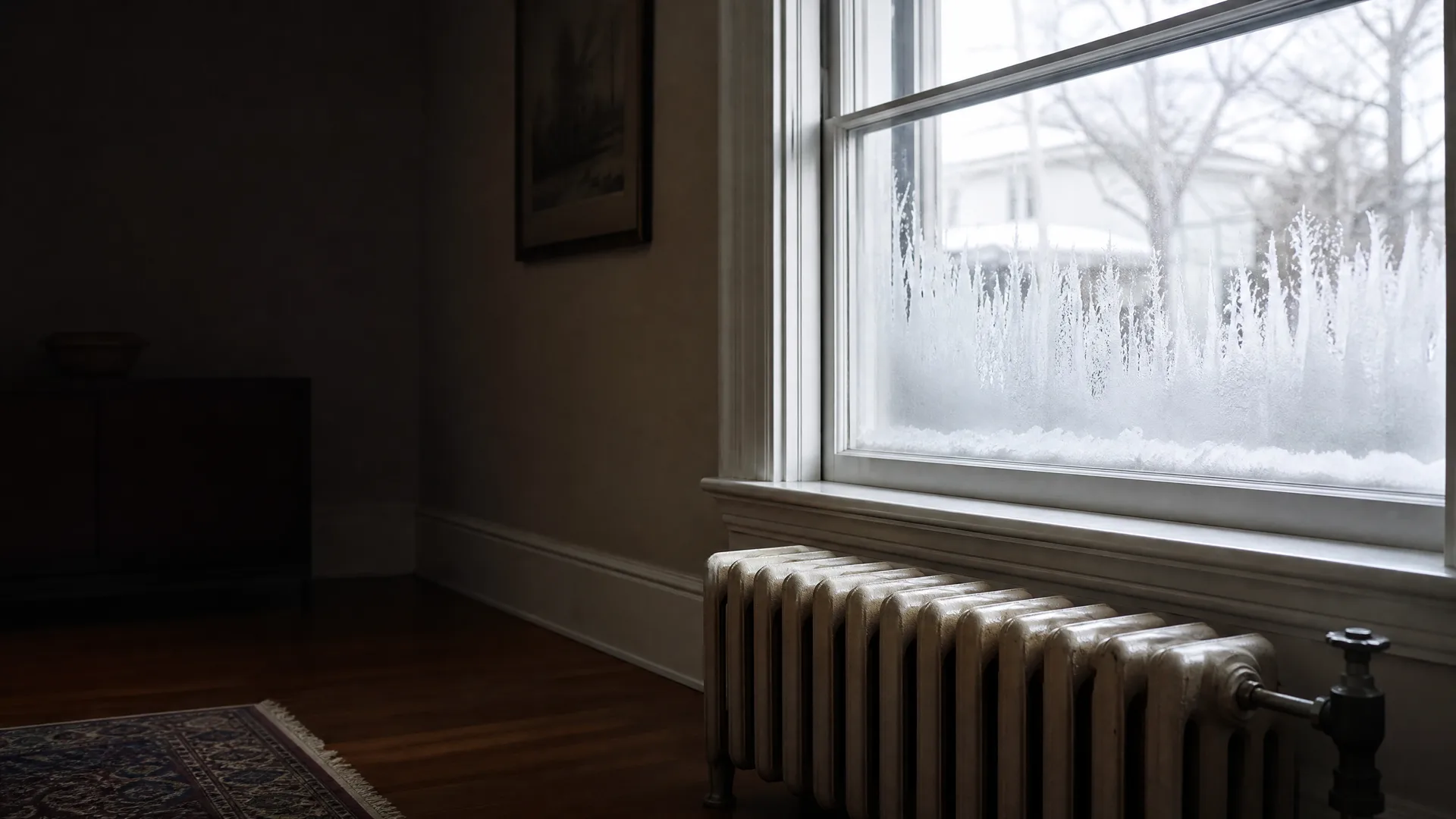
It's just past six on a January morning, still dark outside the window. The cast-iron radiator under the sill ticked twice an hour ago and went quiet. Now there's ice crowding the inside corners of the glass, the kind that doesn't melt until the sun's been up a while. You're standing over the radiator in socks, waiting for the knock that means it's firing again. It doesn't come. Somewhere down in the basement the boiler sits cold, pressure gauge sitting lower than it should. The room holds yesterday's heat for a little while longer, then stops holding it.
One form replaces the calls you'd make to find a boiler pro.
There's no charge for the request.
A boiler that quits every hour turns a South Dakota evening into one spent watching a thermostat instead of sitting through it. You reset the switch, it runs twenty minutes, it quits again, and the rooms never quite catch up before the next cutoff. That cycle wears on the parts doing the actual work: a pump pushing against low pressure, a flame sensor reading a dirty signal, an igniter firing more times in a night than it should over a season. None of that shows up as a bigger bill right away, since power here is cheap and the gas use barely moves, but the burner and the switch take the hit instead, and a short cycle problem left alone tends to end in a part failing outright instead of just tripping. If the house is already cold by the time you notice, that's the pressure or the sensor telling you now instead of waiting for a harder freeze to make the point for it.
At 11°F, a boiler that short cycles never gets a real run at the house. Each restart starts the water cooling again before the rooms picked up any heat, so the gap between cutoffs matters more on a night that cold than it would on a mild one.
NOAA nClimDiv 1991-2020 county normals weighted by homes
You can keep doing what you're doing now. Bleed a radiator, top off the pressure, flip the switch back on, and get another twenty minutes before it quits again. Some nights that's enough to get through to bedtime. But you're the one checking the gauge every hour, and you're guessing at what's actually wrong each time it happens. If the cause is a leak in the loop or a bad flame sensor, resetting the switch doesn't touch it. You're just buying the house a little warmth at a time, over and over, on a night that's already cold.
Send the form and the part of this that's work for you ends: no calling around South Dakota boiler companies, no explaining the short cycling three different times to three different people, no sorting through quotes while the house keeps cooling off between cutoffs. A contractor who shows up already knows pressure switches and flame sensors and limit switches, and checks them in order instead of guessing. You still wait for the repair like anyone would. What you're not doing anymore is the finding part, on top of everything else tonight.


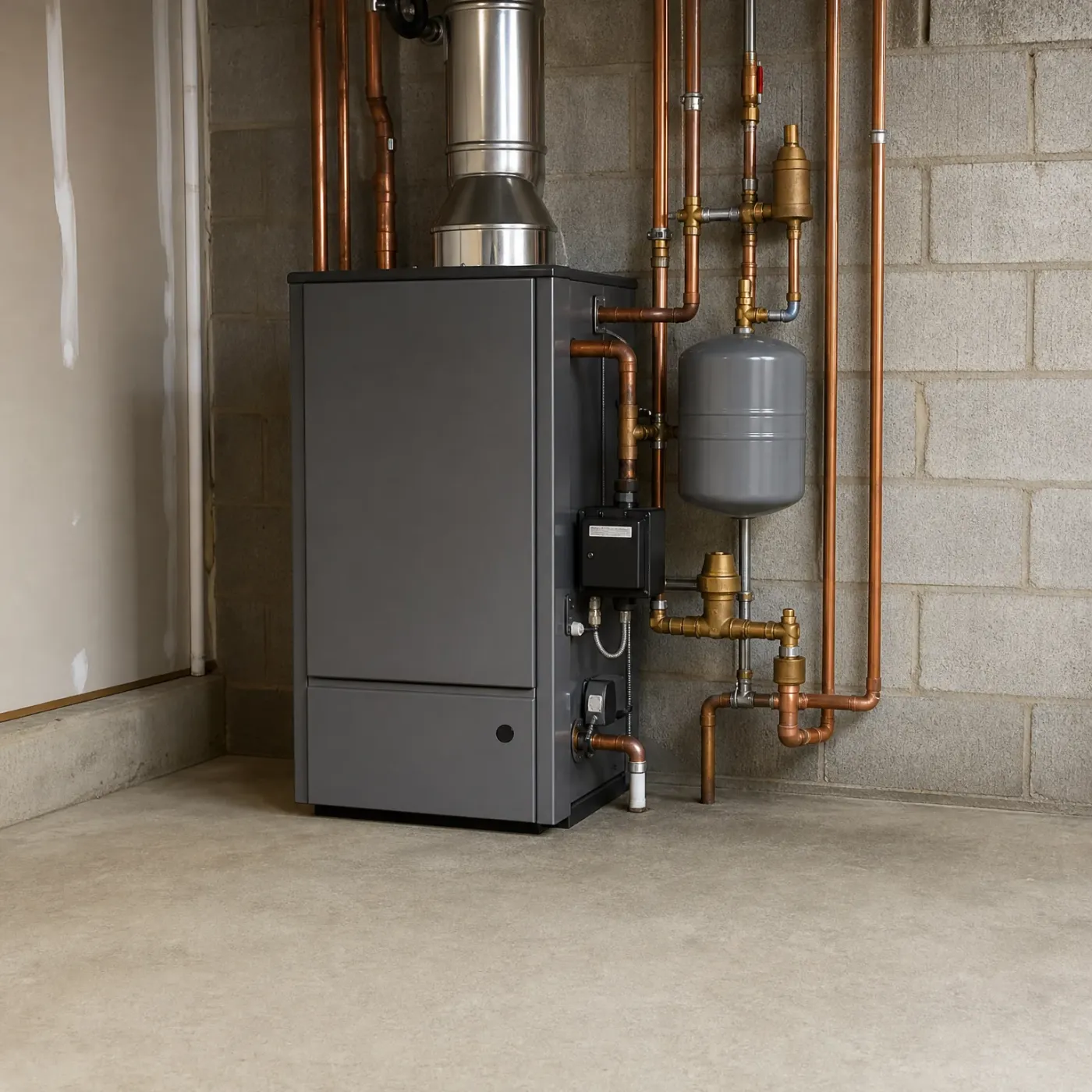
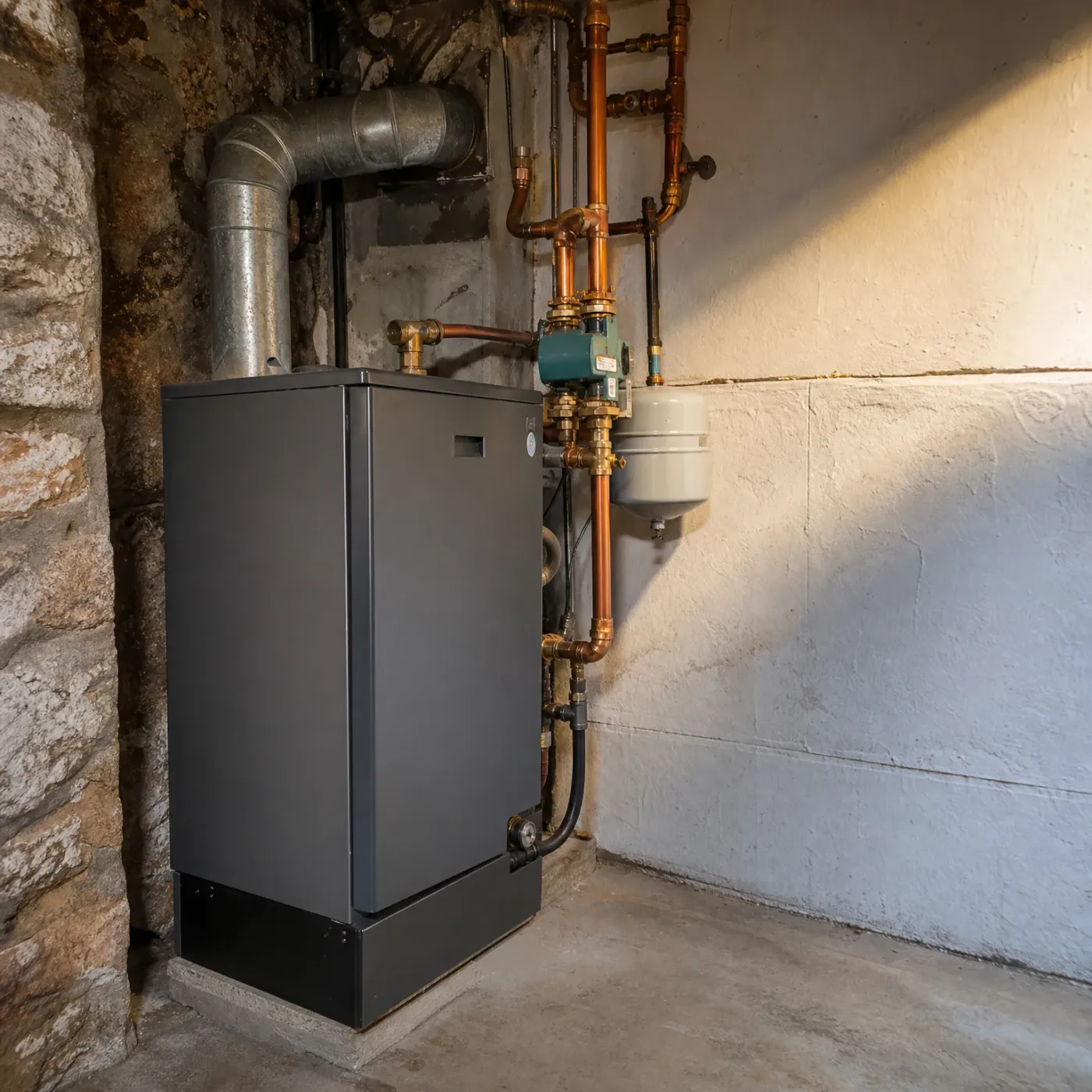
Pressure sits where it should, the copper runs to the expansion tank without strain, and the flue draws clean. The burner lights, holds, and shuts off on its own once the rooms are warm. Nothing about this one needs a reset tonight.
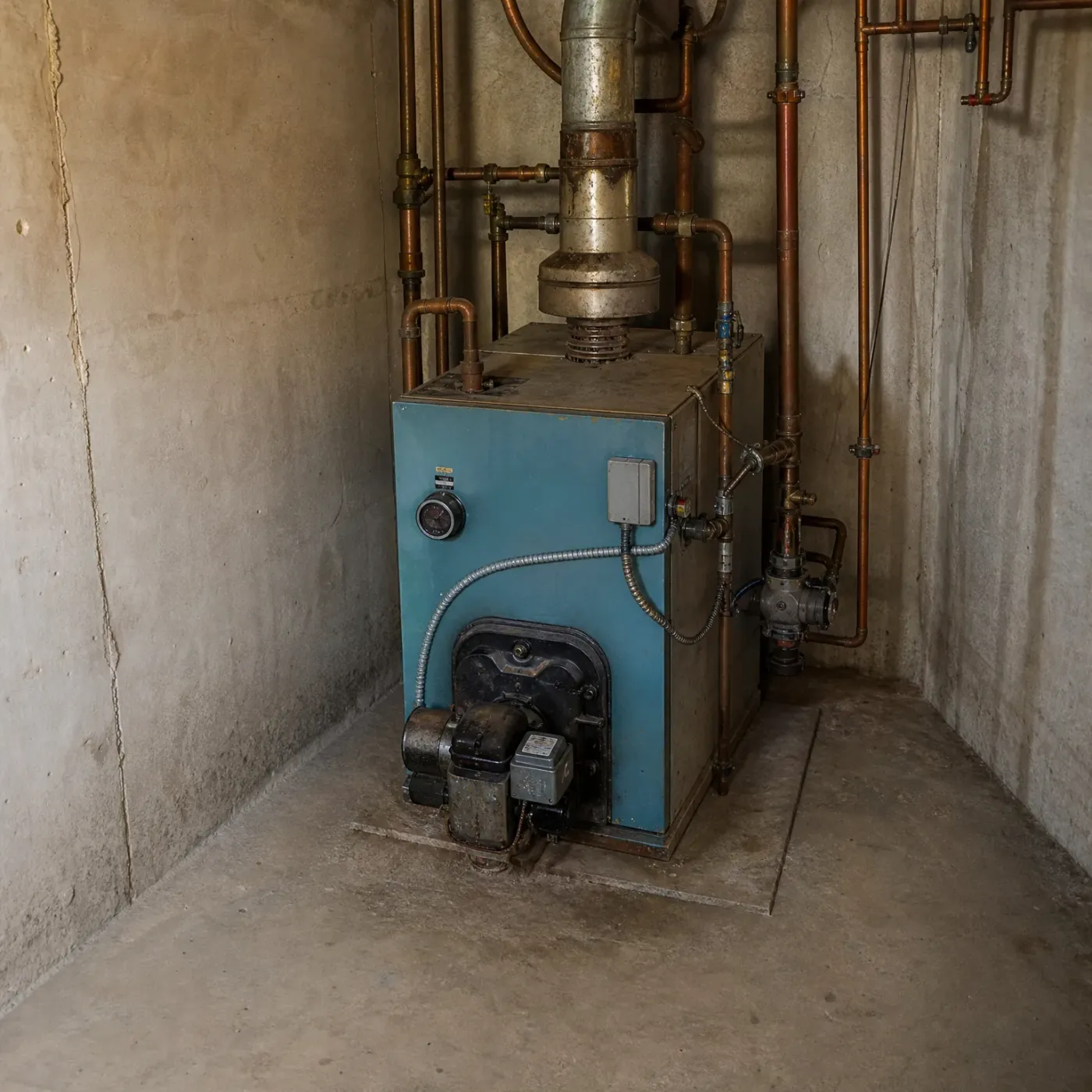
This one quits before the job is done. The burner assembly up front fires, but the unit can't hold a cycle long enough to heat the pipes rising off it. Whatever's wrong here, a reset won't fix it twice.

Low pressure, a tripped limit switch, a flame sensor that's lost its read on the burner. Whichever it is, it's mechanical, and it's the kind of thing a licensed contractor finds in an afternoon instead of a week of guessing. You don't need to keep logging what time it quits or which radiator stayed cold longest.
What's actually in front of you is a choice between two evenings. One where you're still calling around, telling three different companies the same thing about pressure drops and reset switches, waiting on callbacks, trying to line up quotes before you pick someone. Or one where you've sent the details once and the work of finding who's qualified and available is off your plate. Either way the boiler gets looked at. Only one way has you spending tonight on the phone instead of off it.

Describe what your boiler is doing once, in one form.
You only hire the pro if you want to.