Why your boiler makes a banging noise in South Dakota

Tell a local repair pro what your boiler is doing.

Connect with a pro

Why does my boiler make a banging noise?

Your boiler bangs, clangs or pops when the heat kicks on, and it's loud enough that you notice it from another room. With gas heat running hard through a South Dakota winter, that noise isn't something you want to just live with, especially when you're trying to keep the house comfortable for everyone in it.

It's usually mineral buildup or trapped air in the system

The banging is almost always caused by sediment that has settled on the bottom of the heat exchanger or boiler tank. When water heats up underneath that layer, it turns to steam and pushes through with a bang, sometimes several in a row. Trapped air in the pipes or radiators can cause a similar knocking as water moves past it. A pump that's starting to wear can also make a rattling or banging sound of its own. None of these fix themselves, and sediment buildup tends to get worse with each heating cycle, so the noise usually shows up gradually and then starts happening every time the boiler runs.

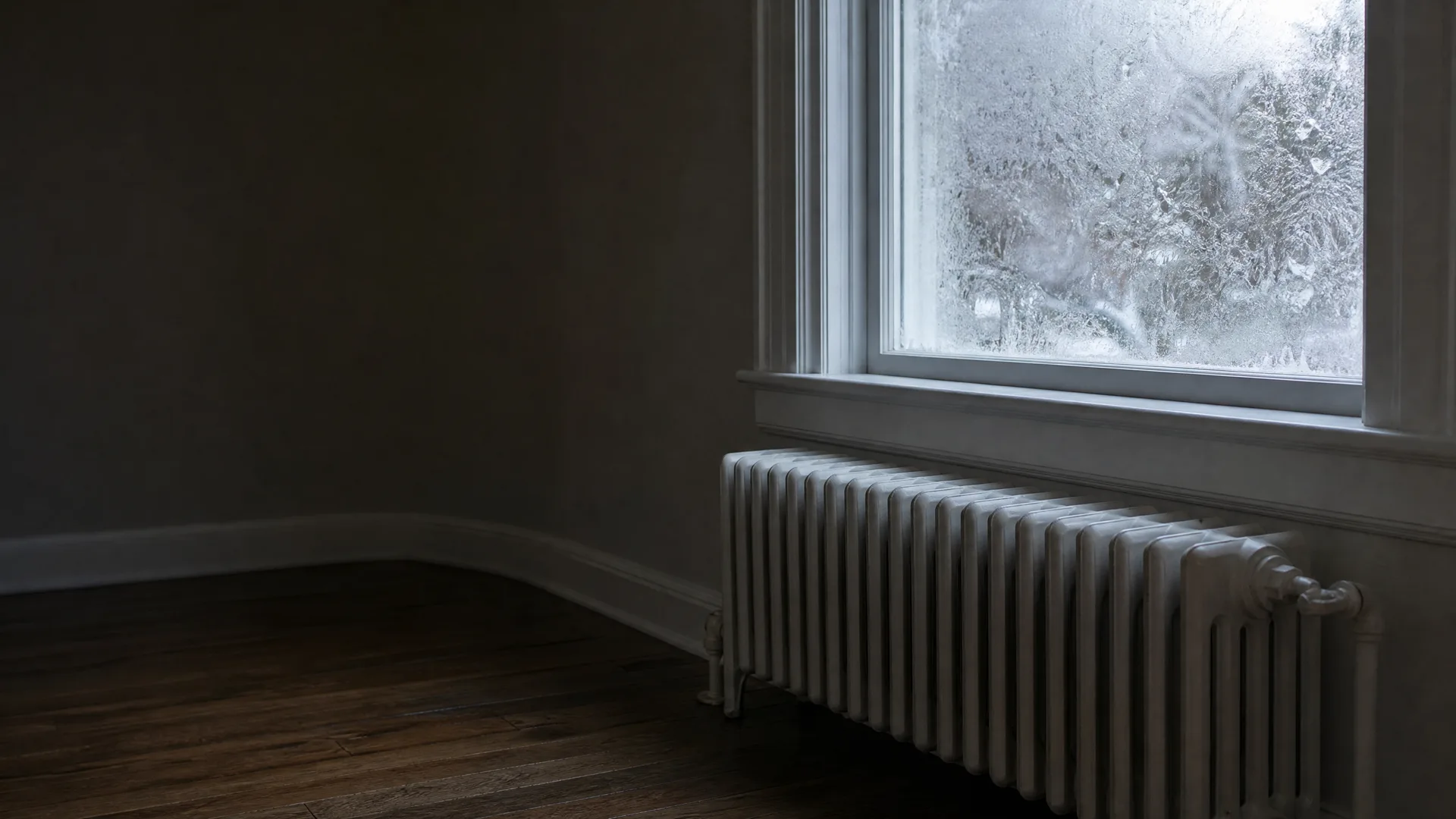
A white cast-iron column radiator under a frosted window in a dim empty room with dark walls and a wood floor, with snowy trees visible outside.

Six in the morning and the house is still dark. You're up before the kids, waiting by the radiator under the living room window because it's the warmest spot in the house. The glass has ice on the inside of it, a thin white film in the corners. Then the banging starts, three or four hard knocks from inside the cast iron, loud enough that your daughter calls down the stairs asking what that noise is. You put your hand near the radiator. It's barely warm yet, still catching up from the night. Outside it's well below freezing, and that radiator is the only thing standing between this room and the cold coming through the glass.


A woman in a cream sweater and jeans stands in the open doorway of a white stucco house, holding the dark door, while a man in a dark quilted jacket seen from behind walks toward the entry past potted plants.

Water hits a hot spot and flashes to steam

A boiler bangs because water is boiling somewhere it shouldn't. Years of mineral buildup settle on the bottom of the cast iron sections, and that layer sits between the flame and the water. The metal under it gets hotter than the water around it. When fresh water reaches that spot, it flashes into steam, and the bubble collapses hard against the cold water above it. That collapse is the bang you're hearing, and it can happen a dozen times in a single heating cycle. Trapped air in the pipes causes a different kind of knock, a lighter rattling as steam or hot water pushes past it, but the deep bang is almost always the sediment.

Finding out which one it is means opening up the boiler, and that's not something to do by guessing over the phone with three different companies. A contractor who works on boilers in South Dakota homes can look at your system, tell you whether it's buildup or air or something in the pressure, and take it from there. Once you're matched with one, they'll reach out to you directly, so you're not the one making the calls.

A gray upholstered sofa with a matching cushion sits beside a potted plant and a wooden table holding a small green plant in a stone pot, near a curtained window.
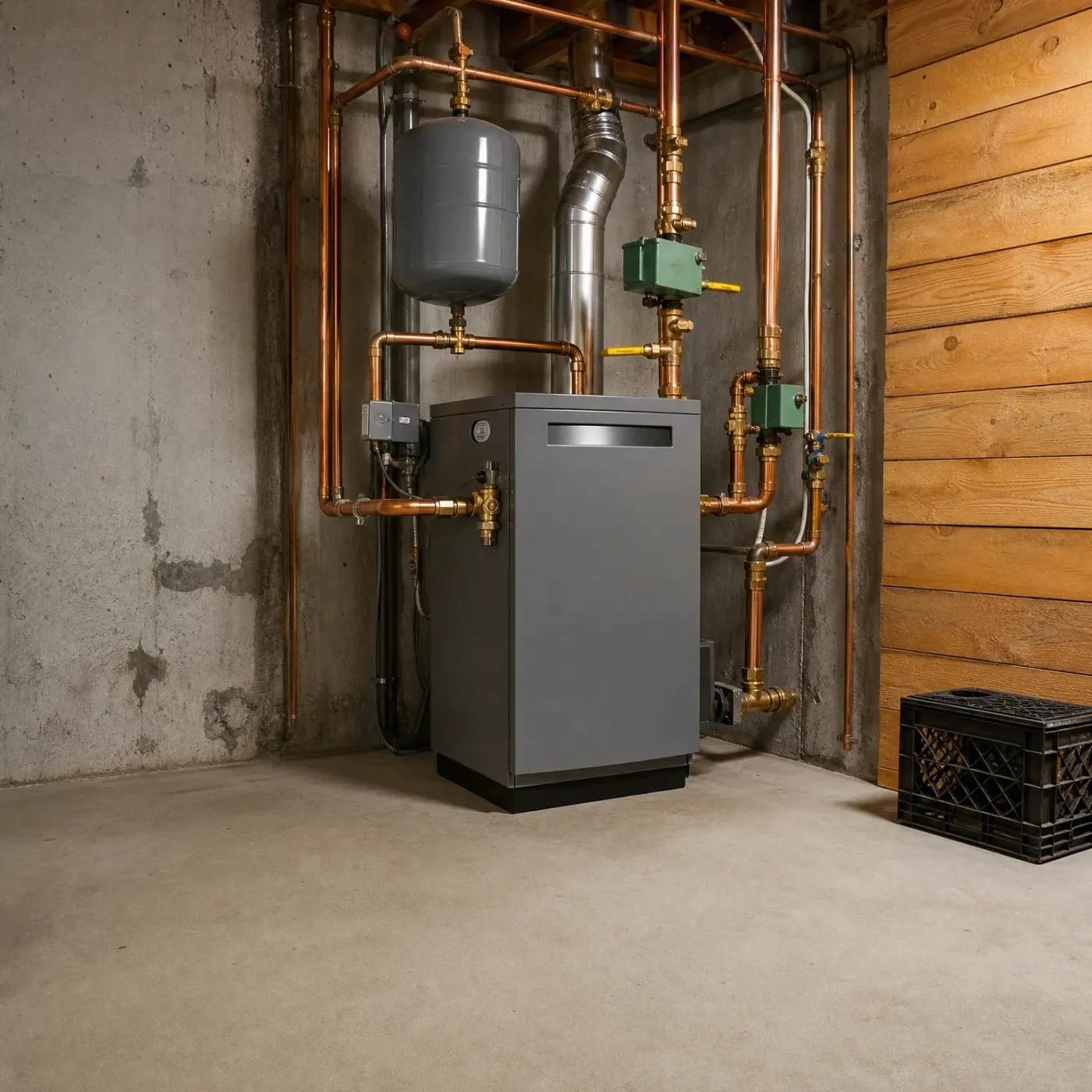
A gray boiler unit in a basement corner with copper piping, brass valves, a gray expansion tank, a metal flue duct, concrete walls and a wood-paneled wall, with a black plastic crate on the floor at right.

Quiet boiler, clean water path

Copper lines run clean to the zone valves and the expansion tank holds steady pressure. Water moves through the cast iron sections without hitting a wall of scale, so it heats evenly and the sections stay quiet when the burner fires.

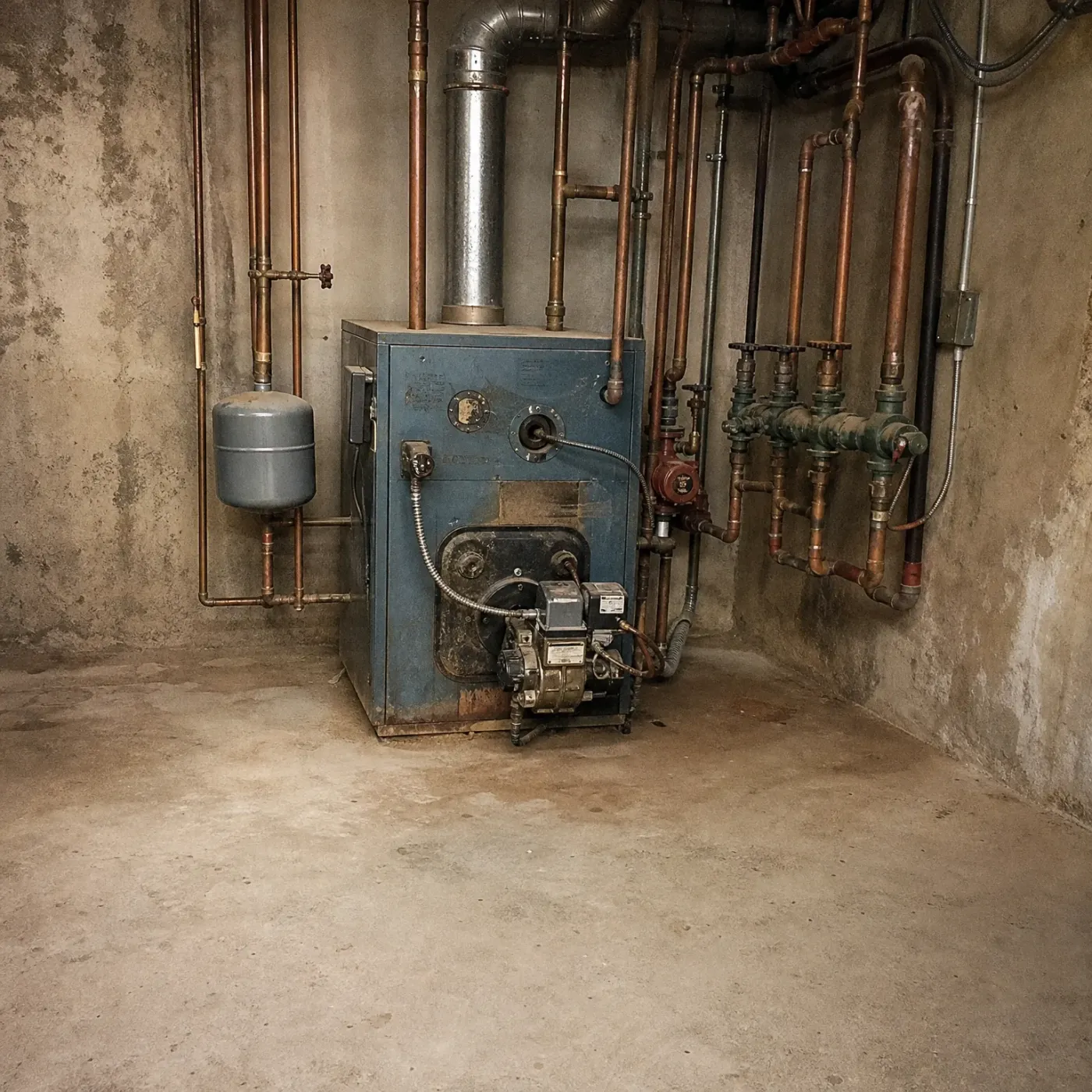
An older blue boiler with a burner unit stands in a concrete basement corner, connected to copper and steel piping, valves and a gray expansion tank on the wall.

Old iron, years of buildup

This boiler has sat in the corner a long time, and the galvanized flue and aging piping are signs of it. Sediment has had years to settle on the bottom of those sections, and that's usually where the banging starts.

A woman with dark hair in a bun wearing a cream knit sweater sits on a gray sofa in a bright living room, looking off to the side.
A woman wrapped in a knit blanket sits on a gray sofa in a living room, looking toward a bright window with houseplants and an armchair in the background.
A woman in a gray cowl-neck sweater sits on a light sofa with cushions, smiling and looking to the side, with a kitchen and window visible behind her.
A woman with dark hair in a bun, wearing a light linen shirt, sits on a sofa and looks to the side, with a window, houseplants and a kitchen with pendant lights blurred behind her.

A local pro for your boiler repair

Answer a few questions instead of calling shop after shop.

You only hire the pro if you want to.

Why scale builds up faster here

Hard water leaves minerals behind every time it heats, and South Dakota well water carries more of them than most. Those minerals don't wash away. They settle on the iron and bake on with every burn cycle, thickening a little more each winter. A boiler that's run five or six seasons without being flushed can carry a scale layer thick enough to trap steam pockets against the metal. That's the layer behind the bang. The longer it sits, the harder it gets, and the harder it gets, the louder the noise.

What the banging does to the iron

Steam pockets don't just make noise, they hammer the cast iron sections from the inside. Each bang is a small shock to metal that was never built to flex. Over enough winters, that repeated stress can crack a section or loosen a joint, turning a noisy boiler into a leaking one. The sound shows up months, sometimes years, before any real damage does. Catching it early, while it's still just loud, means the fix is cleaning out scale rather than replacing a cracked section when the gas bill climbs and the water starts dripping.

A green oil-fired boiler with a flue pipe, burner and circulator pumps sits on a concrete pad in a basement corner, surrounded by copper piping and an expansion tank against concrete walls.
Before you get your boiler repair
A gray and blue floor-standing boiler in a basement corner, with a metal flue pipe and copper and black piping, valves, and a gray expansion tank mounted on an unfinished wood-framed wall beside a concrete wall.
After you get your boiler repair

Keep running it with the banging and the sediment layer keeps baking onto the cast iron, so the burner works harder to heat the same water and the sections wear against each other every cycle.

Get the scale flushed and the water moves through the sections the way it's supposed to, so the noise stops and the iron isn't taking that beating every time the heat kicks on.

Winter nights average 11°F statewide

At 11 below zero most nights, your boiler is firing long and often to keep the house warm. That means more burn cycles pushing heat through sediment that's already baked onto the iron, and more chances for a hot spot to turn water to steam. The banging isn't going to ease up on its own this winter.

NOAA nClimDiv 1991-2020 county normals weighted by homes

The banging is water boiling against scale that built up inside your boiler's cast iron sections, and it won't quiet down on its own. Left alone, it wears on the sections every time the burner fires through a South Dakota winter. The fix is a flush or a descale from someone who can get inside the system and clear that layer off the iron. What you don't have to do is any of the legwork that usually comes with that: hunting down boiler contractors, calling a handful of them, explaining the same banging noise over and over, then sitting with a stack of quotes trying to tell them apart. That part ends when you ask for help here. You get matched with a contractor who handles what your boiler needs, and they reach out to you. The radiator under the living room window will heat the way it used to, without the noise, and without you having to run down every heating company in the area to get there.

A single-story stucco house at dusk with a lit paver walkway lined by low path lights, desert plants and boulders in front, and distant mountains under an orange and blue sky.

Boiler Repair

Get the right pro for your boiler

Step 1 of 3: Equipment
  • A cream chunky cable-knit throw draped over a beige upholstered armchair beside a bright window, with a wooden side table holding a book and a vase of leafy branches at left.
    • A local pro who knows boilers gets your details and gets in touch.
  • Living room corner with a gray sofa holding beige pillows and a knit throw, a round wooden coffee table with a dark planter and shallow bowl, a jute rug, a floor lamp, a framed landscape print on the wall, and a window showing trees.
    • Get the boiler repair search off your mind today.
    • Once you send the form, finding a pro is off your list.
  • A living room corner with a cream sofa and cushion, knit throw, wooden coffee table holding a shallow bowl and dark ceramic vase with green foliage, a floor lamp, potted plant in a woven basket, and linen curtains at a window.
    • Fill out one short form instead of calling around.
    • Explain the job once and skip repeating it on every call.
  • A round reclaimed-wood coffee table with a black metal base sits on a woven rug in front of a cream sofa with cushions, with a lit built-in fireplace and a tall indoor tree in the background.
    • Only one pro gets your request, so you hear from one company.
    • Your request stays with one local pro.