Tell us about the job
Takes about a minute. No obligation.
A contractor quoting a boiler installation in Beadle County has to size the system for what the burner and heat exchanger will actually carry, not what looks adequate on a spec sheet. Homes in Beadle County, SD run heat about nine months a year, from September through May. The burner cycles through ignition and shutdown across that entire span, and the heat exchanger flexes with every one of those cycles. A unit that is undersized or poorly commissioned has nowhere to hide that stress. The contractor's load calculation has to reflect the full season the boiler will work, because a misjudgment there shows up in metal fatigue and component failure, not in energy bills alone.
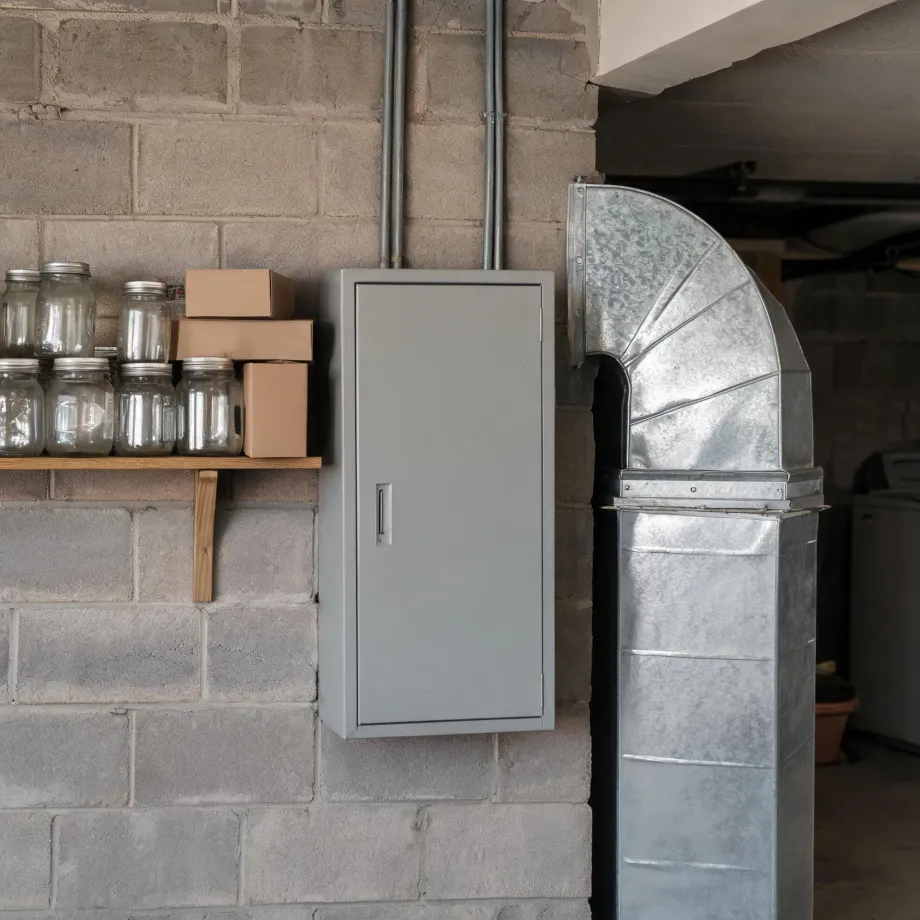
Ductwork sized and routed for an older system may not distribute heat the way a new boiler needs it to. Half the homes in Beadle County, South Dakota were built in 1963 or earlier (2020-2024 ACS 5-year). That gap between what the house was built around and what a contractor is now installing is where the job gets complicated or straightforward. A contractor working through a Beadle County installation checks whether the existing runs can carry the new system before anything else gets priced or ordered.
What Gets Installed With a New Boiler
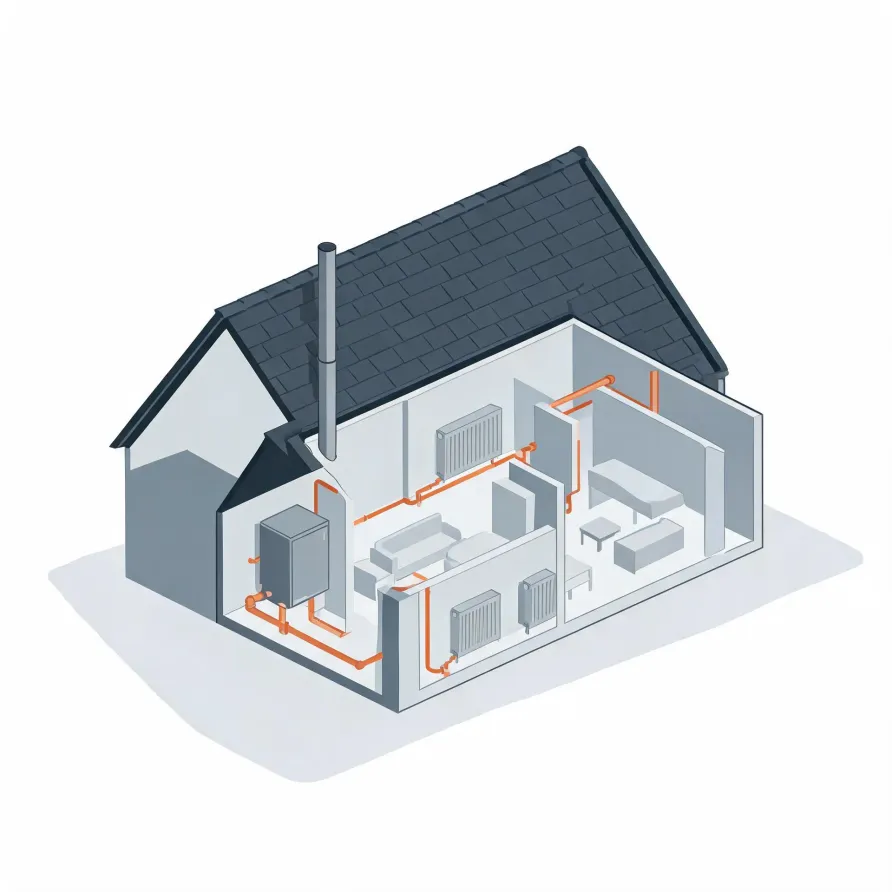
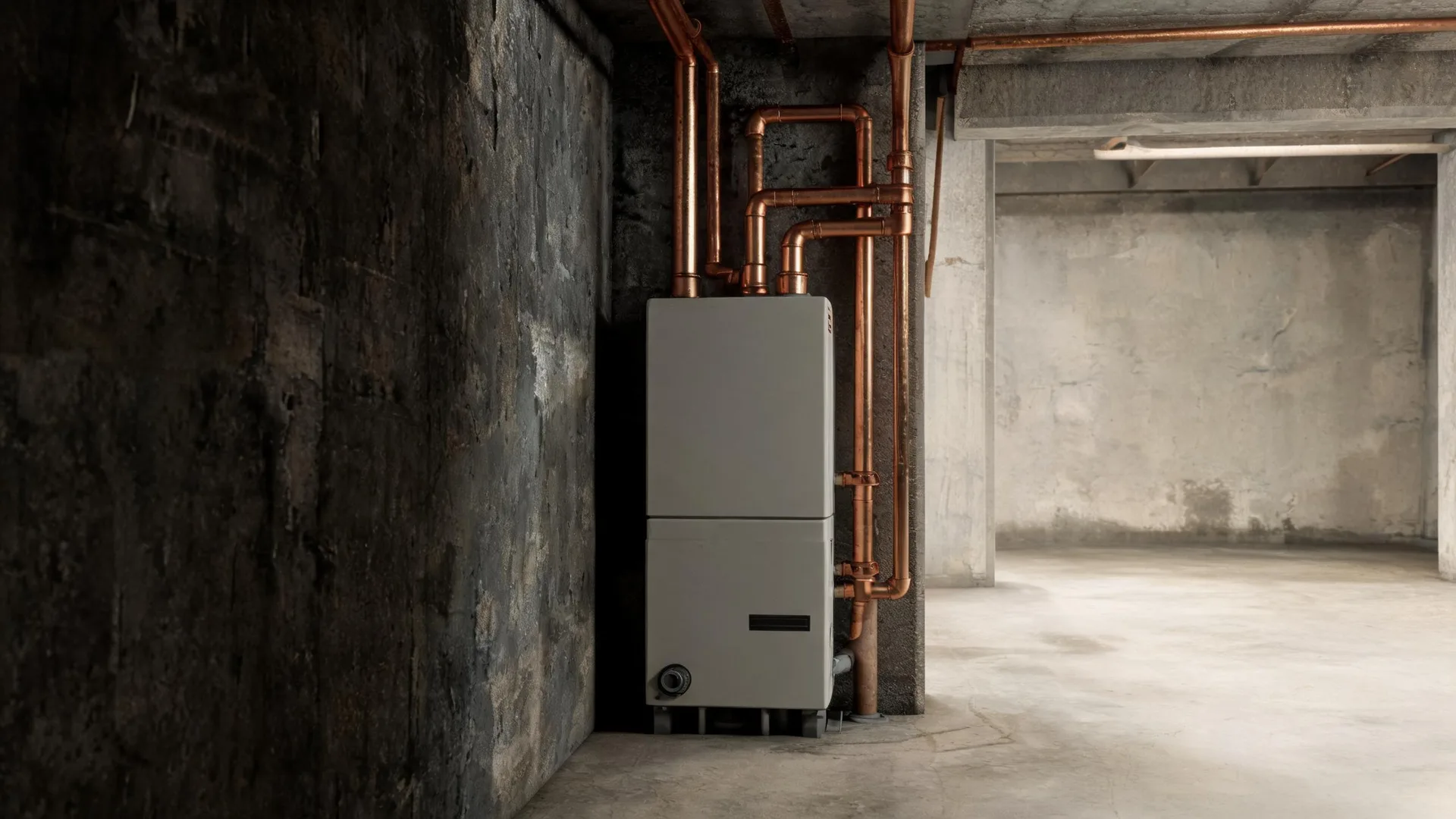
The boiler itself sits in a mechanical room, basement, or utility space and is the unit that heats water and sends it out through the system. Alongside it, the expansion tank absorbs pressure changes as water heats and cools, and the circulator pump drives hot water through the pipes.
From there, supply and return pipes run through the house to the heat emitters, whether those are baseboard radiators, cast-iron radiators, or radiant floor loops set into the subfloor. A mixing valve and zone controls also go in at this stage, giving each area of the house its own temperature.
The drawing shows a typical layout, and a licensed contractor determines what the specific configuration looks like in your home.
Find a contractor in Beadle CountyBeadle County, by the record
195 severe weather events were recorded in Beadle County, South Dakota between 2015 and 2024.
NOAA National Centers for Environmental Information, Storm Events Database, bulk CSV export, events 2015-01-01 through 2024-12-31.Half the homes in Beadle County, South Dakota were built in 1963 or earlier (2020-2024 ACS 5-year).
U.S. Census Bureau, 2020-2024 American Community Survey 5-Year EstimatesBeadle County, South Dakota holds 8,474 housing units (2020-2024 ACS 5-year).
U.S. Census Bureau, 2020-2024 American Community Survey 5-Year EstimatesOwners occupy 72.9% of the occupied homes in Beadle County, South Dakota (2020-2024 ACS 5-year).
U.S. Census Bureau, 2020-2024 American Community Survey 5-Year EstimatesSevere Weather Events in Beadle County
Extreme weather puts real demands on heating equipment, shortening service life and raising the stakes on installation quality. Boiler sizing and setup in Beadle County is a local decision, and local conditions are part of it.
195 severe weather events, 2015–2024. Source: NOAA National Centers for Environmental Information, Storm Events Database.