Tell us about the job
Takes about a minute. No obligation.
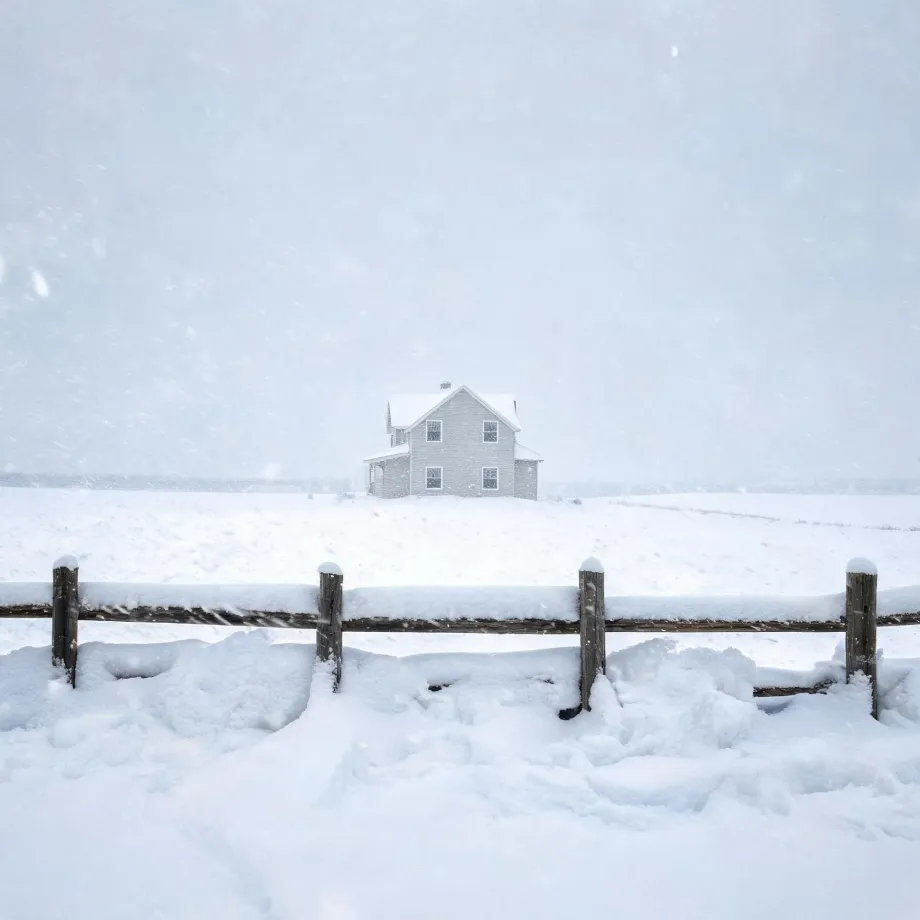
Sizing a boiler for a Clark County home starts with knowing how hard the burner actually runs each year. Homes in Clark County, SD run heat about nine months a year, from September through May. A boiler cycling through that kind of season puts sustained hours on the heat exchanger, the ignition assembly, and the circulator pump. A contractor doing an installation quote here has to account for that cumulative load, because a unit that is marginal in capacity will not hide its shortcomings in a short off-season. Sediment, thermal fatigue, and ignition wear accumulate on components that rarely get a long rest.
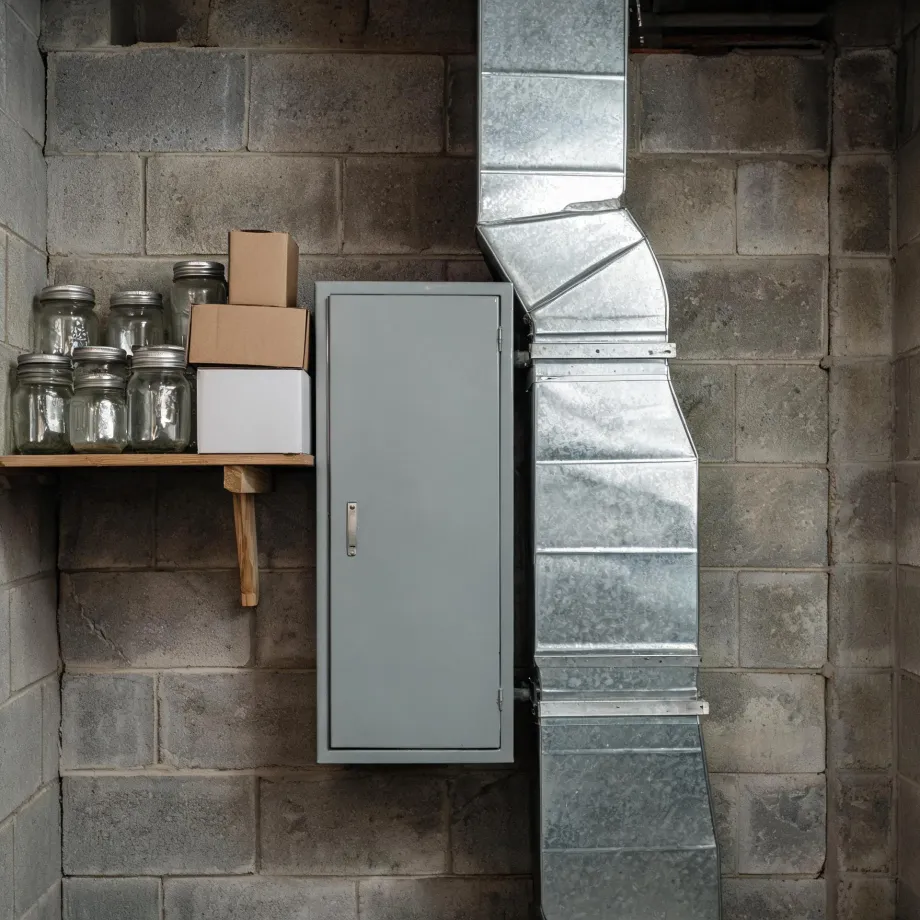
Piping and distribution were designed around whatever heated these houses originally, and that original layout is what a contractor prices against when a new boiler goes in. Half the homes in Clark County, South Dakota were built in 1957 or earlier (2020-2024 ACS 5-year). Houses from that era were commonly built with distribution systems that do not map onto modern hydronic zoning, which means a contractor has to assess whether the existing runs can carry the new system before the boiler itself is even selected. The electrical service, too, was sized for a different load. Both have to be measured, not assumed.
What Gets Installed With a New Boiler
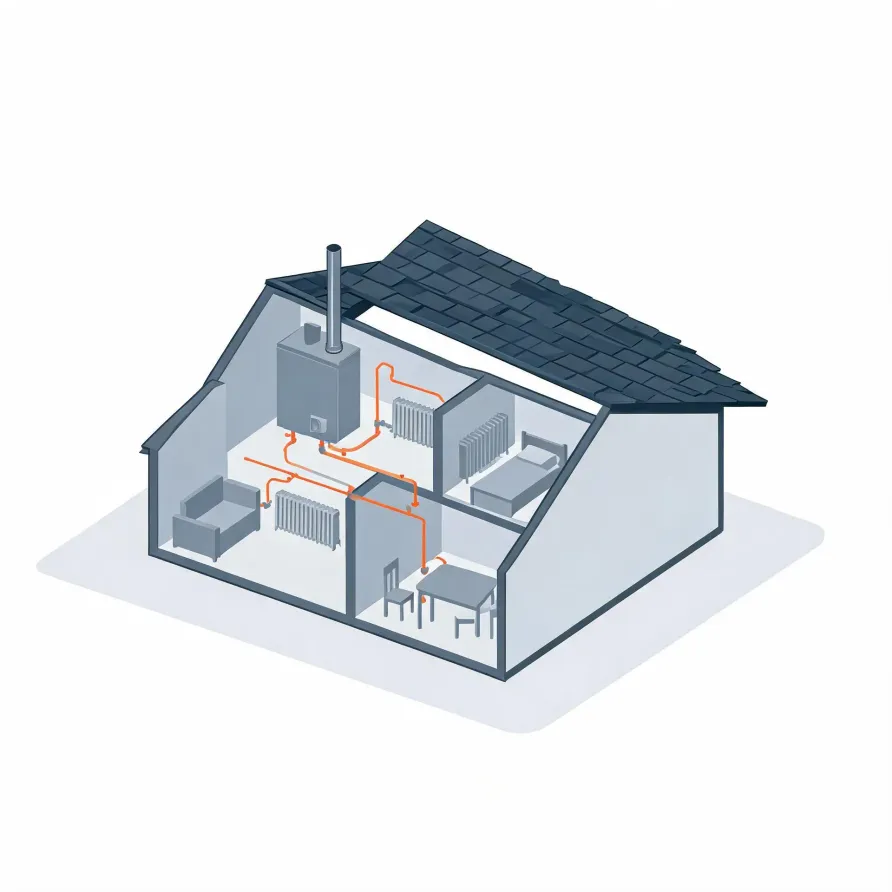
The boiler itself sits in a mechanical room, basement, or utility space and is the heart of the system. A contractor mounts it there, connects it to a fuel supply, and ties it into the home's water lines. The expansion tank mounts nearby, holding the pressure in the system steady as water heats and cools.
Radiators or baseboard units go into each room the system serves, sitting along exterior walls or beneath windows where heat loss is greatest. The circulator pump, mounted close to the boiler, moves heated water out through the supply lines and pulls cooler water back through the return. A thermostat goes on an interior wall and tells the system when to run.
The drawing shows a representative layout, and a licensed contractor determines exactly what applies to this house.
Find a contractor in Clark CountyClark County, South Dakota, by the numbers
148 severe weather events were recorded in Clark County, South Dakota between 2015 and 2024.
NOAA National Centers for Environmental Information, Storm Events Database, bulk CSV export, events 2015-01-01 through 2024-12-31.Half the homes in Clark County, South Dakota were built in 1957 or earlier (2020-2024 ACS 5-year).
U.S. Census Bureau, 2020-2024 American Community Survey 5-Year EstimatesClark County, South Dakota holds 1,609 housing units (2020-2024 ACS 5-year).
U.S. Census Bureau, 2020-2024 American Community Survey 5-Year EstimatesOwners occupy 77.5% of the occupied homes in Clark County, South Dakota (2020-2024 ACS 5-year).
U.S. Census Bureau, 2020-2024 American Community Survey 5-Year EstimatesSevere Weather Events in Clark County
Clark County's weather puts real demands on heating equipment, and those demands shape what a boiler installation here needs to handle. A system sized and installed for local conditions holds up where a generic approach falls short.
148 severe weather events, 2015–2024. Source: NOAA National Centers for Environmental Information, Storm Events Database.