Tell us about the job
Takes about a minute. No obligation.
Sizing a boiler for Codington County starts with understanding what the burner and heat exchanger are being committed to. Homes in Codington County, SD run heat about nine months a year, from September through May. A contractor quoting a new installation here has to get the load calculation right the first time, because a system running that many months accumulates cycling wear on the ignition components and the heat exchanger at a pace that punishes any margin left out of the original design. A unit that is a size too small runs longer to meet the setpoint, and the burner pays for that gap in years rather than in comfort.
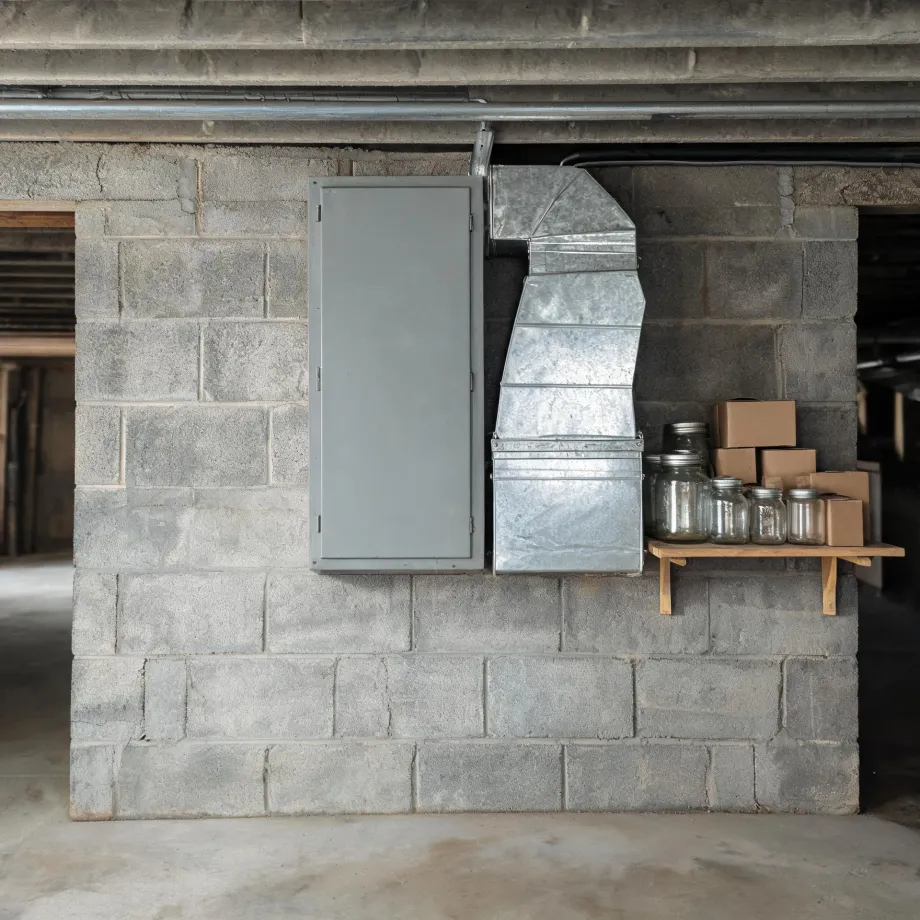
Ductwork laid out for one kind of system does not always carry a new boiler's distribution requirements without modification. Half the homes in Codington County, South Dakota were built in 1978 or earlier (2020-2024 ACS 5-year). That means a contractor sizing a replacement here has to assess what is already behind the walls before the equipment question is settled. Wiring and distribution runs that made sense for what the house originally ran on shape what a new install actually requires. The ductwork, in that sense, is the first thing a contractor opens and measures.
What Gets Installed With a New Boiler
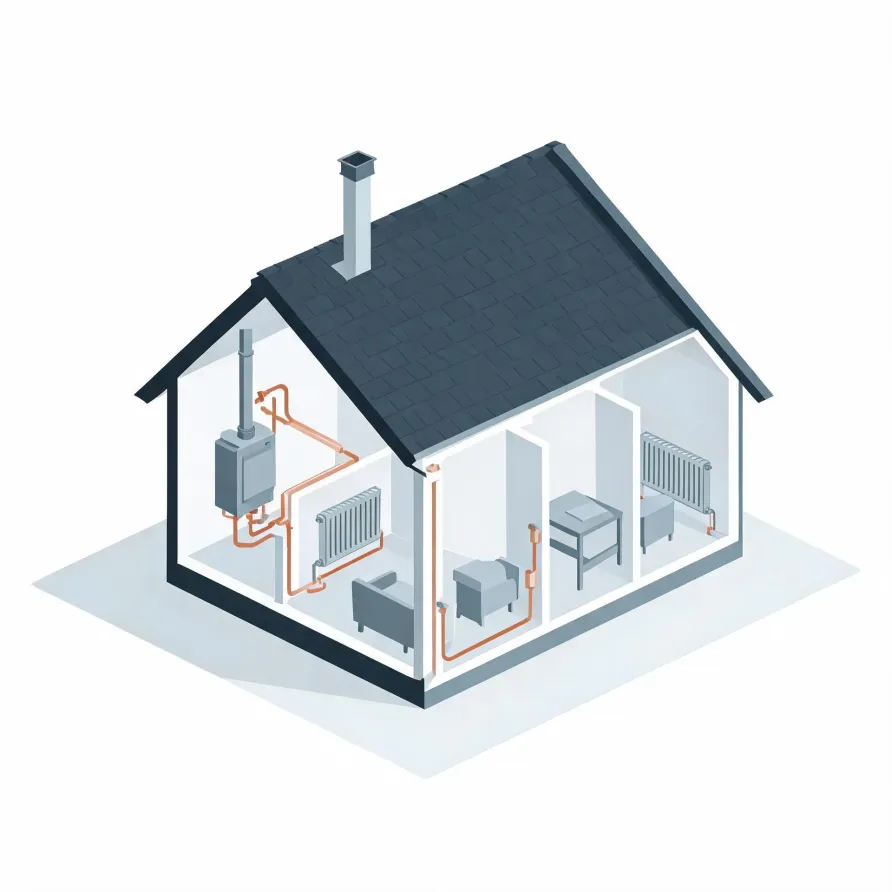
The boiler itself sits in a mechanical room, basement, or utility closet and is the unit that heats the water. From there, a network of pipes carries that hot water through the house. Radiators or radiant floor loops are the delivery points a homeowner sees or feels directly.
The expansion tank mounts near the boiler and absorbs pressure changes as water heats and cools. The circulator pump, also close to the boiler, moves water through the loop. A pressure relief valve and the thermostat round out what a contractor installs alongside the main unit.
The drawing shows a typical boiler layout, and a licensed contractor determines exactly which components apply to your house.
Find a contractor in Codington CountyCodington County, by the numbers
167 severe weather events were recorded in Codington County, South Dakota between 2015 and 2024.
NOAA National Centers for Environmental Information, Storm Events Database, bulk CSV export, events 2015-01-01 through 2024-12-31.Half the homes in Codington County, South Dakota were built in 1978 or earlier (2020-2024 ACS 5-year).
U.S. Census Bureau, 2020-2024 American Community Survey 5-Year EstimatesCodington County, South Dakota holds 13,533 housing units (2020-2024 ACS 5-year).
U.S. Census Bureau, 2020-2024 American Community Survey 5-Year EstimatesOwners occupy 69.8% of the occupied homes in Codington County, South Dakota (2020-2024 ACS 5-year).
U.S. Census Bureau, 2020-2024 American Community Survey 5-Year EstimatesSevere Weather Events in Codington County
Codington County weather puts real demands on heating equipment, and those demands shape what a boiler installation here needs to handle. How hard a system works over its life is a local question, and local weather history is part of the answer.
167 severe weather events, 2015–2024. Source: NOAA National Centers for Environmental Information, Storm Events Database.