Tell us about the job
Takes about a minute. No obligation.
Sizing a boiler for Grant County means sizing it for the coldest stretch, not the middle of the season. Homes in Grant County, SD run heat about nine months a year, from September through May. A burner and heat exchanger that run through months like that accumulate wear on every component that cycles: the ignition system fires repeatedly, the heat exchanger expands and contracts, and seals that might last years in a milder climate see their full workload compressed into a relentless run. A contractor quoting a replacement here will calculate the heat load against the actual demand this county places on the equipment, because a unit that comes up short does not catch a break until May.
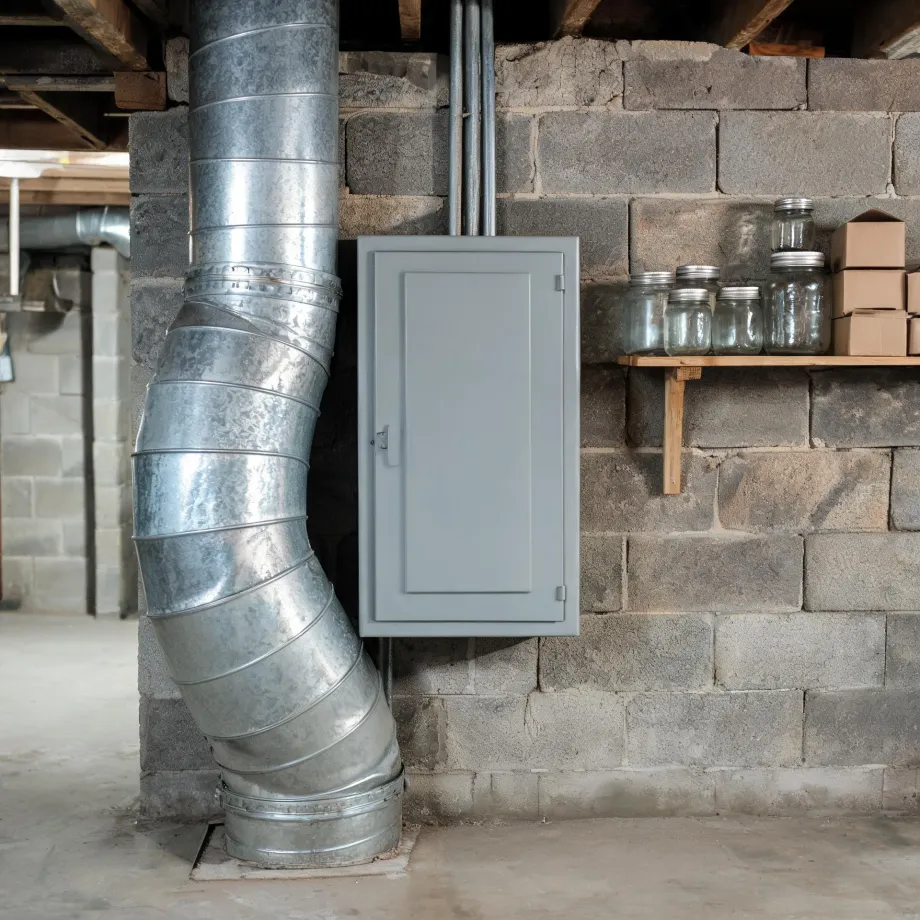
Ductwork designed for an older heating system and electrical service from the same era are what a contractor meets in much of Grant County's housing stock. Half the homes in Grant County, South Dakota were built in 1972 or earlier (2020-2024 ACS 5-year). A boiler installation in a house like that turns on what the existing distribution system will actually carry, not on the unit itself. If the ductwork is undersized or the service panel draws close to its limit, those get resolved first, and the equipment gets specified after.
What a Boiler Installation Puts in Your Home
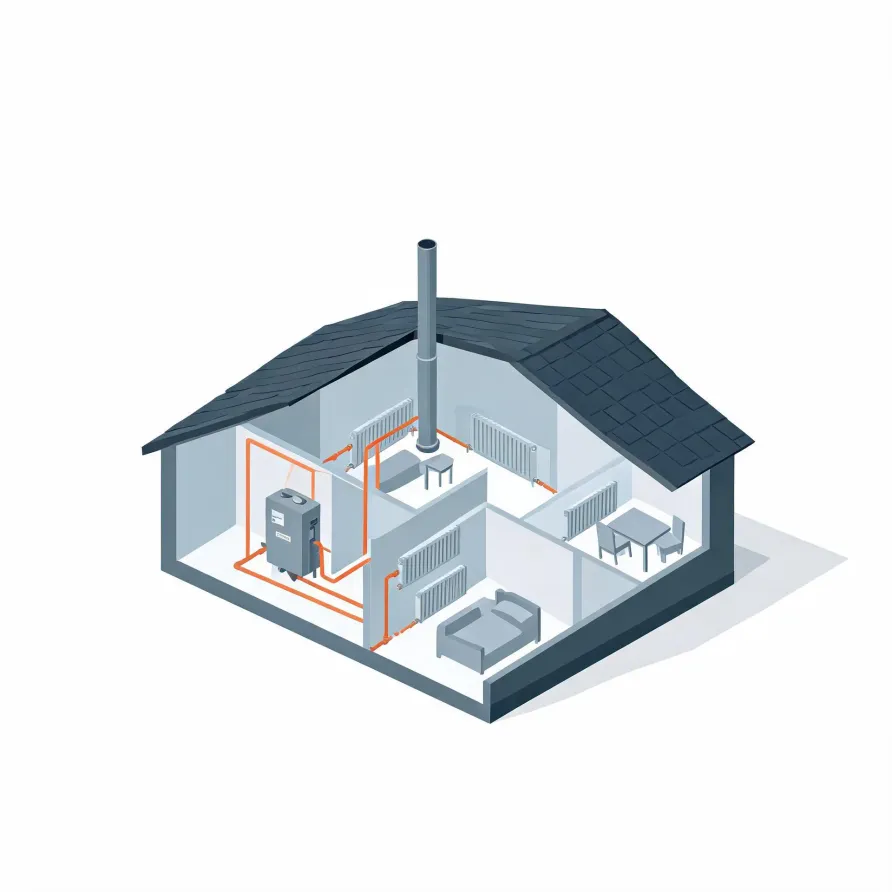
The boiler itself sits in a mechanical room, basement, or utility space and is the unit that heats water and sends it through the rest of the system. Alongside it, the expansion tank manages pressure as the water heats and cools, and the circulator pump moves the heated water out to where it is needed.
Radiators or radiant panels sit in the living spaces and are the points where heat actually enters the rooms. The thermostat mounts on a wall inside the house and tells the system when to fire and when to rest.
The drawing shows the general layout of a boiler system, and a licensed contractor determines what applies to the specific configuration of your house.
Find a contractor in Grant CountyGrant County, South Dakota, by the numbers
132 severe weather events were recorded in Grant County, South Dakota between 2015 and 2024.
NOAA National Centers for Environmental Information, Storm Events Database, bulk CSV export, events 2015-01-01 through 2024-12-31.Half the homes in Grant County, South Dakota were built in 1972 or earlier (2020-2024 ACS 5-year).
U.S. Census Bureau, 2020-2024 American Community Survey 5-Year EstimatesGrant County, South Dakota holds 3,456 housing units (2020-2024 ACS 5-year).
U.S. Census Bureau, 2020-2024 American Community Survey 5-Year EstimatesOwners occupy 75.6% of the occupied homes in Grant County, South Dakota (2020-2024 ACS 5-year).
U.S. Census Bureau, 2020-2024 American Community Survey 5-Year EstimatesSevere Weather Events in Grant County
Grant County's weather puts real demands on heating equipment: hard seasons stress systems, shorten parts life, and expose anything undersized or poorly installed. A boiler spec that fits the local load isn't a guess.
132 severe weather events, 2015–2024. Source: NOAA National Centers for Environmental Information, Storm Events Database.