Tell us about the job
Takes about a minute. No obligation.
Sizing a boiler for Perkins County requires a contractor to work from the actual heat load of the house, not a rule of thumb. Homes in Perkins County, SD run heat about nine months a year, from September through May. The burner and heat exchanger carry that load across most of the calendar, cycling on and off through cold stretches that run deep into spring. A system undersized at installation runs longer per cycle, stressing the ignition system and the heat exchanger in ways that a correctly sized unit avoids. Poor installation has nowhere to hide here.
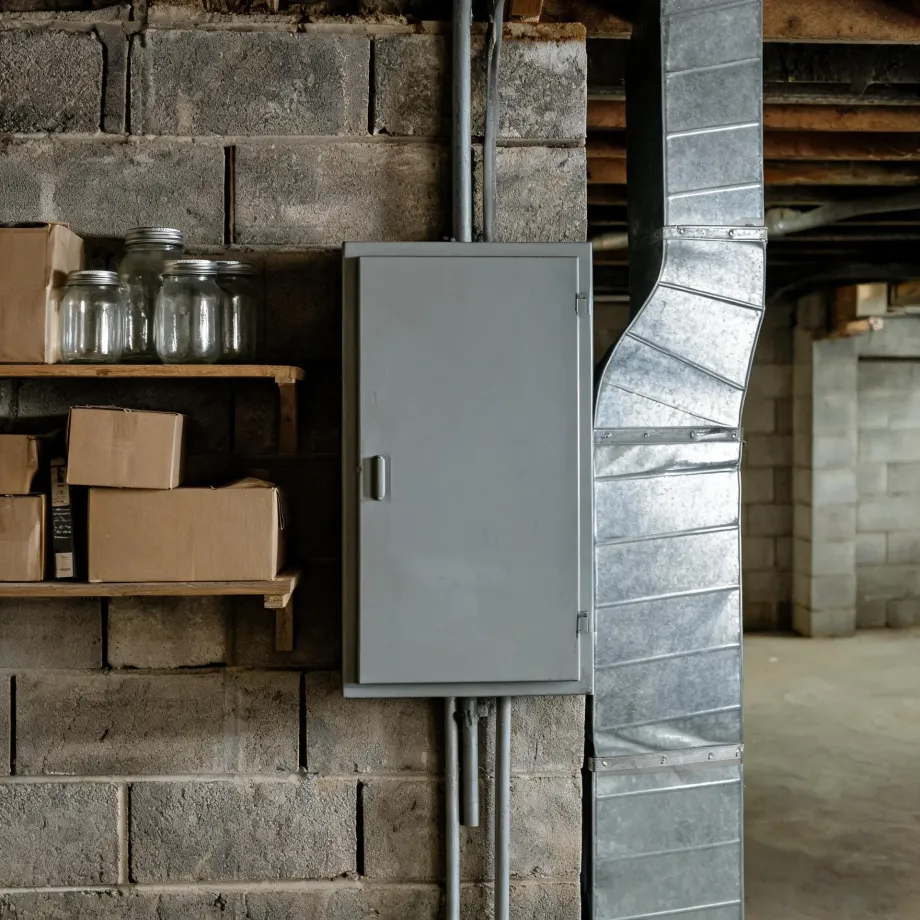
Existing ductwork and plumbing in a house tell a contractor more about how a boiler installation will go than the equipment choice does. Half the homes in Perkins County, South Dakota were built in 1966 or earlier (2020-2024 ACS 5-year). That means a significant share of homes here were built around heating infrastructure designed for systems that no longer exist in them. A contractor sizing a new boiler has to assess what the distribution side of the house can actually handle before the unit itself matters. Where the original pipe runs or duct layout falls short, that is where the job gets priced and planned.
What Gets Installed With a New Boiler
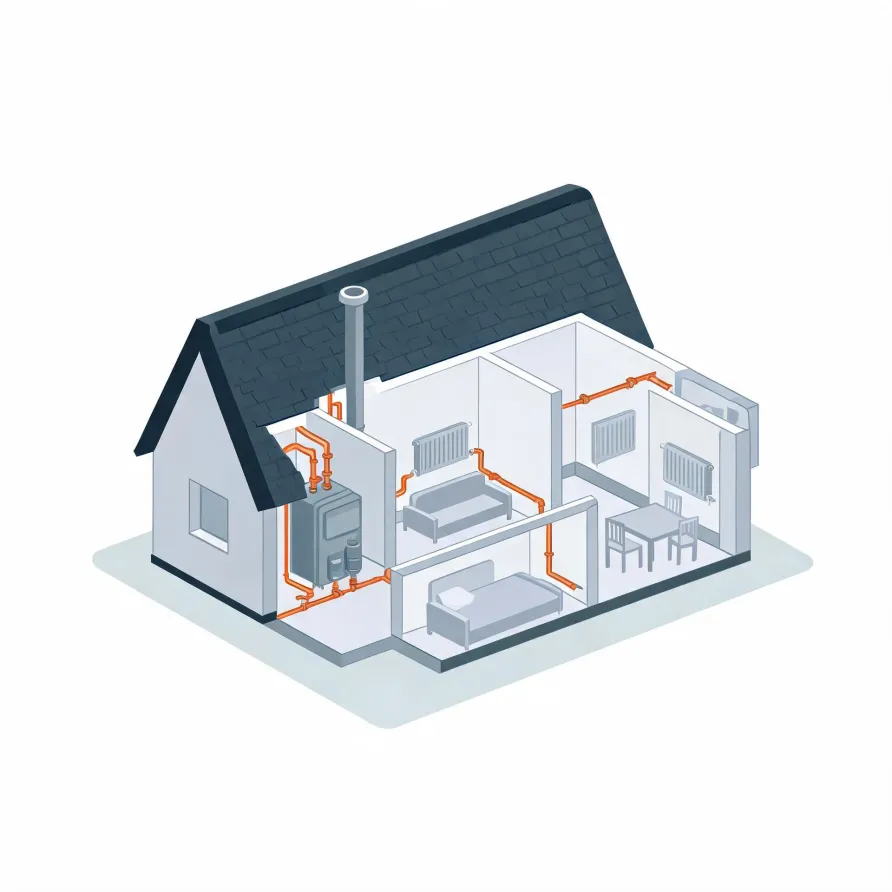
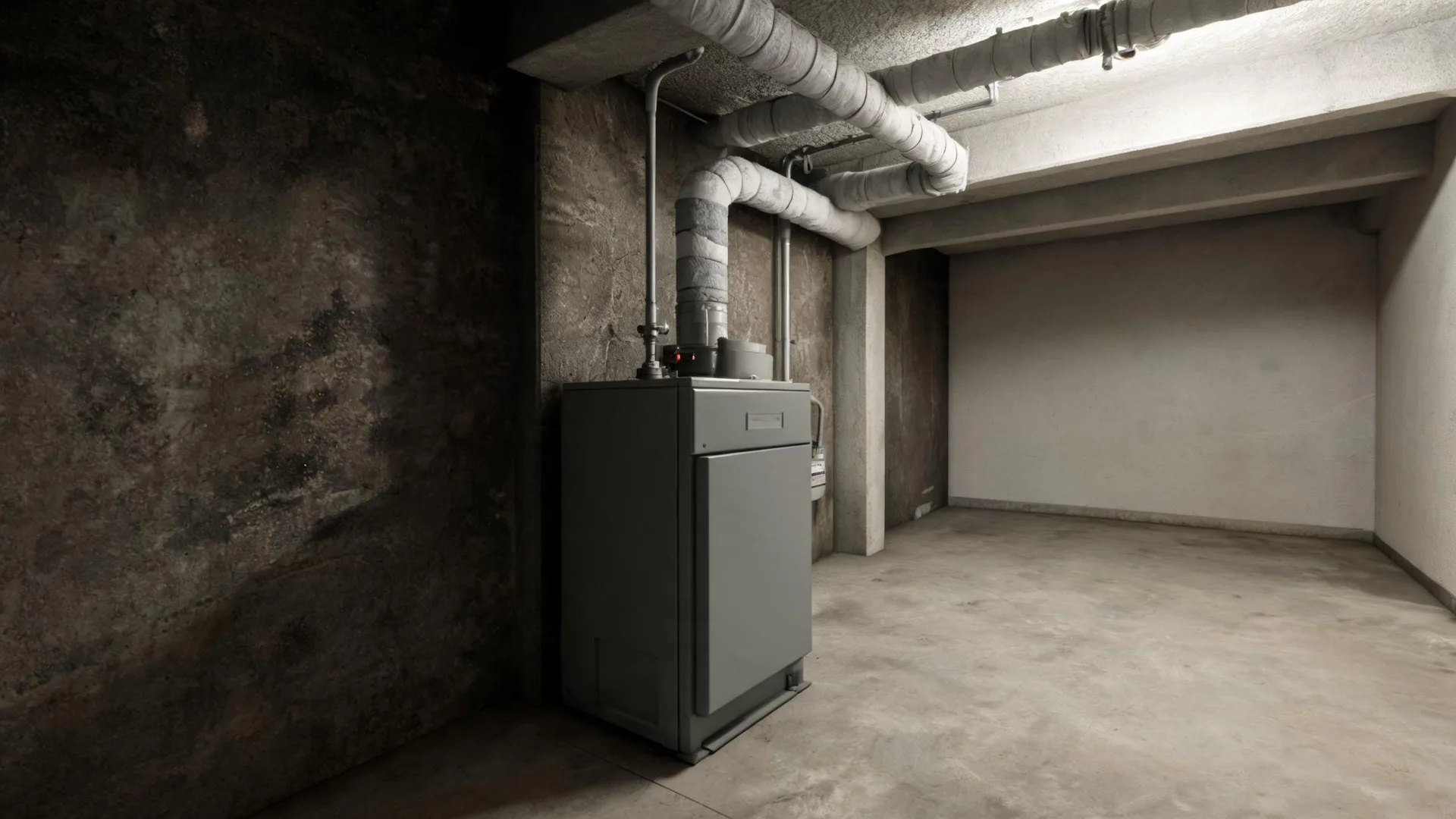
The boiler itself sits in a mechanical room, basement, or utility closet and is the unit that heats water. From there, a network of pipes runs through the house, carrying hot water to radiators or radiant floor tubing in each room. Those radiators and floor loops are what actually deliver the heat where people feel it.
A circulator pump mounts close to the boiler and moves water through the pipe loop. An expansion tank, also near the boiler, absorbs pressure changes as water heats and cools. A thermostat goes on an interior wall and gives the homeowner control over when the system runs.
The drawing shows a typical boiler system layout, and a licensed contractor determines which components and configurations apply to your specific home.
Find a contractor in Perkins CountyPerkins County, by the numbers
327 severe weather events were recorded in Perkins County, South Dakota between 2015 and 2024.
NOAA National Centers for Environmental Information, Storm Events Database, bulk CSV export, events 2015-01-01 through 2024-12-31.Half the homes in Perkins County, South Dakota were built in 1966 or earlier (2020-2024 ACS 5-year).
U.S. Census Bureau, 2020-2024 American Community Survey 5-Year EstimatesPerkins County, South Dakota holds 1,744 housing units (2020-2024 ACS 5-year).
U.S. Census Bureau, 2020-2024 American Community Survey 5-Year EstimatesOwners occupy 78.4% of the occupied homes in Perkins County, South Dakota (2020-2024 ACS 5-year).
U.S. Census Bureau, 2020-2024 American Community Survey 5-Year EstimatesSevere Weather Events in Perkins County
Boilers in Perkins County work against whatever the climate puts on them, and weather swings drive the workload a heating system carries over its life. That makes local weather history a real factor in sizing and installing equipment built to last here.
327 severe weather events, 2015–2024. Source: NOAA National Centers for Environmental Information, Storm Events Database.