Tell us about the job
Takes about a minute. No obligation.
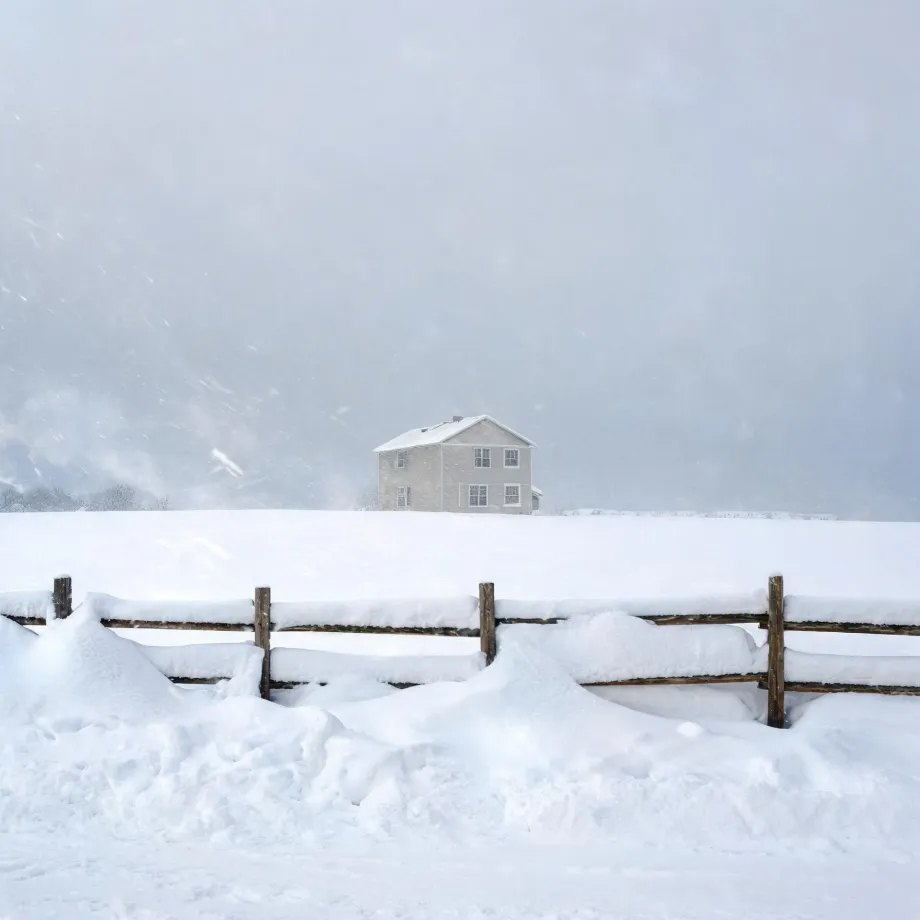
Sizing a boiler for a Corson County home starts with understanding how hard the system is asked to work. Homes in Corson County, SD run heat about nine months a year, from September through May. The burner and heat exchanger cycle through nearly the full calendar, which means a unit that was undersized from the beginning shows fatigue on those components sooner than it would somewhere the season breaks earlier. A contractor quoting a replacement here works out the actual load first, because an undersized unit will repeat the same failure and an oversized one short-cycles and wears its ignition system just as fast.
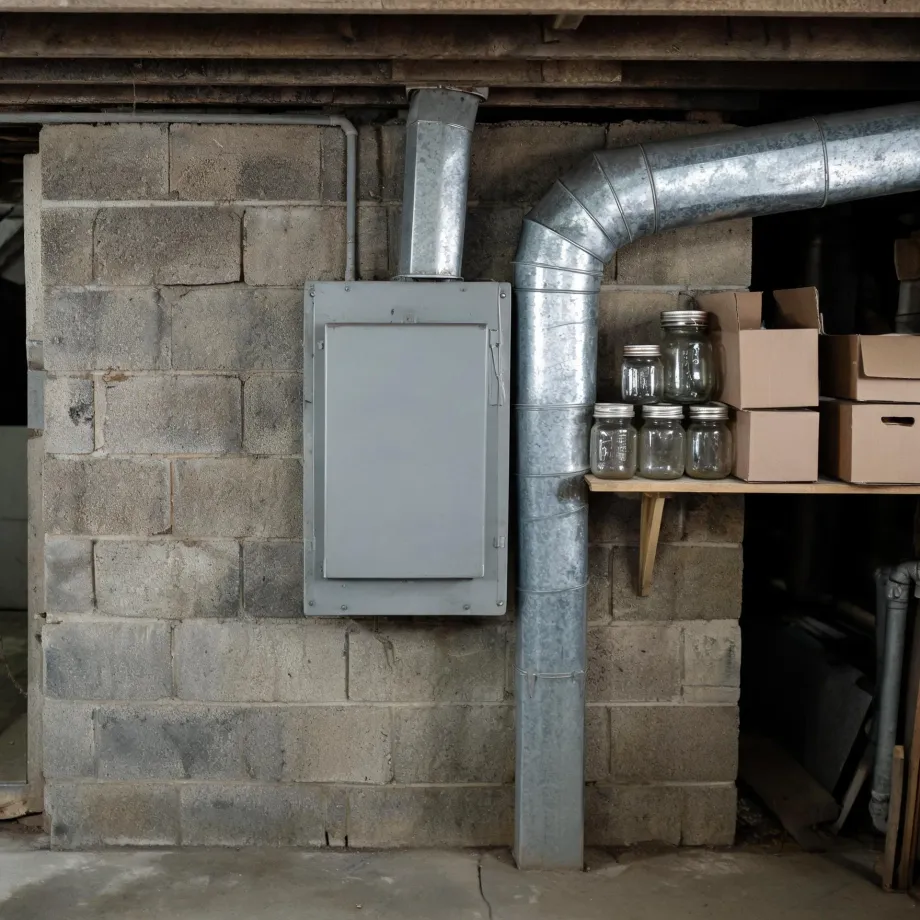
Existing ductwork and electrical service panels in a house do more to shape a boiler installation than the new equipment itself does. Half the homes in Corson County, South Dakota were built in 1974 or earlier (2020-2024 ACS 5-year). That means a contractor opening up a typical Corson County house is working with infrastructure originally built around something older than what is going in now, and the gap between the two is where the installation gets complicated. Whether the existing runs can carry the load of a new system, and whether the panel can handle what the new unit draws, are the questions that set the scope and the price.
What Gets Installed With a New Boiler
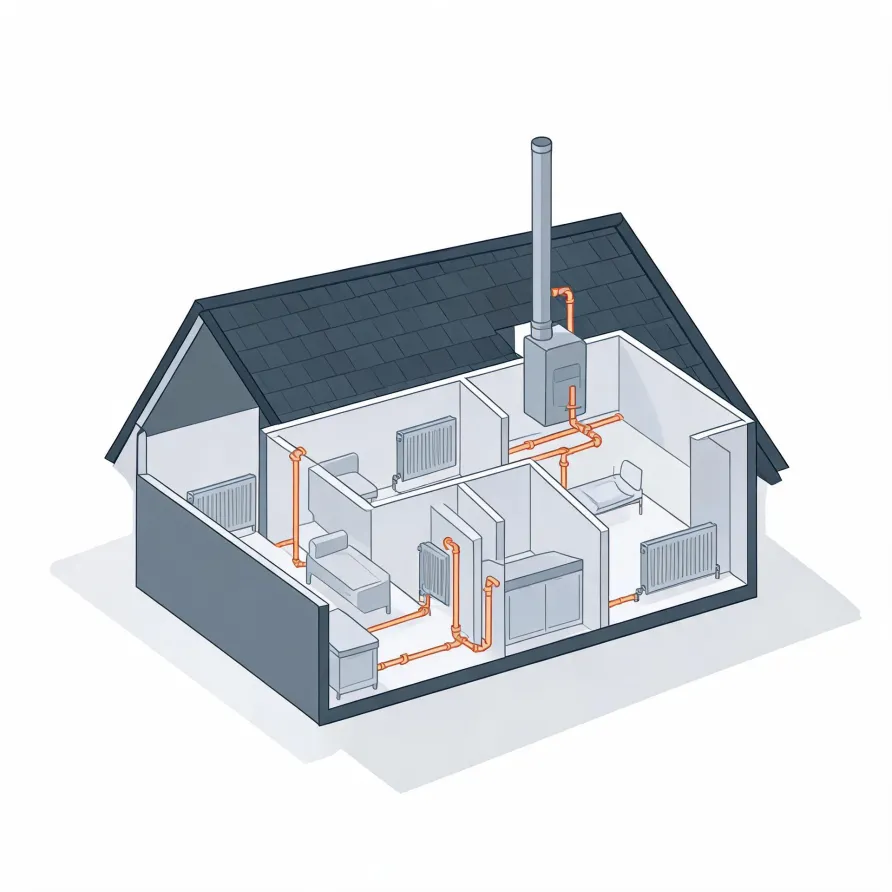
The boiler itself sits in a mechanical room, basement, or utility closet and is the unit that heats water for the whole system. From there, a network of pipes carries that heated water out to the living spaces. Radiators or radiant panels in each room receive the water and release heat into the space.
A thermostat mounts on an interior wall and tells the boiler when to fire. An expansion tank, usually hung near the boiler, manages pressure as water heats and cools. A circulator pump, also located near the boiler, keeps water moving through the pipe runs.
The drawing shows a typical layout, and a licensed contractor determines what the configuration looks like in this specific house.
Find a contractor in Corson CountyCorson County, by the numbers
239 severe weather events were recorded in Corson County, South Dakota between 2015 and 2024.
NOAA National Centers for Environmental Information, Storm Events Database, bulk CSV export, events 2015-01-01 through 2024-12-31.Half the homes in Corson County, South Dakota were built in 1974 or earlier (2020-2024 ACS 5-year).
U.S. Census Bureau, 2020-2024 American Community Survey 5-Year EstimatesCorson County, South Dakota holds 1,359 housing units (2020-2024 ACS 5-year).
U.S. Census Bureau, 2020-2024 American Community Survey 5-Year EstimatesOwners occupy 59.1% of the occupied homes in Corson County, South Dakota (2020-2024 ACS 5-year).
U.S. Census Bureau, 2020-2024 American Community Survey 5-Year EstimatesSevere Weather Events in Corson County
Boiler systems work hardest when outside conditions push hardest against them. What the weather has done in this county over recent years is part of what determines how much a properly installed boiler will be asked to handle.
239 severe weather events, 2015–2024. Source: NOAA National Centers for Environmental Information, Storm Events Database.