Boiler not heating in Sioux Falls, SD

Send the request today and stop worrying about who to call.

Hand it off

Why is my boiler not heating my house?

A boiler that runs but doesn't warm the house, or won't fire at all, is a real problem in a Sioux Falls winter when temperatures stay below freezing for weeks. You need to know whether this is something simple or a sign the system needs a repair tech before the next cold snap comes through.

Low water pressure or trapped air is the most common cause

Most of the time, a boiler that won't heat has lost pressure or has air trapped in the lines, and either one stops hot water from circulating through your radiators or baseboard heat. The pressure gauge on the boiler will tell you a lot: if it reads below 12 psi, the system doesn't have enough water in it to push heat through the house. Air in the lines does the same thing by blocking flow at a high point in the piping. A failed circulator pump or a bad thermostat can cause the same symptom, which is why a tech checks pressure, bleeds air, and tests the pump and controls in order. With Minnehaha County winters running hard into the single digits, this isn't something to leave for long.

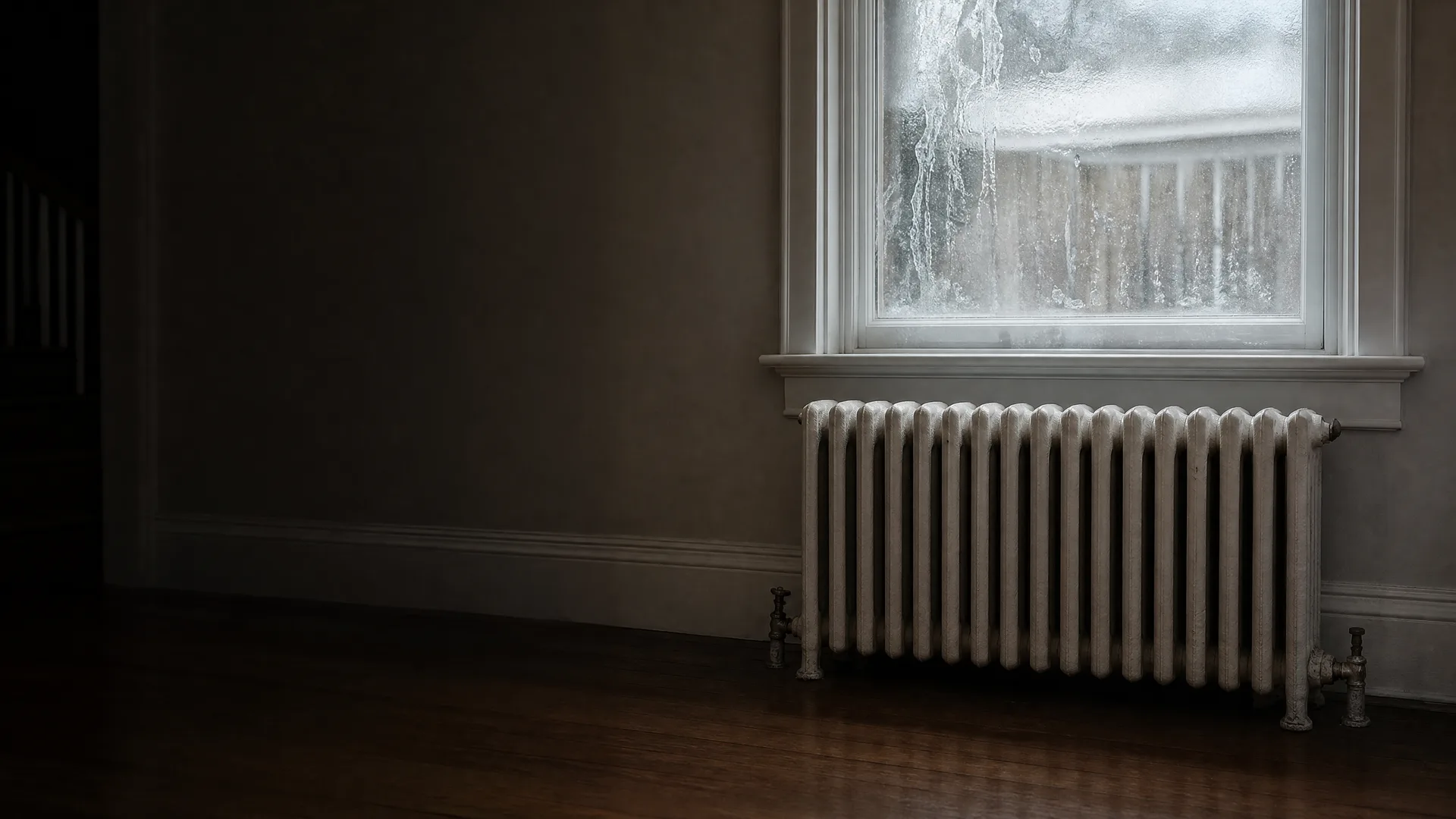
A white cast-iron column radiator with valves at each end sits beneath a frosted, condensation-covered window in a dim room with dark wood flooring and gray walls.

You wake up before the sun's up, the way you do most January mornings, and the living room is cold in a way that tells you something before you even check the thermostat. The radiator under the window sits quiet. No tick, no hiss, none of the warmth it should be throwing off. You press a hand to the cast iron anyway and it's cold to the touch. On the glass above it, ice has formed on the inside, a thin frost pattern across the lower pane. Outside, the morning is still dark and well below freezing, the kind of cold that settles into a house fast once the heat stops. You turn up the thermostat and wait, listening for the boiler to answer. It doesn't.


Why does a dead boiler hit so hard here?

  • Winter nights average 10°F

    Nights in December, January and February average 10°F. A boiler that stalls out isn't a small inconvenience at that temperature, it's a house that cools fast.

  • Heat runs September through May

    Heat runs here from September through May. A boiler that quits has nine months a year where it could happen, not just the deep cold snaps.

  • 64.2% of homes heat with gas

    64.2% of homes in the county heat with gas, most of them boilers or furnaces tied to a gas line. If yours stops firing, a gas supply issue is worth ruling out early.

NOAA nClimDiv 1991-2020 · ACS 2020-2024

How a boiler actually fires

  • A gas boiler needs ignition, water flow and a call for heat from the thermostat all working before it fires.
  • The igniter or flame sensor is often the first thing to fail, and a dirty sensor will shut the burner down as a safety measure.
  • Low water pressure on the gauge, usually below 12 psi, keeps a boiler from firing even when everything else checks out.
  • A circulator pump that's seized or wired wrong will let the burner run while the radiators or baseboards stay cold.
  • Trapped air in the lines keeps hot water from reaching some rooms, which is why one radiator can be cold while another warms up fine.
  • The aquastat controls when the burner turns on and off, and a failed one will either stop the heat call or never let it rest.

A gas boiler has to clear three things before it puts out heat. The thermostat has to call for it, the igniter has to light the burner, and water has to move through the system to carry that heat into the house. Any one of those can fail on its own and leave you with a boiler that looks fine but isn't doing its job.

The igniter and flame sensor wear out faster than people expect, since they sit right in the flame every time the burner runs. A flame sensor coated in soot will read that as no flame at all, and the boiler shuts the burner down rather than let gas build up unburned. That's the boiler protecting itself, not malfunctioning.

Water pressure matters just as much as ignition. Check the gauge on the front of the boiler. If it reads below 12 psi, the boiler may refuse to fire even though the burner, the igniter and the thermostat are all working correctly.

Sometimes the burner lights and stays lit, but the heat never makes it to the radiators. That points to the circulator pump, the part that pushes hot water through the pipes. A pump that's seized or has a wiring fault will let the boiler run hot while the house stays cold. Air trapped in the lines causes a similar problem room by room, which is why one radiator can be warm while the next one stays cold.

The aquastat sits behind most of this, telling the burner when to start and stop based on water temperature. When it fails, it can cut the heat call short or keep the burner running past when it should rest.

A woman in a knitted shawl sits in a living room with a fireplace, shelves, a sofa with cushions, and a lamp by a bright window, looking off to the side.
A woman with long brown wavy hair in a green shirt over a white top stands in a living room with built-in white shelves, a ceiling fan, a potted plant and a sliding glass door.
A woman with shoulder-length gray-streaked hair in a light gray knit sweater stands smiling and looking off to the side in a living room with a sofa, houseplant, framed picture, and sunlit sliding glass door.
A woman with shoulder-length curly gray hair wearing a gray knit sweater stands near a window with a sheer curtain, looking to the side, with a blurred interior room behind her.
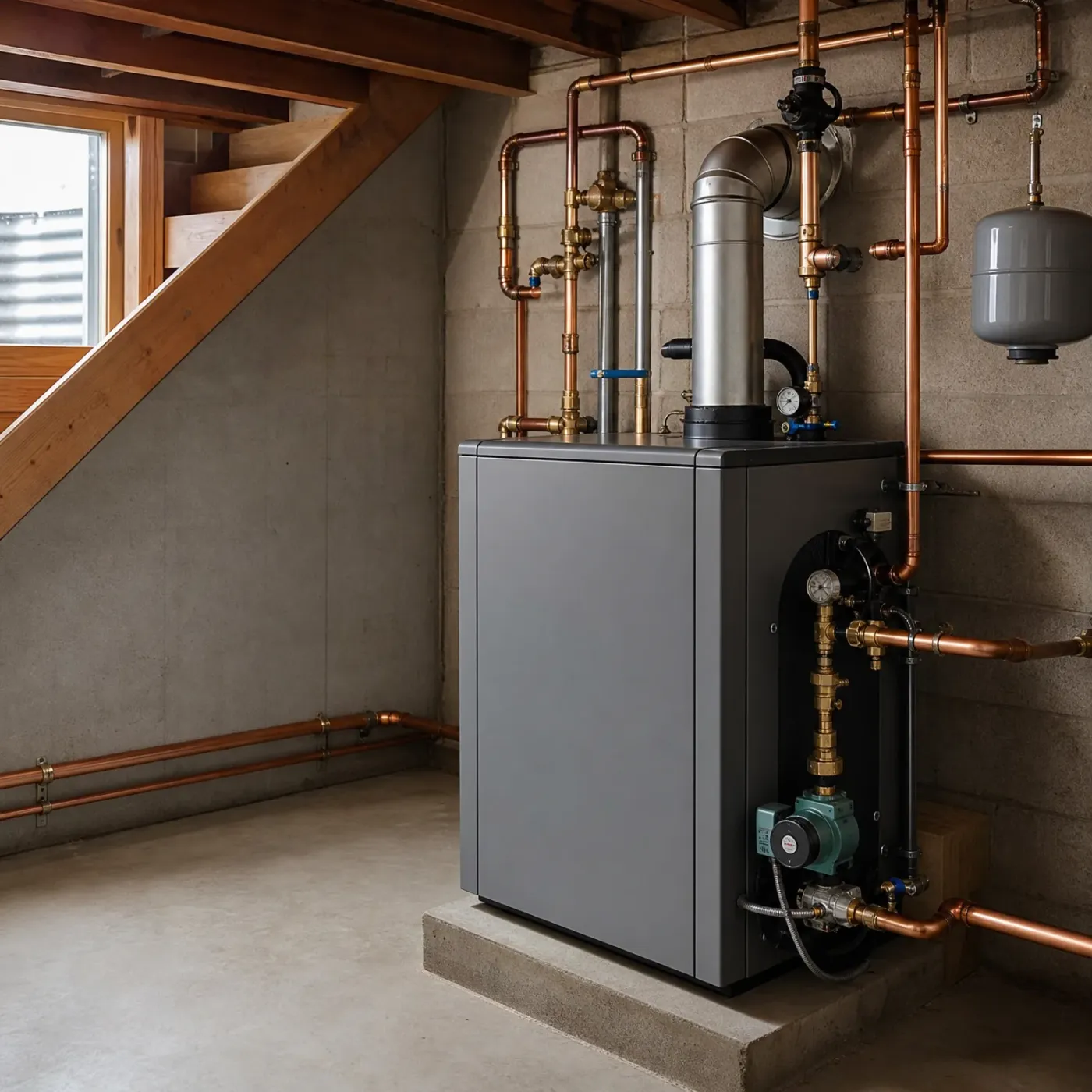
A gray boiler on a concrete pad in a basement, connected to copper and black pipes with valves, gauges, a circulator pump, a flue, and a wall-mounted expansion tank, beside a wooden staircase.

Done looking for a boiler pro

The pro who gets in touch is licensed in South Dakota and works in Minnehaha County.

Send the request and finding a pro stops being your problem.

Get one local pro

No charge to send it. You decide if you hire them.

Is your house actually losing ground right now?

Check the rooms farthest from the boiler first. If the baseboards or radiators there are cool while one near the boiler is warm, the water isn't circulating the way it should. Listen at the unit itself. A kettle noise or banging in the pipes usually means sediment built up low in the system. Look at the pressure gauge on the front. Anything under 12 psi is low and worth noting. If the house has been cooling for more than a few hours, check for frozen pipes in outside walls or an unheated basement corner before the cold reaches them.

A gray and blue floor-standing boiler in a basement corner, with a metal flue pipe and copper and black piping, valves, and a gray expansion tank mounted on an unfinished wood-framed wall beside a concrete wall.

Running the way it should

Heat moves out through the copper piping to every radiator in the house, and the water comes back to the boiler to be heated again. The expansion tank holds steady, the pressure stays where it belongs, and the burner fires only when the thermostat calls for it.

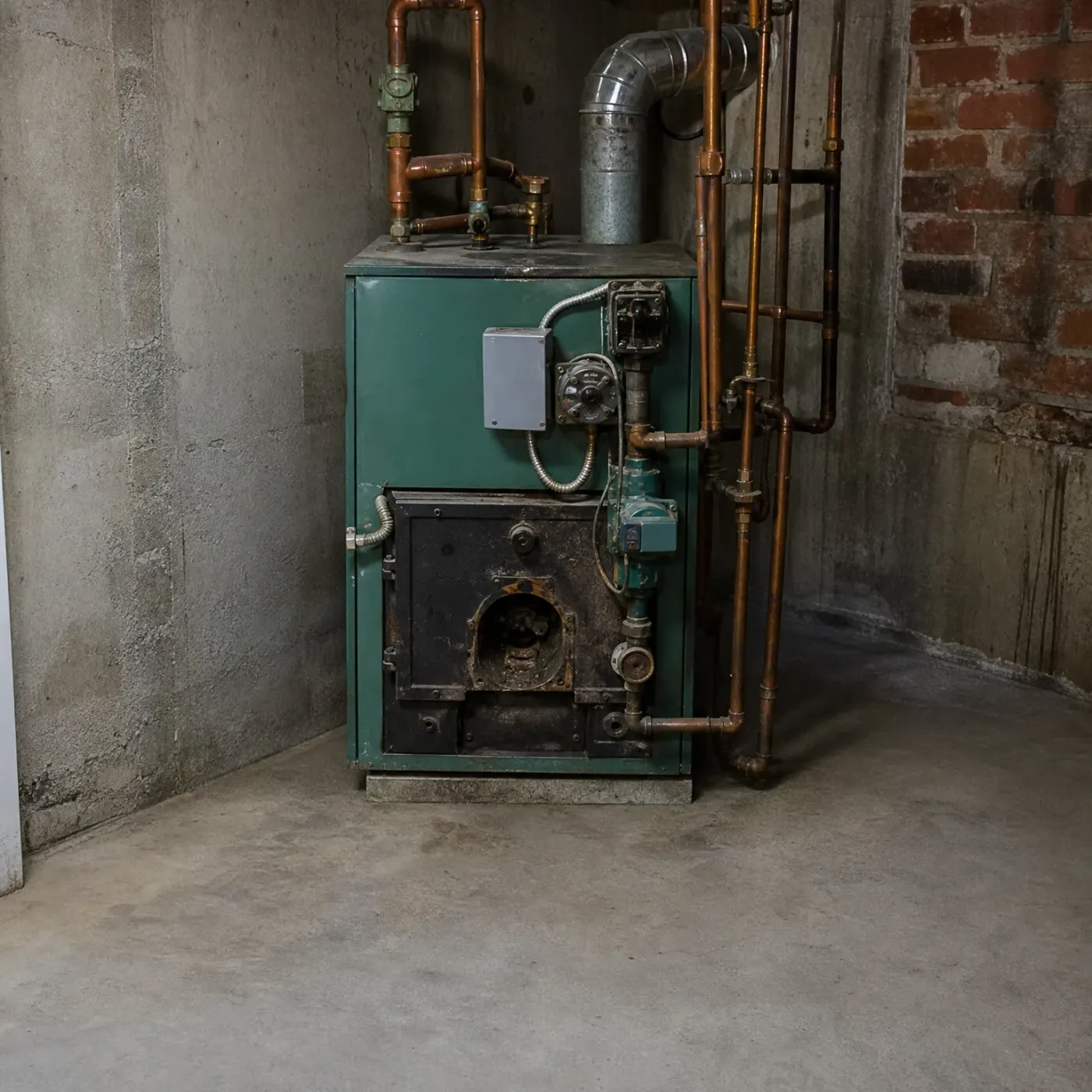
A green oil-fired boiler with a flue pipe, burner and circulator pumps sits on a concrete pad in a basement corner, surrounded by copper piping and an expansion tank against concrete walls.

Something in the loop has stopped

The flue still rises from the top of the unit, but that doesn't mean the water inside is moving. A boiler can sit there looking whole while a stuck valve, a failed igniter or low pressure keeps it from putting out any heat at all.

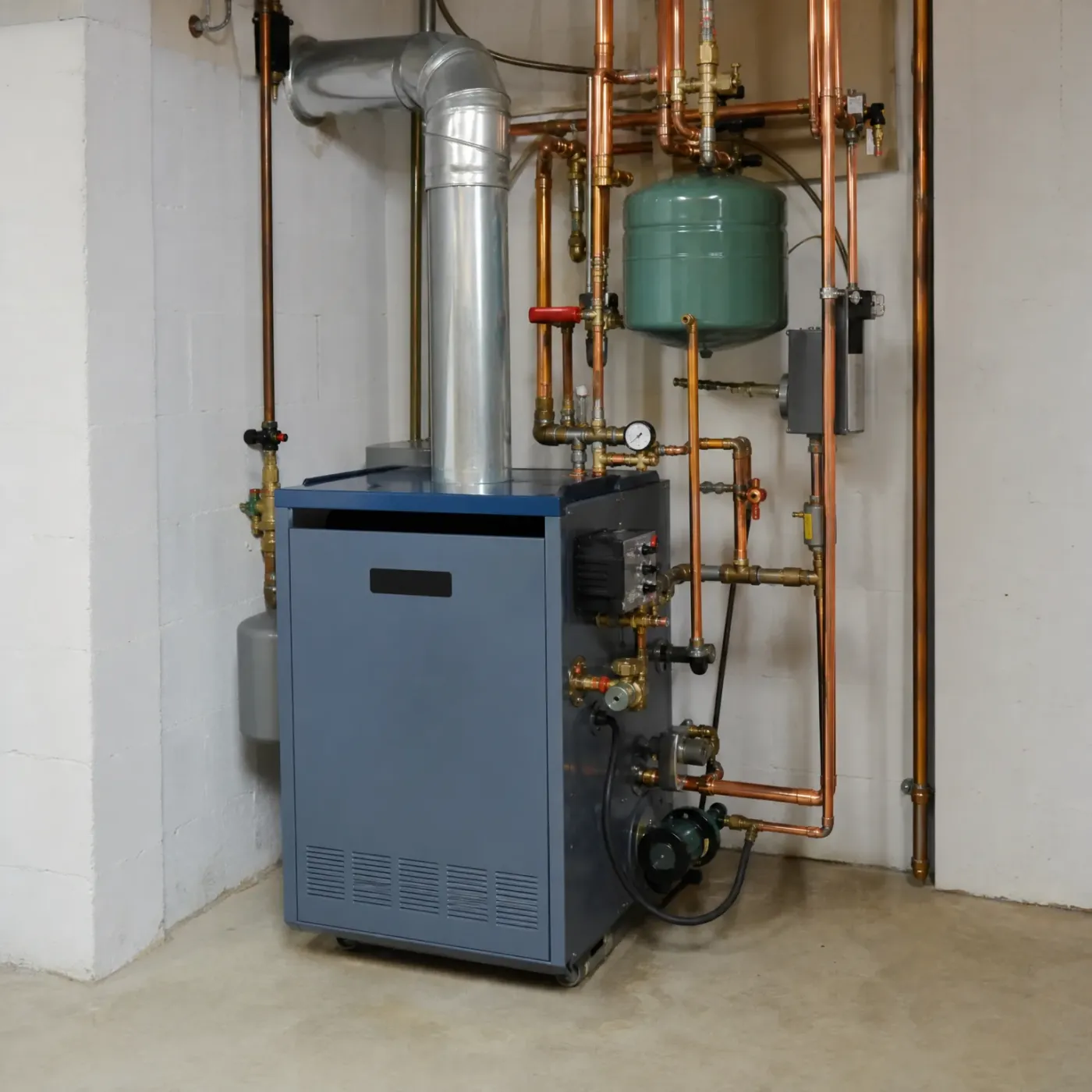
A green cast-iron boiler with a soot-stained front door, copper piping and a metal flue, standing on a concrete floor in a basement corner with concrete and brick walls.
Before you get your boiler repair
A blue-gray residential boiler in a basement corner, connected to copper piping, a green expansion tank, a circulator pump, gauges, and a metal flue pipe against painted block walls.
After you get your boiler repair

A boiler can run and still fail at one specific point along the way. A zone valve stuck in the wrong position sends heat down one loop and leaves another cold, even with the burner working fine. The circulator pump has to keep water moving, and a seized bearing or a bad capacitor will stop that without shutting the burner off, so the boiler fires into a system that isn't circulating. The aquastat is what tells the burner when to fire based on water temperature, and if it sticks, the boiler can cycle on and off without ever reaching the temperature it's set to. Older boilers collect sludge and mineral buildup at the bottom of the tank, and that layer sits between the heat exchanger and the water, keeping the heat from transferring the way it should. Air trapped in the lines blocks water from getting to a radiator, which is why bleeding just that radiator can bring the heat back to one room. And if the heat exchanger has cracked, the boiler will lock out on purpose and stay that way until the part is replaced.

Where the heat actually stalls

  • A zone valve that sticks open or shut can send heat to one loop while another stays cold even though the boiler fires fine.
  • The circulator pump moves water through the system, and a seized bearing or a failed capacitor stops that motion without stopping the burner.
  • An aquastat reads the water temperature and tells the burner when to fire, so a stuck aquastat can leave the boiler cycling without ever reaching the set point.
  • Sludge and mineral buildup settle at the bottom of an older boiler and insulate the heat exchanger from the water that's supposed to carry that heat away.
  • Trapped air in the lines keeps water from reaching a radiator, which is why bleeding a radiator valve sometimes restores heat to just that one room.
  • A cracked heat exchanger forces a boiler into lockout as a safety response, and it will not reset until that part is addressed.
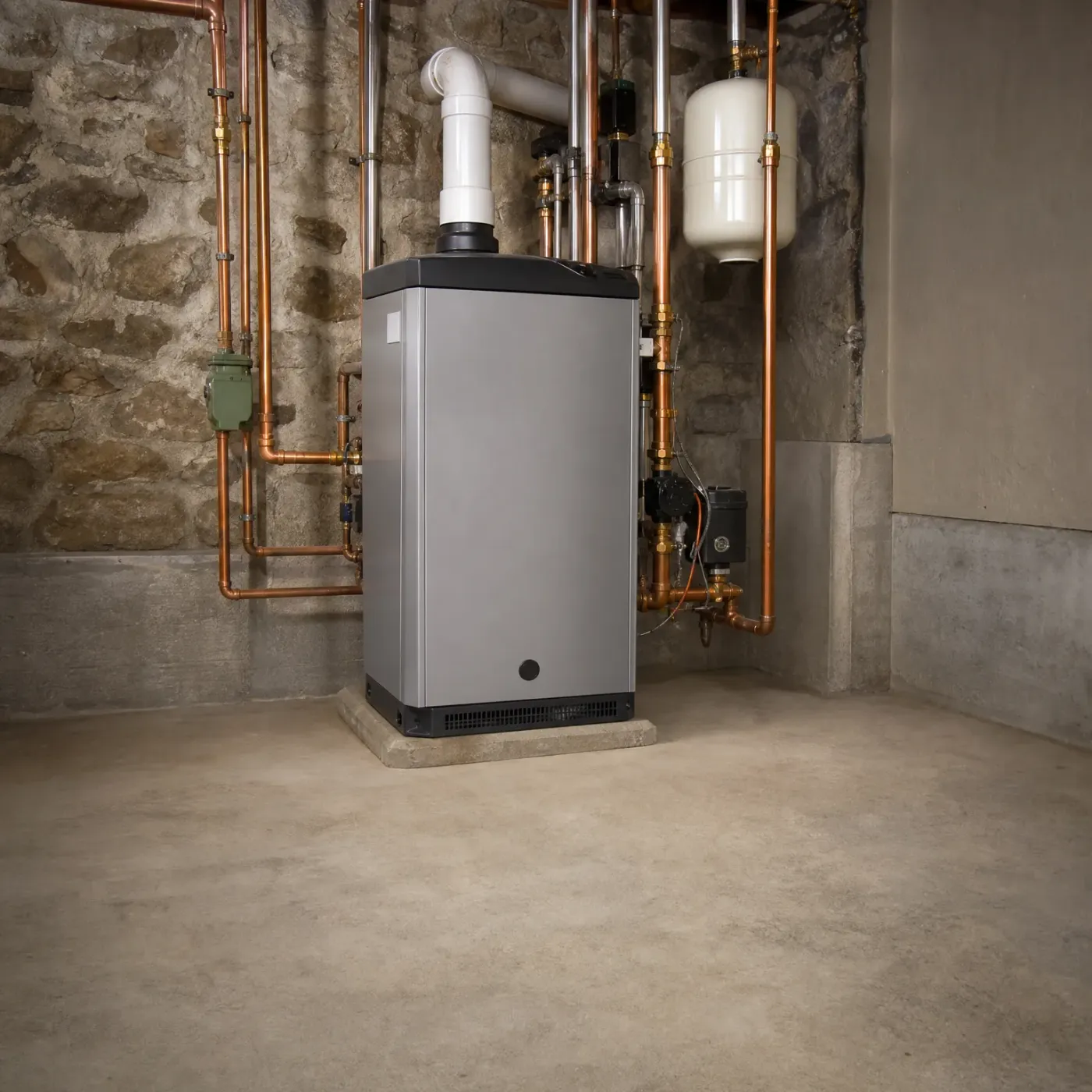
A gray floor-standing boiler on a concrete pad in a basement, connected to copper pipes, a white expansion tank, and a white PVC vent against a stone and concrete wall.
Copper lines, a working circulator, and a pressure that holds steady mean every radiator in the house gets its share of hot water.
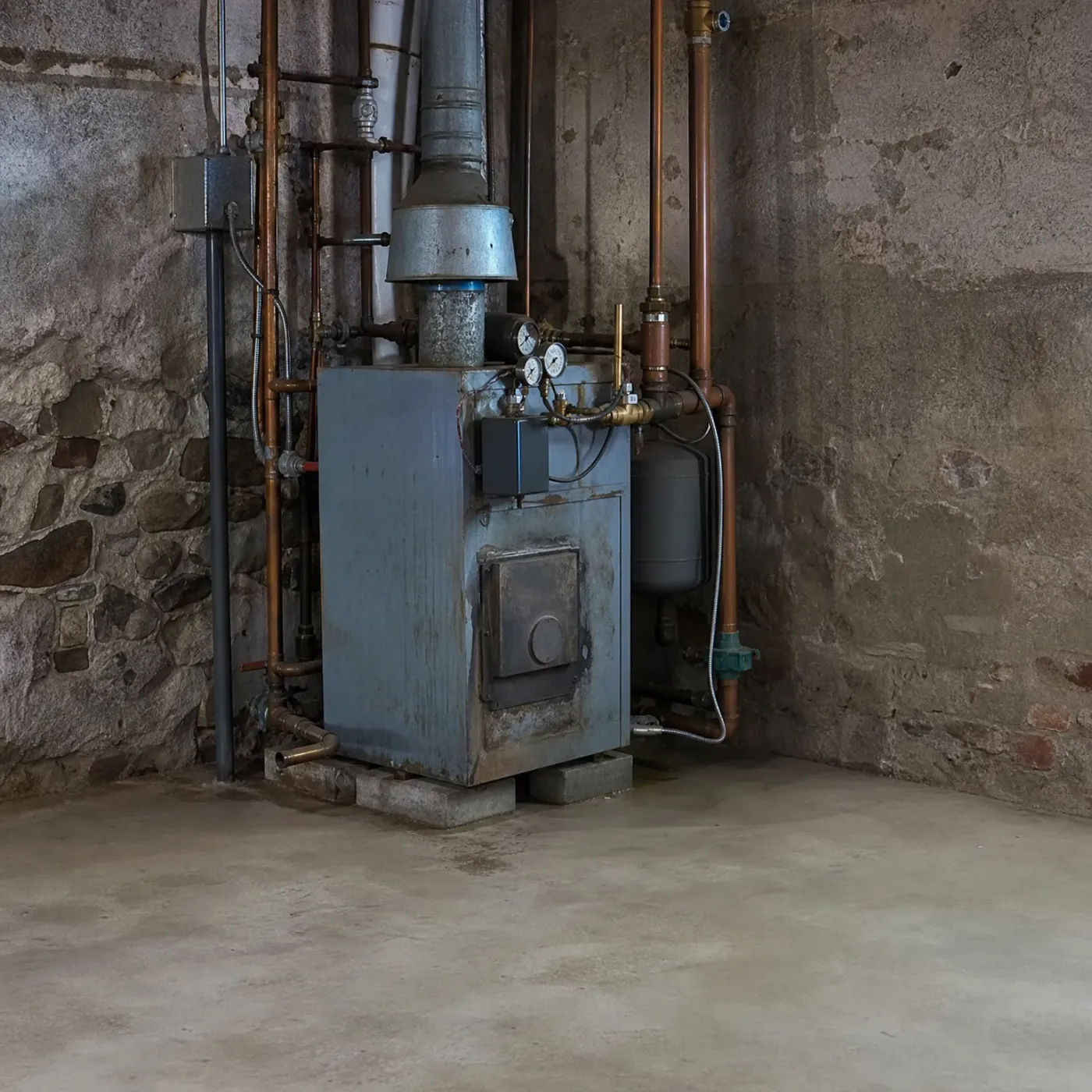
An older gray boiler with a metal flue, copper piping, pressure gauges and an expansion tank sits on concrete blocks in a basement corner with stone and concrete walls.
A cast-iron boiler like this one, worn valves and gauges that won't hold pressure let heat leak out before it ever reaches the far rooms.

Call Now or Wait a Day

Call today

  • A tech who already knows boilers can usually tell you over the phone whether it sounds like the igniter, the circulator, or low pressure.
  • Getting a tech out before the cold snap deepens means the fix happens while it's still a one-part job, not a frozen-pipe job.
  • Minnehaha County nights in January run around 10 degrees, and a boiler stalled out tonight means a house losing heat fast.
  • A local contractor who works this equipment all winter has likely already seen whatever is wrong with yours this season.
  • Waiting a day to call often means waiting a day colder, since a boiler problem rarely fixes itself overnight.

Wait it out

  • If the thermostat is just set wrong or a breaker tripped, checking that yourself first can save a visit altogether.
  • A boiler that's still circulating warm water to most rooms, just not all of them, may hold the house above freezing for a while.
  • Some problems, like a stuck zone valve on one loop, won't get worse fast if the rest of the system is still firing.
  • Waiting makes sense if you've got a backup heat source, like a space heater or a fireplace, to cover the gap.
  • Holding off costs you comfort now and risks a bigger repair later if low pressure or a bad sensor is left to sit through more cold nights.
  • A boiler that's gone fully cold with no heat anywhere in the house is not one to leave for later in a Sioux Falls winter.
  1. Thermostat calls for heat and sends power to the boiler

  2. Igniter glows or sparks to light the gas burner

  3. Flame sensor confirms the burner is actually lit

  4. Circulator pump pushes heated water out through the pipes

A woman and a child wrapped together in a thick knitted blanket on a sofa, both with eyes closed, with a lit table lamp and houseplant in the dim background.
An older woman with short gray hair in a cream cable-knit turtleneck sweater smiles while looking to the side in a wooden kitchen, with a round loaf of bread on a board in the foreground and a lit candle by a dark window.

A boiler holds somewhere around 12 to 15 psi when it's running right. Drop below that and the circulator can't push water through every loop in the house.

That's why a room on the far end of the house stays cold while the one near the boiler is warm. The water isn't short on heat. It's short on pressure to get there.

Winter nights average 10°F

At 10 below zero overnight, a boiler that's only half working can't keep up. A house that normally holds its heat fine will start losing ground room by room until someone notices the cold spots.

NOAA nClimDiv 1991-2020

A boiler that won't fire, or runs without warming the house, almost always traces back to one part: the igniter, the circulator, the pressure, or a stuck zone valve. None of those are mysteries once someone has eyes on the unit. What matters now is getting a tech there before a cold night turns a one-part fix into a bigger job. The request that follows goes to one licensed contractor working in Sioux Falls, someone who services boilers all winter and has seen this exact failure in houses like yours plenty of times. You won't be fielding calls from three or four companies trying to win the work. You'll hear from the one who's going to do it, and who already knows what usually fails on a cold February morning in Minnehaha County. The cold room, the quiet radiator, the boiler that won't hold pressure, all of it points somewhere specific. Finding that spot and fixing it is the job ahead, and it's no longer yours to carry alone.

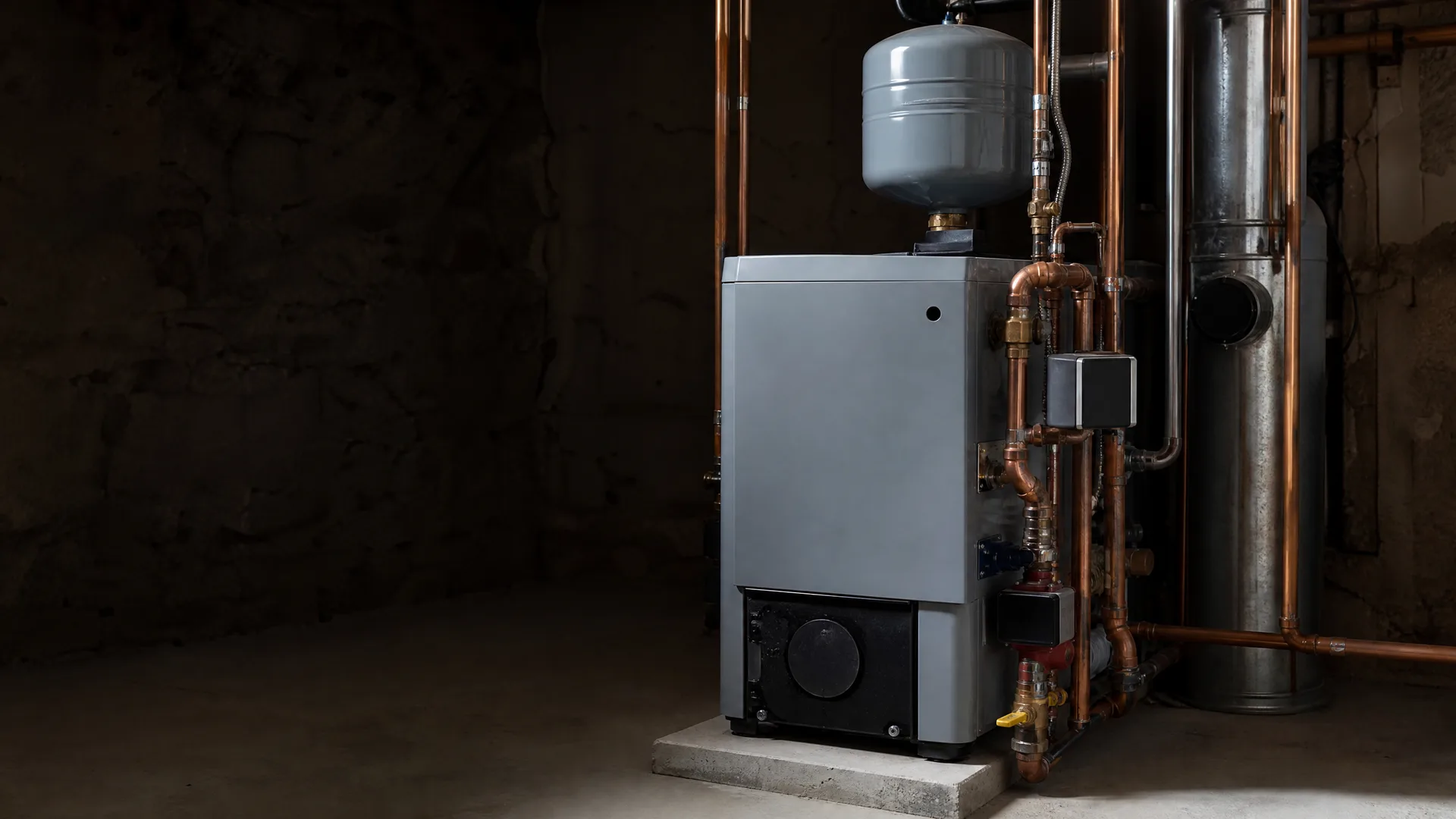
A gray residential boiler on a concrete pad in a dim basement, connected to copper piping, a gray expansion tank overhead, and a metal flue pipe along the wall.

It's off your list after this

Step 1 of 3: Equipment