Tell us about the job
Takes about a minute. No obligation.
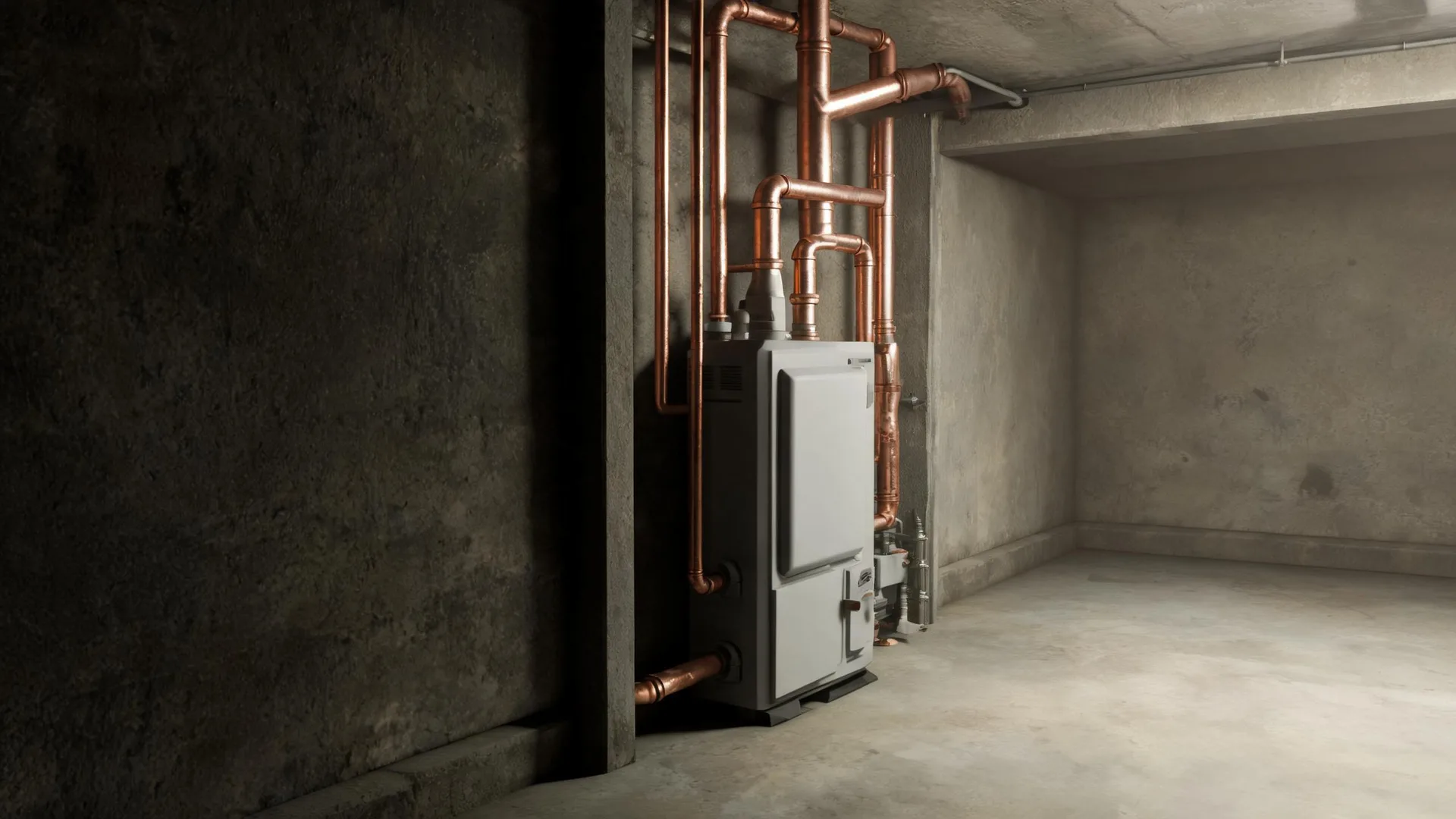
A boiler repair quote in Davison County starts with the burner and ignition system, because those are the parts that have been cycling longest and hardest. Homes in Davison County, SD run heat about eight months a year, from October through May. Each firing cycle loads the heat exchanger, stresses the ignition components, and works the expansion and contraction into every seal and joint. A contractor who skips that assessment and prices only the presenting fault will miss what is already close to failure beside it.
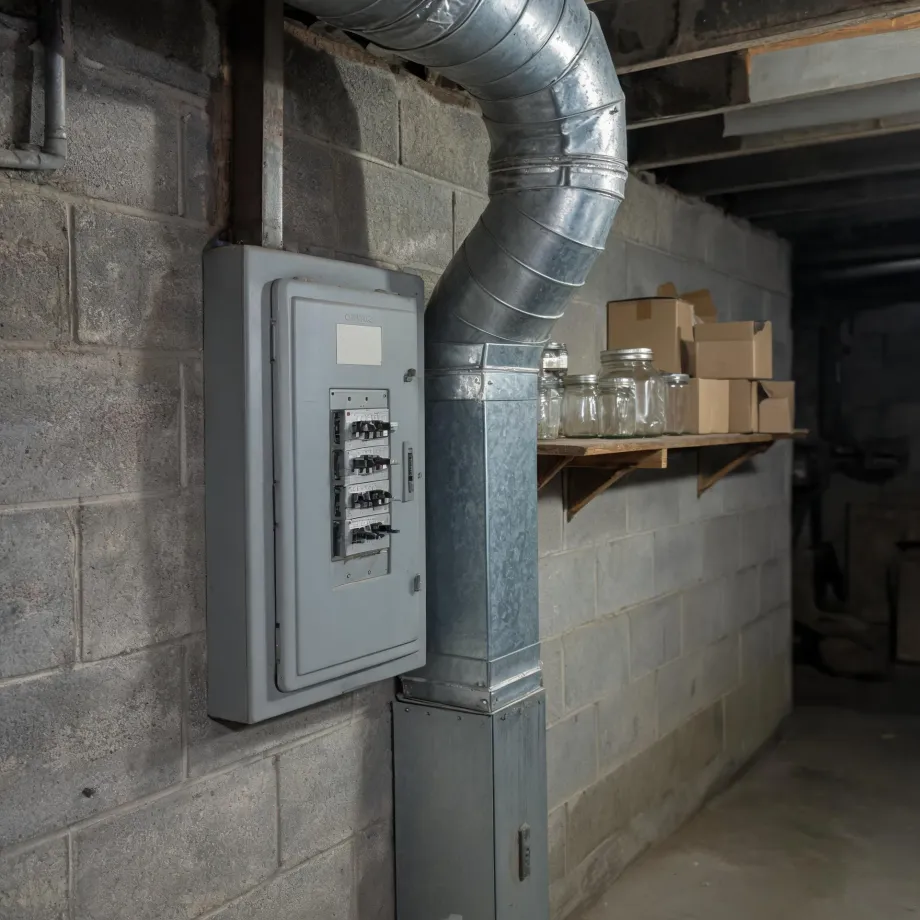
Boiler systems in this county run inside houses that have been reworked more than once. The original piping layout, the zone valves, the expansion tank sizing, and even the venting path may reflect repairs or conversions that happened long before the current boiler was installed. Half the homes in Davison County, South Dakota were built in 1972 or earlier (2020-2024 ACS 5-year). When a contractor opens a system here, what they find behind the boiler is often the record of those earlier decisions, and a part that appears to need simple replacement may sit at the end of a distribution loop that has been spliced or re-routed. That history is what sets the repair scope.
The Parts of a Boiler a Contractor Checks First
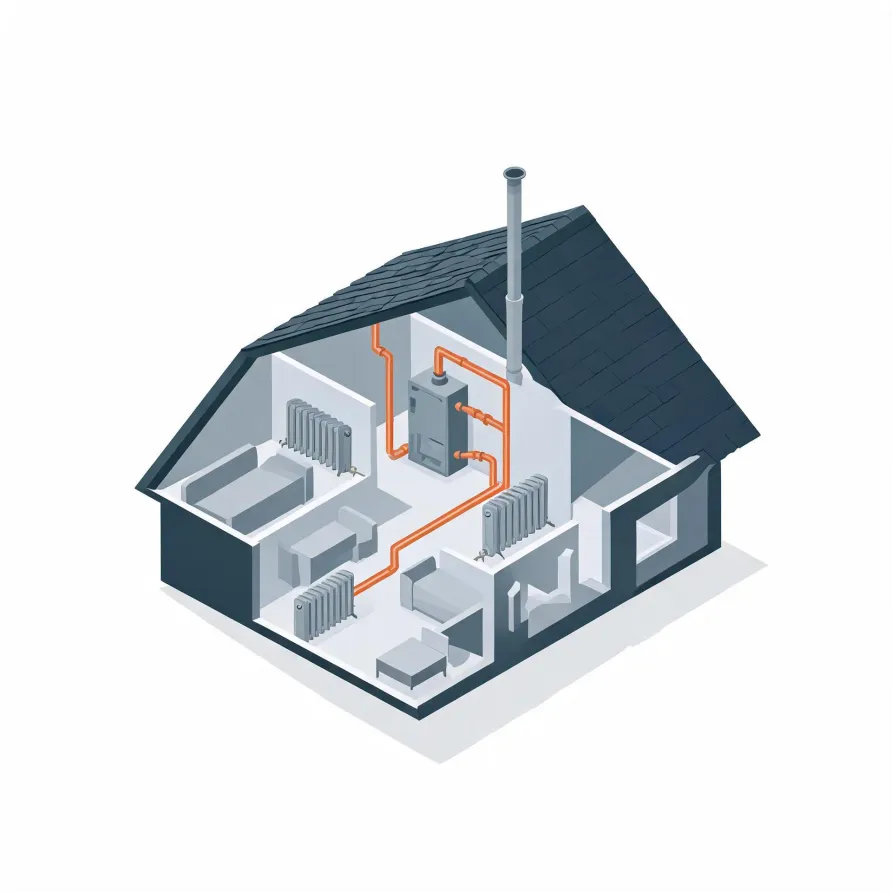
The boiler itself sits in the basement or mechanical room and is the piece a contractor goes to first. It heats water and pushes it out through the system. When the boiler is the problem, symptoms show up as no heat at all, uneven heat across the house, or the unit cycling on and off without completing a full run.
Radiators or baseboard units sit in each room and release that heat into the living space. A faulty zone valve, a failing circulator pump, or a stuck expansion tank can each produce cold spots or pressure problems without the boiler itself being at fault, so a contractor works through these pieces in turn.
The drawing shows a typical boiler layout, and a licensed contractor determines which parts and configurations apply to your specific home.
Find a contractor in Davison CountyDavison County, by the numbers
136 severe weather events were recorded in Davison County, South Dakota between 2015 and 2024.
NOAA National Centers for Environmental Information, Storm Events Database, bulk CSV export, events 2015-01-01 through 2024-12-31.Half the homes in Davison County, South Dakota were built in 1972 or earlier (2020-2024 ACS 5-year).
U.S. Census Bureau, 2020-2024 American Community Survey 5-Year EstimatesDavison County, South Dakota holds 9,579 housing units (2020-2024 ACS 5-year).
U.S. Census Bureau, 2020-2024 American Community Survey 5-Year EstimatesOwners occupy 61.5% of the occupied homes in Davison County, South Dakota (2020-2024 ACS 5-year).
U.S. Census Bureau, 2020-2024 American Community Survey 5-Year EstimatesSevere Weather Events in Davison County
South Dakota weather puts real stress on boilers, and stress shortens equipment life and surfaces repair needs that would not otherwise exist. How much a boiler is asked to do here is a local fact, not a national average.
136 severe weather events, 2015–2024. Source: NOAA National Centers for Environmental Information, Storm Events Database.