Tell us about the job
Takes about a minute. No obligation.
Homes in Tripp County, SD run heat about eight months a year, from October through May. A boiler running that kind of schedule puts most of its stress on the burner assembly and the ignition system, because those are the parts that fire and reset every time the thermostat calls for heat. The heat exchanger takes the thermal load, but the ignition components take the mechanical repetition. A contractor diagnosing a failed boiler here checks the igniter, the flame sensor, and the gas valve before pulling the heat exchanger, because the wear pattern the season produces shows up there first.
Boilers in this part of South Dakota have often outlasted the original plumbing arrangements they were set into, which means a contractor opening a system here finds layered repairs from prior equipment rather than a clean baseline. Half the homes in Tripp County, South Dakota were built in 1969 or earlier (2020-2024 ACS 5-year). A house that old has typically seen more than one boiler, and the piping, controls, and zone valves around the current unit reflect those earlier configurations. What a contractor finds inside an aging boiler in stock like this tends to determine the scope far more than the boiler's own nameplate does, because the surrounding system shapes what is still serviceable and what has to come out.
The Parts of a Boiler a Contractor Checks First
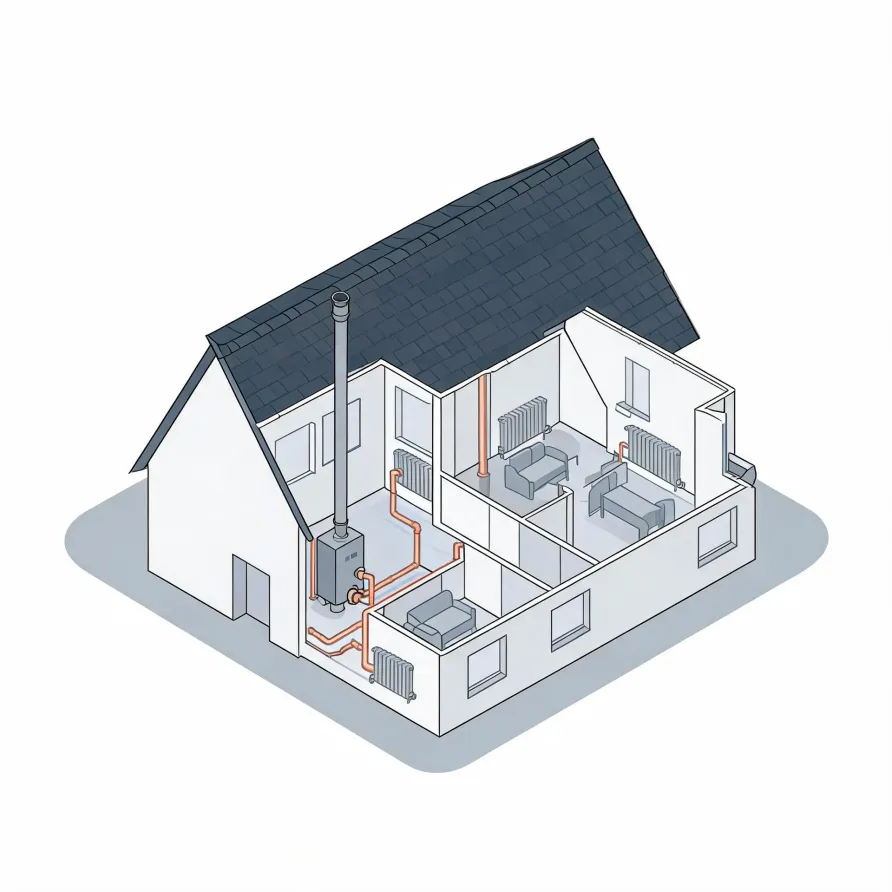
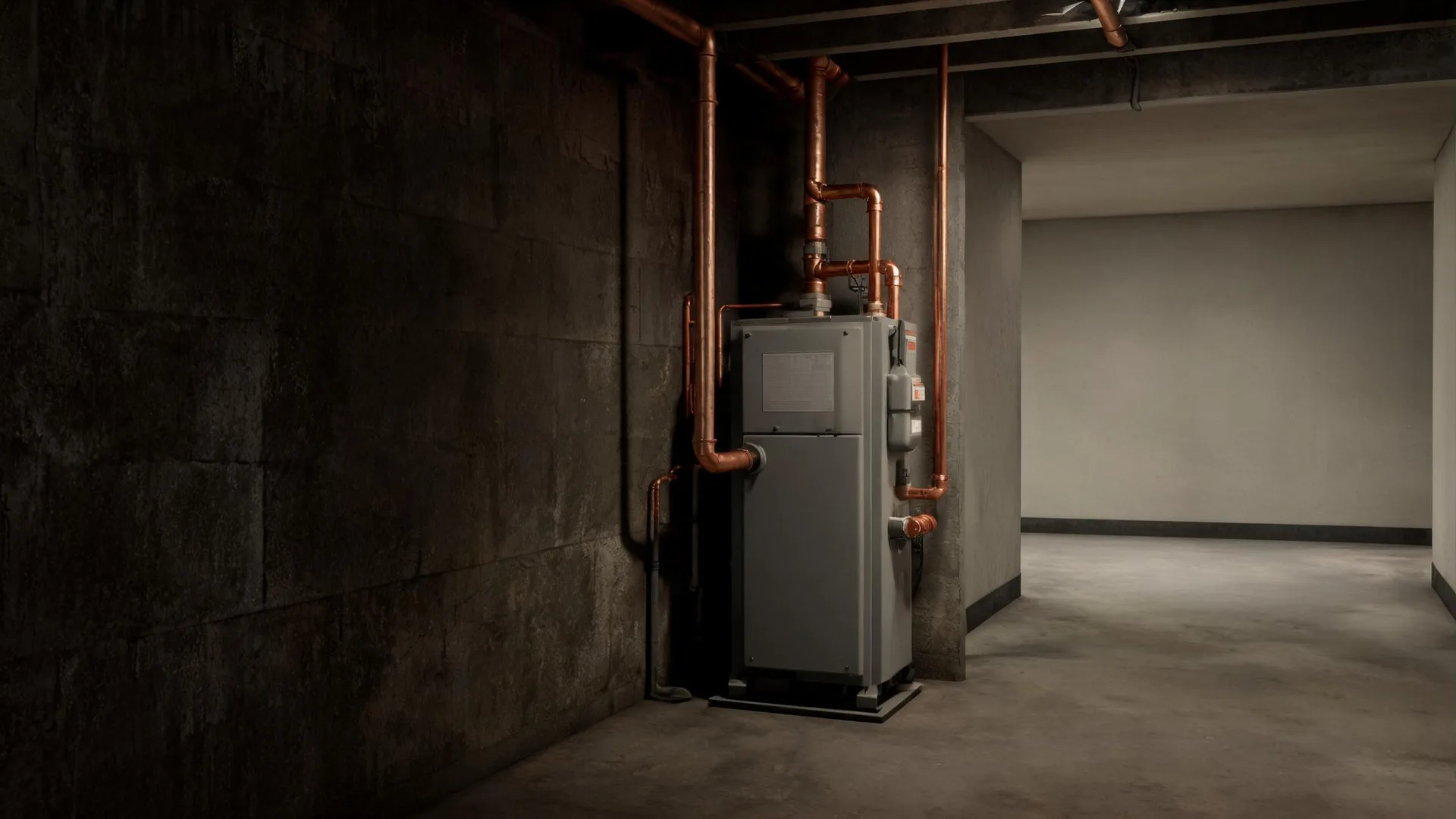
The boiler itself sits in the basement or a mechanical room and is the piece a contractor goes to immediately when heat stops or stutters. Inside it, the heat exchanger is the component that takes the most punishment. A cracked or fouled heat exchanger is one of the first things a contractor rules out.
The circulator pump moves heated water out through the pipes and back again, and a failed pump is a common reason rooms go cold even when the boiler fires normally. The expansion tank, usually mounted nearby, keeps pressure in the system stable, and the pressure relief valve is the safety component a contractor checks when readings are off.
The drawing shows the general layout of a boiler system, and a licensed contractor determines which components are relevant to the specific house and situation.
Find a contractor in Tripp CountyTripp County, by the numbers
232 severe weather events were recorded in Tripp County, South Dakota between 2015 and 2024.
NOAA National Centers for Environmental Information, Storm Events Database, bulk CSV export, events 2015-01-01 through 2024-12-31.Half the homes in Tripp County, South Dakota were built in 1969 or earlier (2020-2024 ACS 5-year).
U.S. Census Bureau, 2020-2024 American Community Survey 5-Year EstimatesTripp County, South Dakota holds 2,762 housing units (2020-2024 ACS 5-year).
U.S. Census Bureau, 2020-2024 American Community Survey 5-Year EstimatesOwners occupy 68.4% of the occupied homes in Tripp County, South Dakota (2020-2024 ACS 5-year).
U.S. Census Bureau, 2020-2024 American Community Survey 5-Year EstimatesBoiler Repair Rules & Standards on Record for Tripp County, South Dakota1 sourced rules and standards
Licensing and Legal Requirements in Tripp County, South Dakota
South Dakota leaves HVAC licensing to the municipality: the state’s trade-regulation chapter lets a municipality license, tax and regulate heating, ventilation and air conditioning contractors by name, so who licenses a contractor depends on the town the work is in.
Severe Weather Events in Tripp County
Boilers in Tripp County work against whatever the climate puts on them, and weather stress is a real driver of wear, breakdowns, and repair calls. How hard local conditions push heating equipment is a local fact, and that makes it worth seeing alongside any conversation about keeping a boiler running.
232 severe weather events, 2015–2024. Source: NOAA National Centers for Environmental Information, Storm Events Database.