Tell us about the job
Takes about a minute. No obligation.
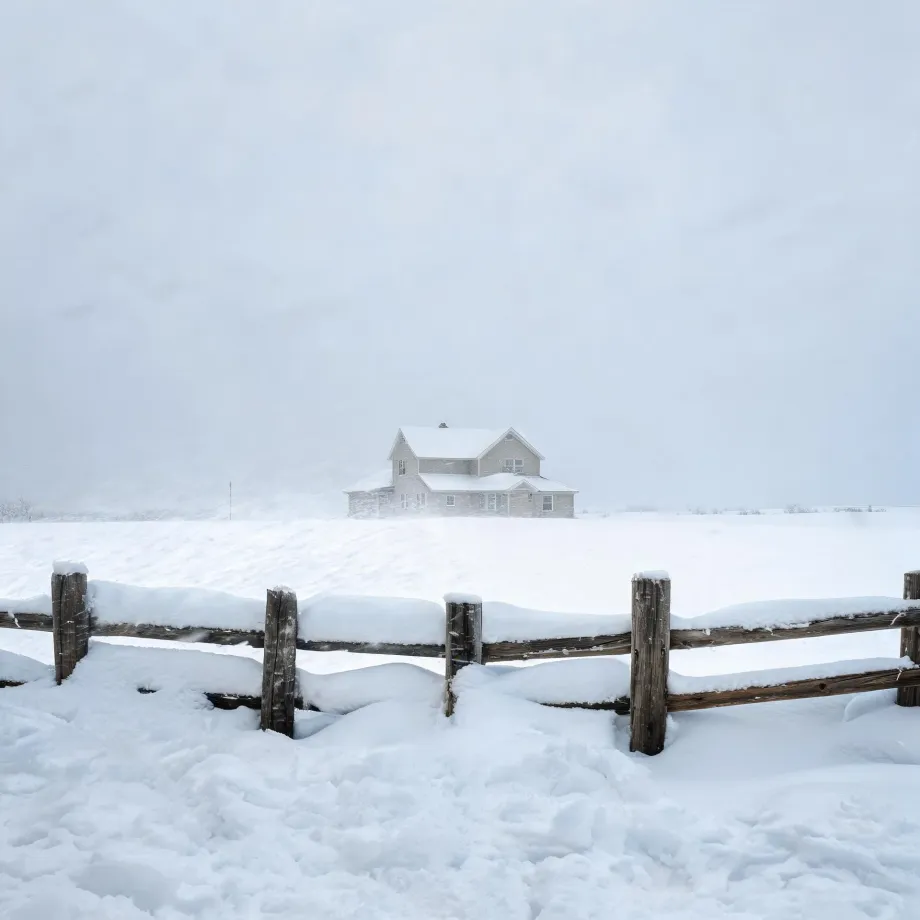
Sizing a boiler for Bennett County starts with how much of the year it actually fires. Homes in Bennett County, SD run heat about nine months a year, from September through May. A burner and heat exchanger cycling through that kind of calendar accumulate wear at a pace that a marginally undersized or sloppily installed unit cannot absorb. The ignition system gets the worst of it, starting and stopping through months of continuous demand. A contractor quoting a replacement here has to calculate the real load the house puts on the equipment, because an install that would hold up in a short season will not hold up here.
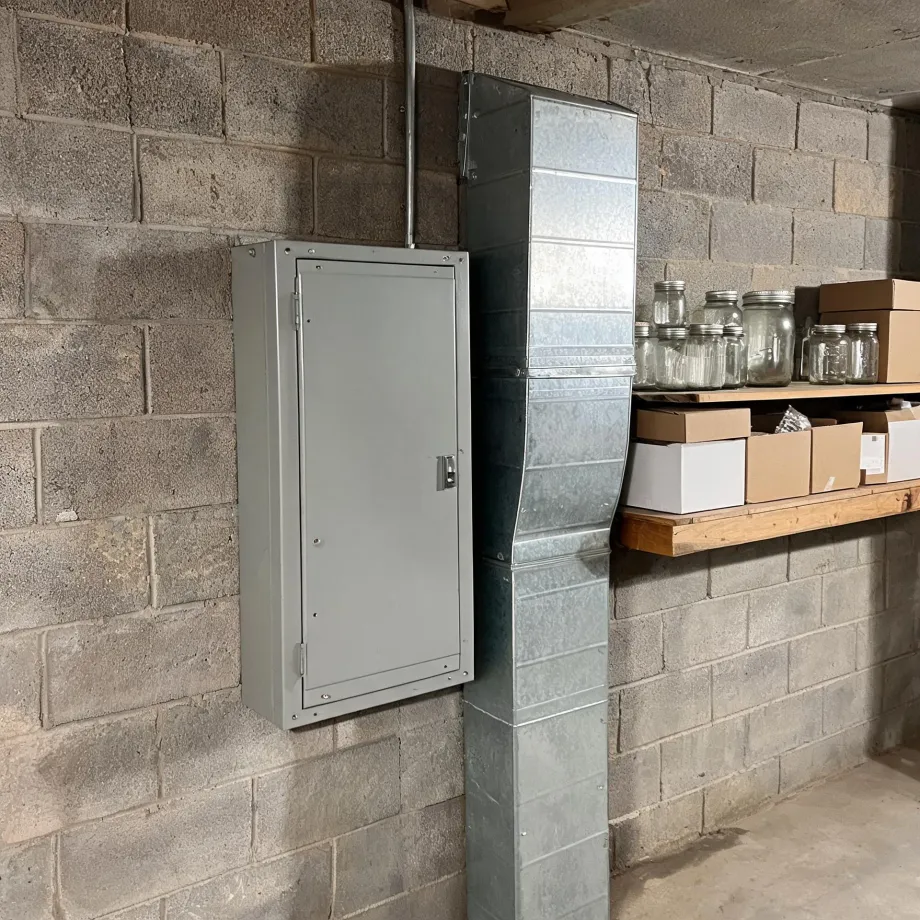
Ductwork in a house this old was laid out for equipment that no longer exists in it. A contractor pricing a boiler installation here has to read what is actually in the walls and mechanical spaces before the unit itself becomes relevant. Half the homes in Bennett County, South Dakota were built in 1973 or earlier (2020-2024 ACS 5-year). That gap between what the house was built around and what a modern boiler requires is where installation scope gets settled, and where a quote that looked simple can widen once the existing runs are measured and the routing is mapped.
What Gets Installed With a New Boiler
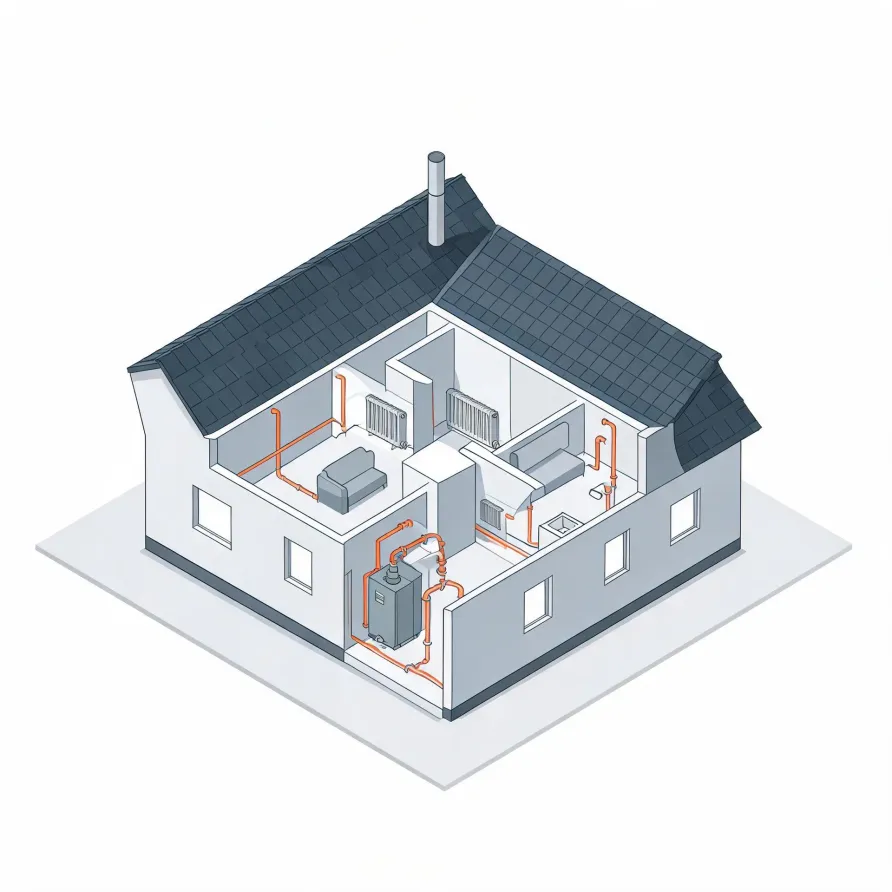
The boiler itself sits in a mechanical room, basement, or utility space and is the unit that heats water. Paired with it is the expansion tank, which absorbs pressure changes as water heats and cools. Both pieces go in during the same installation.
From the boiler, supply and return pipes run through the house to the heat emitters, which are either radiators or radiant floor loops depending on what the house is set up for. A circulator pump, mounted directly on the piping, moves the heated water through that circuit. The thermostat, placed on a main living-area wall, is the control point that tells the whole system when to fire.
The drawing shows a representative layout, and a licensed contractor determines exactly which components apply to this house.
Find a contractor in Bennett CountyBennett County, by the numbers
161 severe weather events were recorded in Bennett County, South Dakota between 2015 and 2024.
NOAA National Centers for Environmental Information, Storm Events Database, bulk CSV export, events 2015-01-01 through 2024-12-31.Half the homes in Bennett County, South Dakota were built in 1973 or earlier (2020-2024 ACS 5-year).
U.S. Census Bureau, 2020-2024 American Community Survey 5-Year EstimatesBennett County, South Dakota holds 1,151 housing units (2020-2024 ACS 5-year).
U.S. Census Bureau, 2020-2024 American Community Survey 5-Year EstimatesOwners occupy 61.2% of the occupied homes in Bennett County, South Dakota (2020-2024 ACS 5-year).
U.S. Census Bureau, 2020-2024 American Community Survey 5-Year EstimatesSevere Weather Events in Bennett County
Boiler systems work against whatever the local climate demands, and that demand shifts with the weather a county actually sees. How hard Bennett County pushes heating equipment is a local question, and the record below reflects the conditions a properly sized boiler has to handle.
161 severe weather events, 2015–2024. Source: NOAA National Centers for Environmental Information, Storm Events Database.