Tell us about the job
Takes about a minute. No obligation.
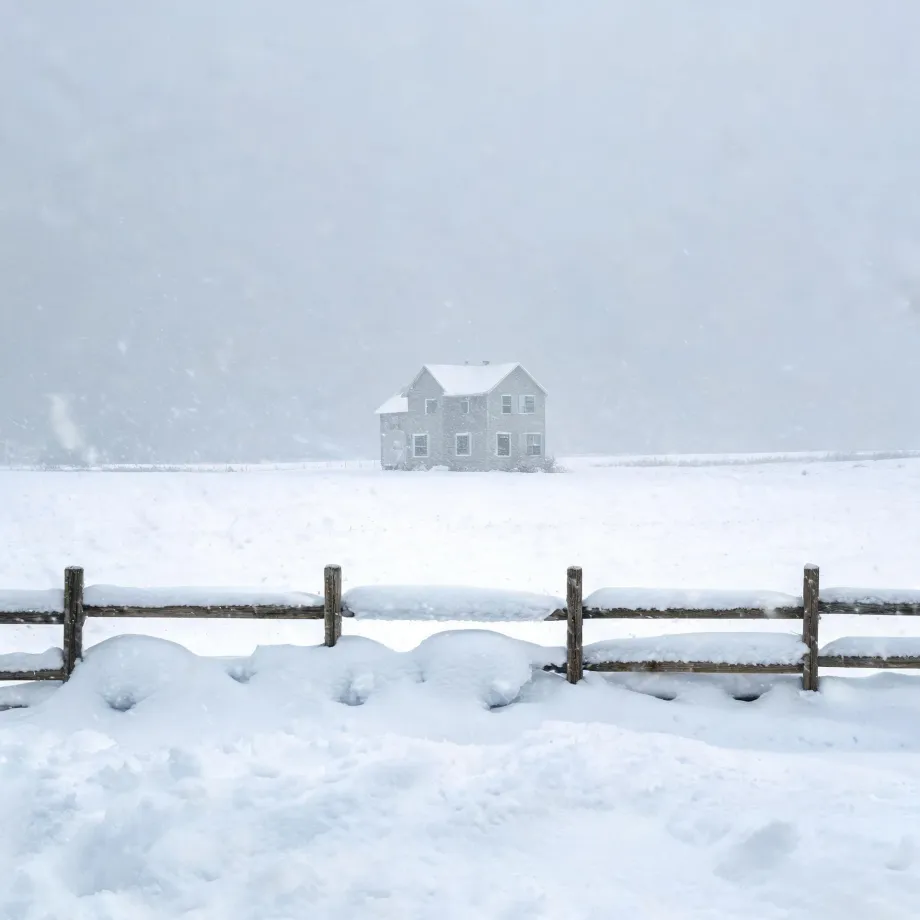
Sizing a boiler for a Todd County home asks a contractor to work from hard numbers before anything else, because the burner and heat exchanger start cycling in October and do not stop until May. Homes in Todd County, SD run heat about eight months a year, from October through May. A system that is undersized or installed without a proper load calculation runs harder through those cycles, and the heat exchanger carries that strain with no long idle period to slow the accumulation. Sloppy installation shows up faster here than in places where the equipment sits quiet for most of the year.
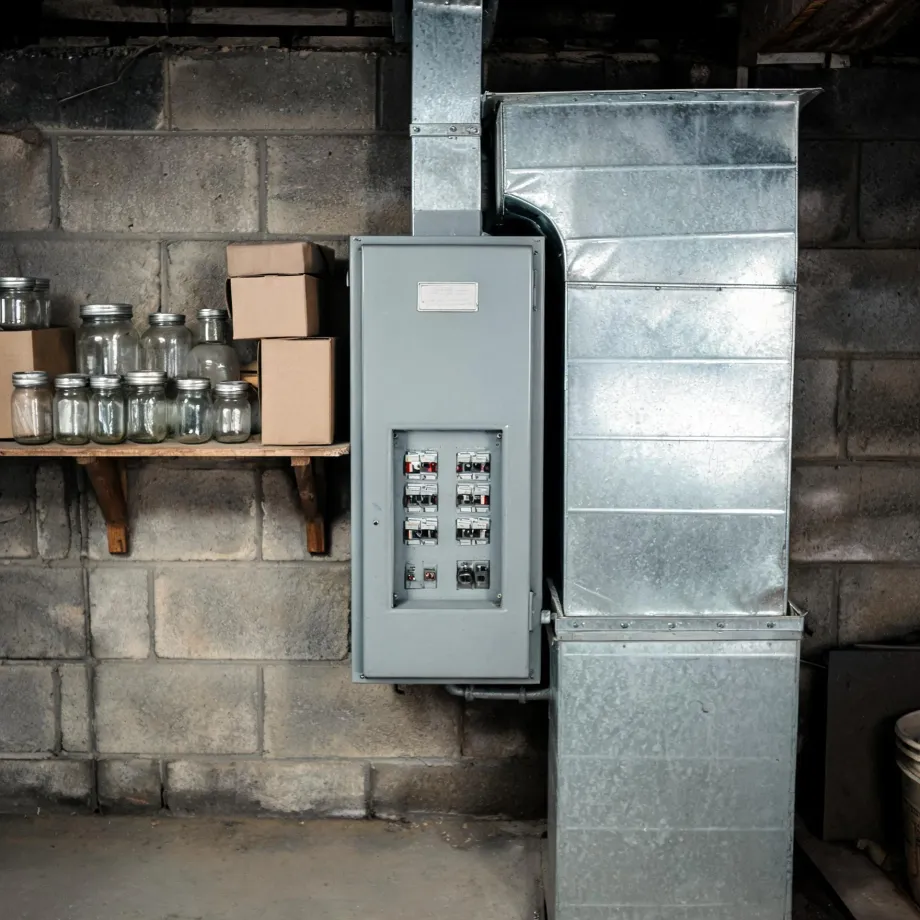
Ductwork in much of this county's housing stock was laid out for an earlier generation of heating equipment, and what a new boiler has to connect to is shaped by those original decisions. Half the homes in Todd County, South Dakota were built in 1981 or earlier (2020-2024 ACS 5-year). That gap between what was built into the house and what a contractor is installing now is where most of the variables in a boiler job actually live. If the existing distribution runs can carry the new system's output and the electrical service meets the load, the install moves cleanly. If they cannot, the ductwork and the panel are where the real scope gets written.
What Gets Installed With a New Boiler
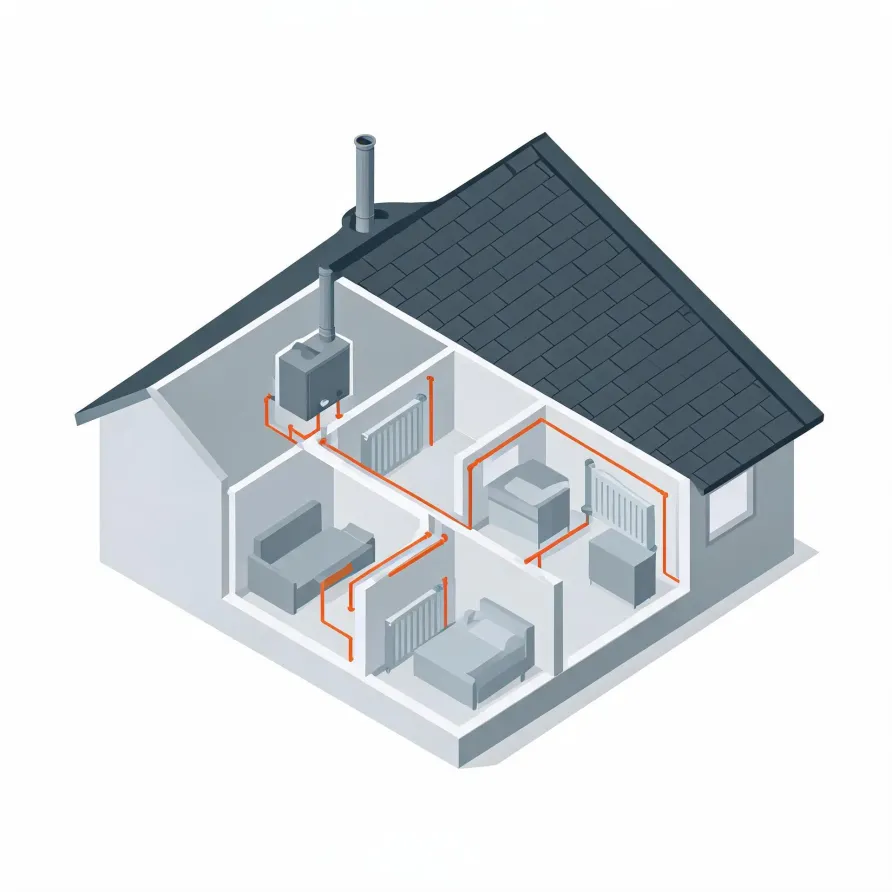
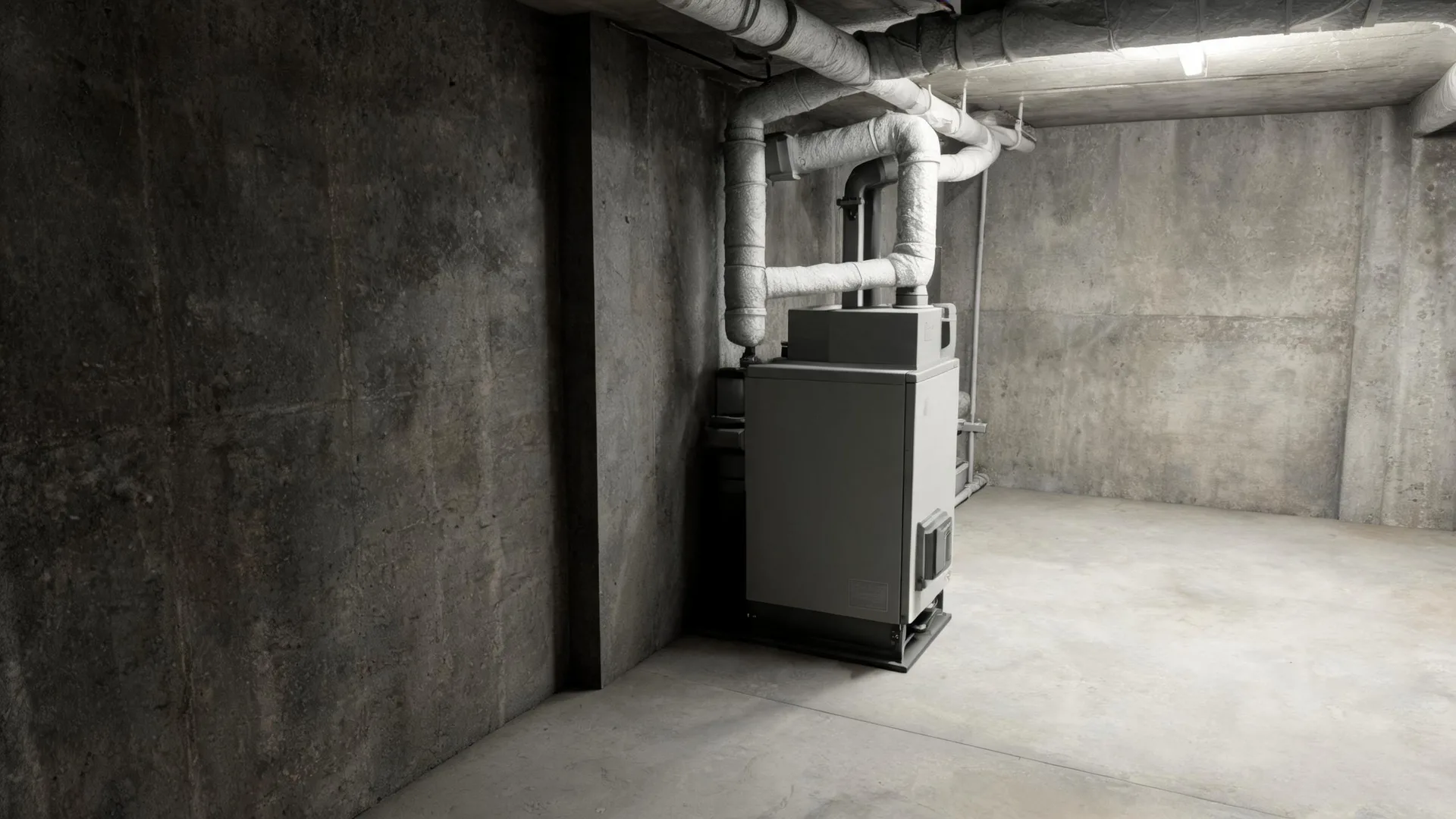
The boiler itself sits in a mechanical room, basement, or utility space and is the unit a contractor mounts and connects first. From there, a network of pipes runs through the house carrying heated water to radiators, baseboard units, or radiant floor loops placed in the rooms being served.
An expansion tank connects near the boiler to manage pressure as water heats and cools. A circulator pump moves water through the loop, and a thermostat goes on a main living-area wall to give the household control over temperature.
The drawing shows a typical boiler system layout, and a licensed contractor determines exactly which components apply to your home.
Find a contractor in Todd CountyTodd County, by the numbers
225 severe weather events were recorded in Todd County, South Dakota between 2015 and 2024.
NOAA National Centers for Environmental Information, Storm Events Database, bulk CSV export, events 2015-01-01 through 2024-12-31.Half the homes in Todd County, South Dakota were built in 1981 or earlier (2020-2024 ACS 5-year).
U.S. Census Bureau, 2020-2024 American Community Survey 5-Year EstimatesTodd County, South Dakota holds 2,879 housing units (2020-2024 ACS 5-year).
U.S. Census Bureau, 2020-2024 American Community Survey 5-Year EstimatesOwners occupy 46.3% of the occupied homes in Todd County, South Dakota (2020-2024 ACS 5-year).
U.S. Census Bureau, 2020-2024 American Community Survey 5-Year EstimatesSevere Weather Events in Todd County
Local weather conditions put real load on heating equipment, and that load shapes what a boiler needs to handle over its working life. What holds in one part of South Dakota does not always hold in Todd County, which is why installation decisions here start with local conditions.
225 severe weather events, 2015–2024. Source: NOAA National Centers for Environmental Information, Storm Events Database.